 English
  Українська
  Čeština
 Getting Started
20 Start Here →Your first steps into the world of specialty coffee
The Coffee Belt
The Coffee Belt spans the tropics between Cancer and Capricorn, home to all 70 coffee-growing nations and every Arabica and Robusta variety on Earth.
The Legend of Kaldi — Coffee's Ethiopian Origins
The story of Kaldi the goat-herder, the earliest written records of coffee in Ethiopia and Yemen, and the Kaffa region as the birthplace of Coffea arabica.
What is Coffee Brewing?
Coffee brewing extracts soluble flavour from roasted grounds using water — and grind size, temperature, time, and ratio all determine whether the cup sings or disappoints.
What is Coffee Origin?
Coffee origin is the story of place — altitude, soil, and climate shape every flavour note. From Ethiopian florals to Colombian caramel and Kenyan citrus.
What is Coffee Processing?
Coffee processing — washed, natural, honey — transforms harvested cherries into green beans and shapes the cup more than almost any other variable, including roast level.
Arabica (Coffea arabica)
Arabica accounts for 60% of global coffee production and virtually all specialty coffee. Here is what separates it from Robusta — genetics, altitude, and cup character.
Grind Size Guide: How Particle Size Shapes Your Cup
From coarse to extra-fine: how grind size controls extraction, which grinder type matters, and how to dial in for every brew method.
Coffee Freshness: Why Roast Date Matters More Than Expiry Date
Why the roast date on your coffee bag tells you far more than any best-before stamp — and how to store, rest, and time your coffee for the best cup.
Espresso
Espresso forces near-boiling water through finely ground coffee at 9 bars of pressure — producing concentrated, crema-topped shots in 25 to 30 seconds.
French Press
French press coffee steeps ground beans in hot water for 4 minutes, producing rich, full-bodied cups with velvety texture and deep, rounded chocolate flavour.
What Is Specialty Coffee?
The 80-point SCA scale separates extraordinary coffee from commodity. Here is what that number actually means, how it is scored, and why it matters in the cup.
How to Read a Coffee Bag
Every detail on a specialty coffee bag is a clue — origin, process, roast date, elevation, variety, tasting notes. Here is how to decode them all.
Your First Cup: Learning to Taste Coffee
Acidity, sweetness, body, finish — the sensory vocabulary of coffee is not intimidating once you know what you are actually looking for. Here is how to start tasting.
Arabica vs. Robusta: The Two Faces of Coffee
Arabica and Robusta are the two dominant coffee species — and they differ in genetics, flavour, caffeine, altitude, and price in ways that shape every cup you drink.
Coffee Roast Levels: Light, Medium, Dark
What actually happens when green coffee meets heat — the chemistry of light, medium, and dark roasts, and why the flavour differences are not what most people expect.
What Is a Coffee Cherry?
Before it becomes a bean, coffee is a fruit — a bright, sweet cherry that grows on trees, takes nine months to ripen, and contains the seeds we roast. Here is the full biology.
Coffee Processing Methods: Washed, Natural, Honey
How coffee is processed after harvest — whether the fruit is removed before or after drying — is one of the most powerful shapers of flavour in the cup.
What Is Terroir in Coffee?
Altitude, soil, rainfall, temperature, and microclimate all shape the flavour of a coffee before the first cherry is picked. This is what terroir means — and why it matters.
Brewing Ratios Explained
The water-to-coffee ratio is the single most controllable variable in brewing — and the 1:15 to 1:17 rule is your starting point, not your destination.
How to Store Coffee
Oxygen, light, heat, and moisture are the four enemies of fresh coffee. Here is how to defeat them — and why the freezer debate is more nuanced than you think.
Origins
25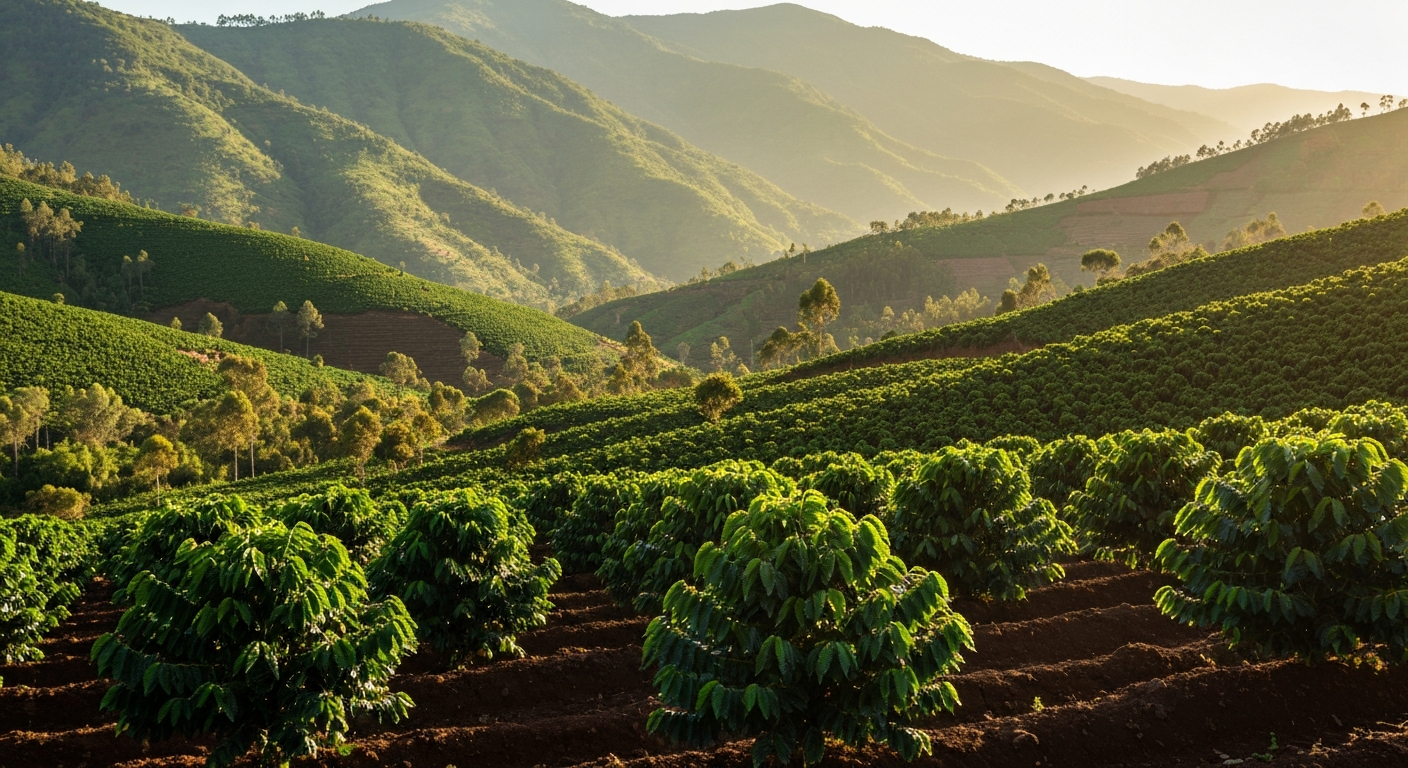
Ethiopia
The birthplace of Arabica and still its most genetically diverse origin — Ethiopia produces florals, berries, and citrus from thousands of heirloom varieties across its highlands.
Guatemala
Guatemala's volcanic soils and high altitudes — from Antigua to Huehuetenango — produce some of Central America's most complex coffees, rich with chocolate, citrus, and spice.
Costa Rica
A pioneer of honey processing and micro-mill innovation, Costa Rica produces exclusively Arabica coffee of exceptional quality.
Indonesia
The world's fourth-largest coffee producer, known for earthy Sumatran coffees and the unique wet-hulled processing method.
Peru
One of the world's top organic coffee producers, Peru's smallholder cooperatives deliver clean, sweet cups from the Andes.
Rwanda
The 'Land of a Thousand Hills' has undergone a remarkable coffee renaissance, producing bright, complex, floral-citrus cups.
Ethiopia — Yirgacheffe
Yirgacheffe sits within the birthplace of coffee and produces some of the most aromatic washed coffees on earth — jasmine, lemon, bergamot, and peach at altitude.
Panama
Home of the legendary Gesha variety, Panama has redefined specialty coffee with record-breaking auction prices and boutique production.
Tanzania
Home to Kilimanjaro coffee and prized Peaberry lots, Tanzania produces bright, complex cups with blackcurrant, citrus, and wine-like acidity.
Ethiopia — Sidamo
Ethiopia Sidamo: a diverse origin producing floral washed lots and explosive naturals bursting with blueberry, dark chocolate, and berry complexity at altitude.
Yemen
The ancient birthplace of coffee trade, Yemen's terraced mountain farms produce some of the world's rarest and most distinctive coffees.
Democratic Republic of Congo
An emerging specialty origin from the heart of Africa — Congo's Kivu region produces exceptional Bourbon coffees despite decades of conflict and infrastructure challenges.
Honduras
Central America's largest coffee producer by volume, Honduras has rapidly emerged as a specialty origin with diverse regional profiles and a growing Cup of Excellence presence.
Mexico
One of the world's largest organic coffee producers, Mexico's indigenous farming communities cultivate shade-grown beans across Chiapas, Oaxaca, and Veracruz.
Vietnam
The world's second-largest coffee producer and the undisputed king of Robusta, Vietnam has built a unique coffee culture around the phin filter and cà phê sữa đá.
Kenya
Kenyan coffee delivers intense blackcurrant, grapefruit, and tomato-like acidity from SL28 and SL34 cultivars grown at high altitude near Mount Kenya.
Colombia
Colombia's Andean geography — three mountain ranges, volcanic soils, and year-round harvests — yields balanced washed Arabicas with caramel sweetness and bright stone fruit.
Brazil
The world's largest coffee producer by far, Brazil supplies one-third of global output — low-acid naturals and pulped naturals with nutty, chocolate, and caramel profiles.
Burundi
A tiny East African nation producing remarkably bright, citrus-driven washed coffees from Bourbon varieties grown in the highlands of Kayanza and Ngozi.
Myanmar
A frontier coffee origin where Arabica is experiencing a remarkable resurgence in the misty highlands of Shan State, producing coffees with unique terroir and specialty potential.
Java
The Indonesian island that gave coffee its most famous slang name. Java coffees are known for their full body, earthy depth, and a colonial history that shaped the global coffee trade.
Sumatra
The iconic Indonesian island known for Mandheling and Lintong coffees — wet-hulled, earthy, herbal, and low in acidity, with a body like no other origin.
Ecuador
An emerging specialty origin with unique terroir — from the volcanic highlands of Loja to the extraordinary isolation of the Galapagos Islands.
India
A dual-heritage producer of both Arabica and Robusta, India is famous for its unique Monsooned Malabar process and the lush highlands of Chikmagalur.
Papua New Guinea
Highland organic coffee from one of the world's most remote origins — rich, earthy, and brimming with tropical fruit and chocolate.
Processing
9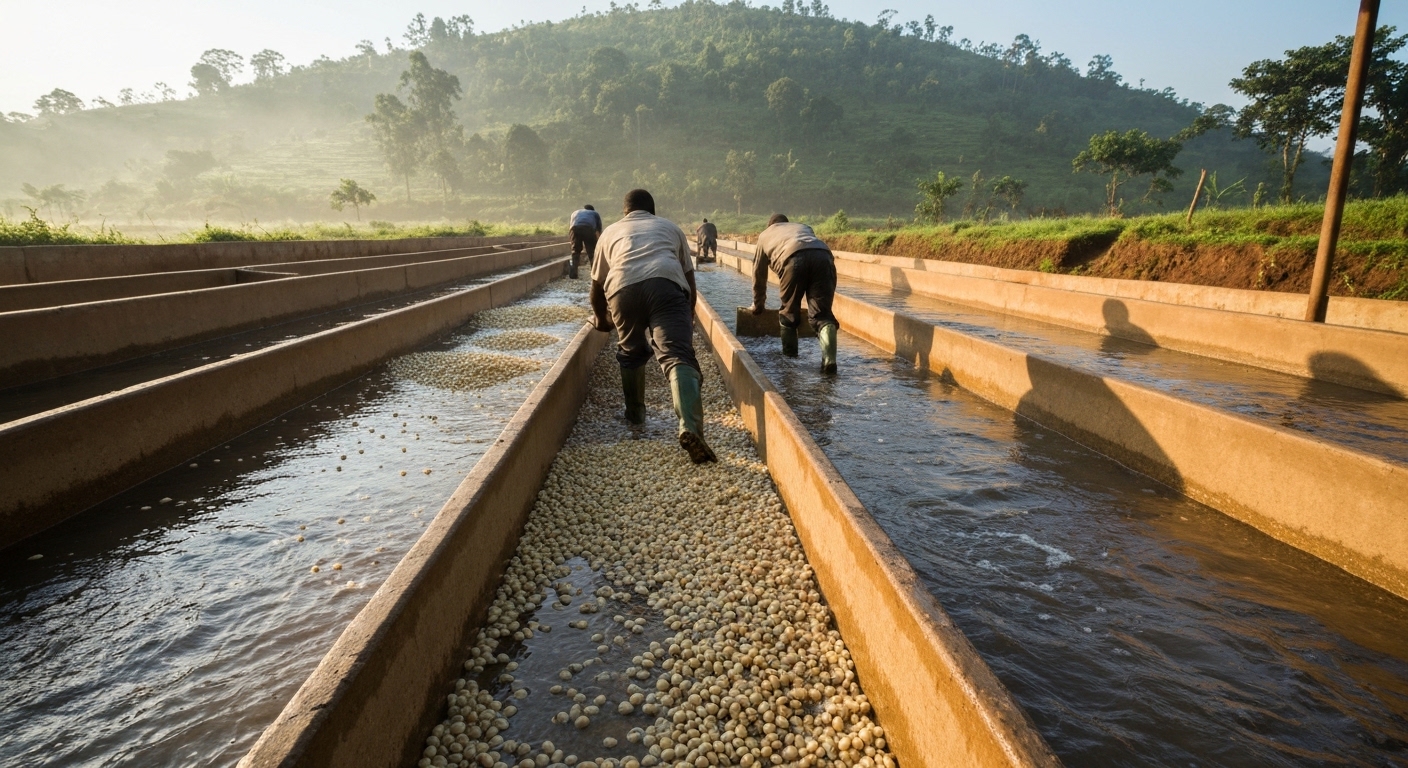
Washed (Wet) Processing
Washed coffee processing removes all fruit before drying to reveal clean, bright cups — floral, terroir-transparent, and prized by the specialty world. The benchmark method.
Natural (Dry) Processing
Natural processing dries whole coffee cherries in the sun before milling — the oldest method, and the one most responsible for fruity, wine-like, and berry-forward cups.
Honey Processing
Honey coffee processing retains mucilage on the bean, producing cups that blend washed clarity with natural sweetness and stone-fruit body. White to black honey.
Coffee Drying Methods: Raised Beds, Patios, and Mechanical Drying
How coffee dries after processing shapes the final cup as much as any other step. Explore raised beds, patio drying, mechanical drum dryers, and the science of getting it right.
Wet-Hulled (Giling Basah)
A processing method unique to Indonesia where parchment is removed at high moisture, creating the signature earthy, herbal, full-bodied character of Sumatran coffee.
Anaerobic Fermentation
A cutting-edge processing innovation where coffee ferments in sealed, oxygen-free tanks — producing intensely fruity, wine-like flavours that are redefining specialty coffee.
Decaffeination Processes
How caffeine is removed from coffee without destroying flavour — from Swiss Water to CO2 to sugarcane EA, the science and quality revolution behind modern decaf.
Controlled Fermentation
How wine-inspired fermentation techniques — from carbonic maceration to inoculated yeasts — are transforming coffee processing and redefining what specialty coffee can taste like.
Green Coffee Storage
How green coffee beans are stored before roasting — moisture targets, packaging options, warehouse conditions, and how storage time affects the quality in the cup.
Varieties
9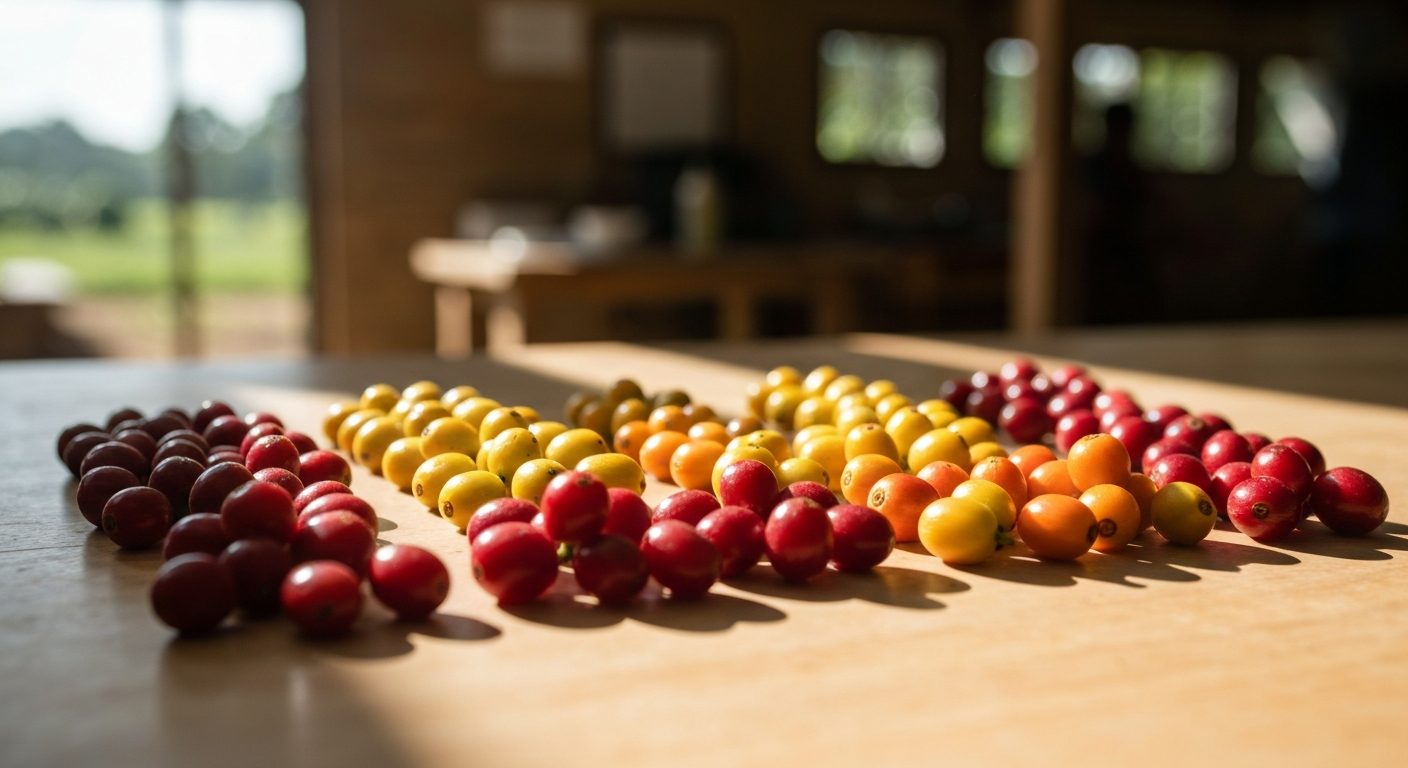
What are Coffee Varieties?
Coffee varieties — Typica, Bourbon, Gesha, SL28 — are the genetic blueprints behind every cup. A guide to what they are, how they differ, and why variety matters for flavour.
Robusta (Coffea canephora)
Often dismissed but increasingly respected, Robusta is coffee's resilient workhorse — powering espresso blends, instant coffee, and a growing fine Robusta movement.
Typica
Typica is Arabica's foundational cultivar, known for clean sweetness, silky body, and delicate acidity — the genetic root of most modern coffee varieties worldwide.
Bourbon
Bourbon is Arabica's second foundational cultivar — named after Réunion island, prized for rich sweetness, chocolate notes, full body, and complex fruit.
Gesha (Geisha)
Gesha is the most celebrated variety in specialty coffee — tracing its origins to Ethiopia, then Panama, where it stunned the world with jasmine florals and bergamot complexity.
Caturra
A natural dwarf mutation of Bourbon discovered in Brazil, Caturra combines high yields with bright acidity and has become the backbone of Latin American coffee production.
Catuai
A high-yield cross of Mundo Novo and Caturra developed in Brazil, Catuai has become the backbone of Brazilian specialty production with its sweet, balanced cup.
SL28 & SL34
Born in Kenyan research labs in the 1930s, SL28 and SL34 produce the intense blackcurrant and tomato-like acidity that defines Kenya's iconic coffee profile.
Pacamara
A cross between Pacas and Maragogipe created in El Salvador in 1958, Pacamara produces unusually large beans with complex floral and citrus flavours.
Brewing
17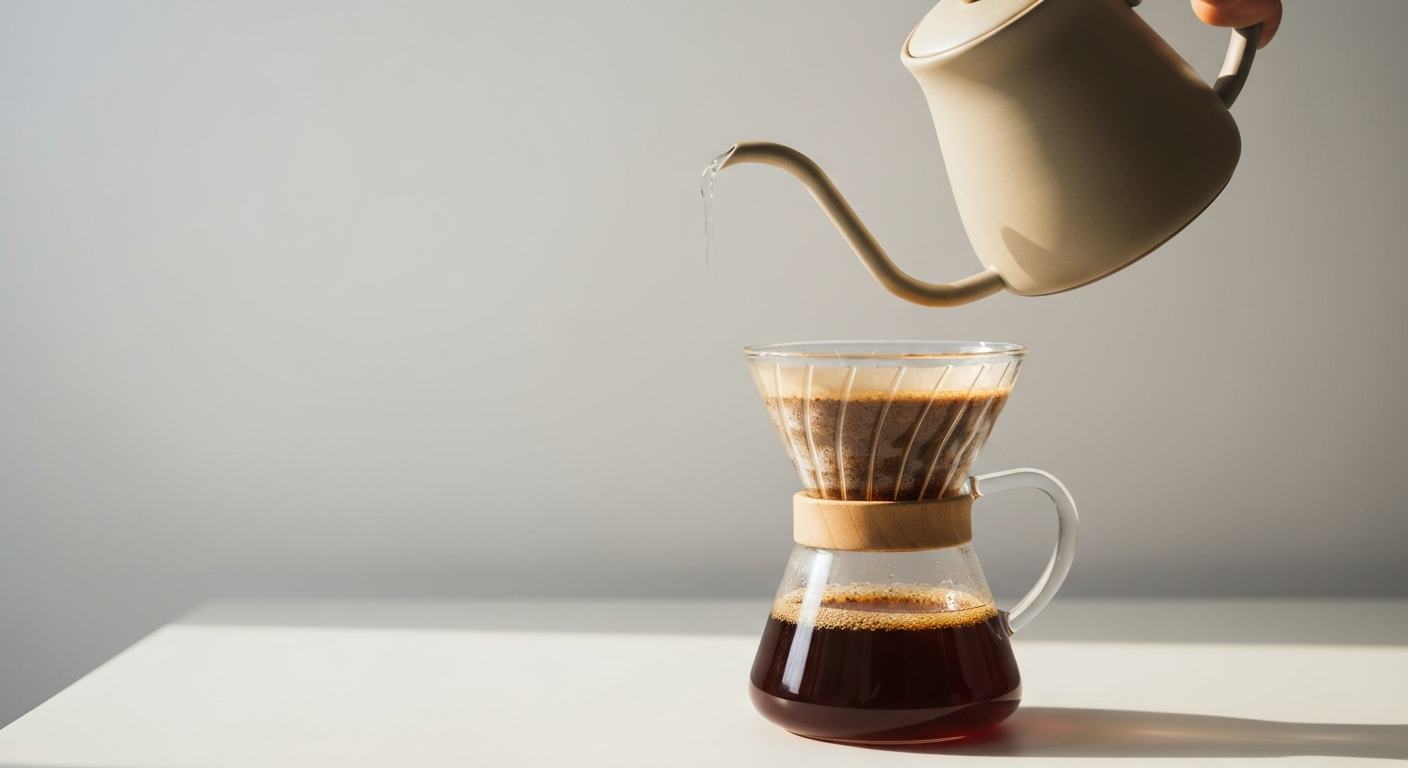
Pour Over
Pour-over is a manual coffee brewing method using paper filters and controlled water flow, producing clean, nuanced cups that reveal single-origin character.
Hario V60 Pour Over
The iconic cone-shaped dripper that rewards technique and precision — a guide to pulse pouring, recipes, and getting the most from the V60.
Coffee Cupping
The universal language of coffee evaluation — how professionals cup coffee using SCA standards, and how you can apply the same protocol at home to sharpen your palate.
Chemex
A design icon since 1941, the Chemex uses thick bonded filters to produce an ultra-clean, bright cup that highlights the delicate nuances of light-roasted coffee.
AeroPress
Invented in 2005 by a Stanford engineer, the AeroPress combines immersion brewing with air pressure to produce a remarkably clean, versatile cup of coffee.
Moka Pot
Alfonso Bialetti's 1933 invention brought espresso-strength coffee to Italian kitchens, and the iconic octagonal stovetop brewer remains a household staple worldwide.
Cold Brew
Cold brew replaces heat with time, steeping coarsely ground coffee in cold water for 12 to 24 hours to produce a smooth, low-acidity concentrate.
The Science of Milk Steaming: Proteins, Microfoam, and Latte Art
What actually happens when you steam milk? Learn the protein chemistry, fat emulsification, and temperature science behind perfect microfoam and silky latte art texture.
Turkish Coffee (Cezve/Ibrik)
One of the oldest brewing methods in existence, Turkish coffee is prepared in a cezve with ultra-fine grounds and earned UNESCO Intangible Heritage status in 2013.
Espresso Machine Types: Manual, Semi-Auto, and Super-Auto Explained
From lever machines to bean-to-cup super-automatics, every espresso machine type works differently. Here is what each one does, who it is for, and the trade-offs involved.
Siphon (Vacuum Brewer)
Part science experiment, part theatrical performance, the siphon brewer uses vapor pressure to create an exceptionally clean and complex cup of coffee.
Alternative Milks and Coffee: Which Works Best and Why
The science behind why dairy steams so well, and how oat, almond, soy, and coconut milks compare for different coffee drinks.
The Coffee Bloom: Why Pre-Infusion Makes Better Coffee
What the coffee bloom is, why fresh beans bloom more dramatically, how to bloom correctly in pour-over and French press, and what pre-infusion does in espresso machines.
Coffee Grinder Types: Blade, Burr, and Why It Matters
Blade vs burr grinders, flat vs conical burrs, stepless vs stepped adjustment, and practical home recommendations at different price points.
Water Temperature in Coffee Brewing: Why 93°C Isn't Always Right
How brew temperature affects extraction rate and flavor, why light and dark roasts need different temps, and practical guidance for every brew method.
How to Store Coffee at Home: The Science of Keeping It Fresh
Oxygen, light, heat, and moisture are the enemies of fresh coffee. Learn what actually works — and what does not — when storing coffee at home.
Latte Art: The Science and Skill Behind Free Pouring
Why microfoam works, how milk temperature and fat content shape the pour, and the physics behind hearts, rosettas, and tulips.
Science
17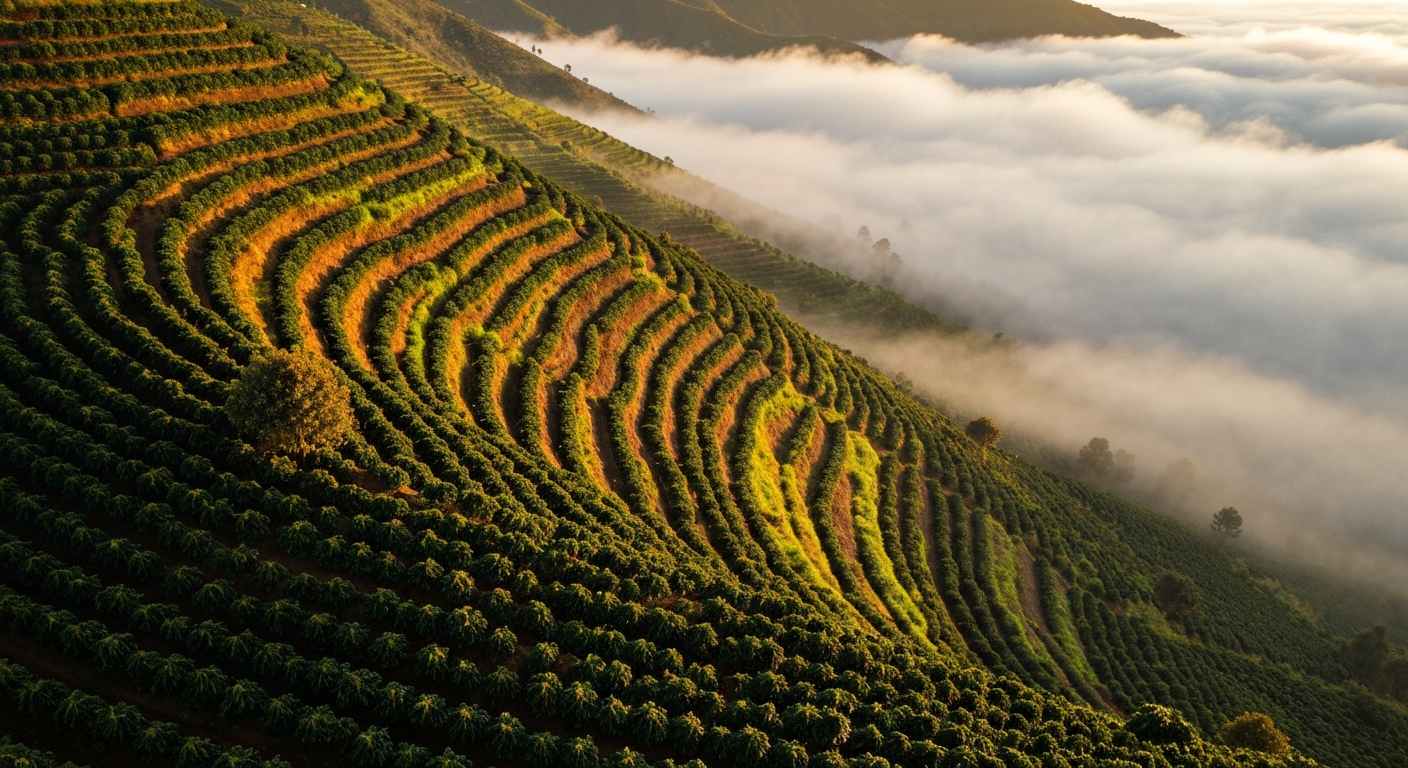
Coffee Altitude & Terroir: How Elevation Shapes Flavor
Altitude is the single most reliable predictor of coffee quality. Learn how elevation shapes bean density, acidity, sugar development, and why terroir matters in the cup.
The Physics of Coffee Extraction
How mass transfer, pressure, diffusion, and temperature work together to pull flavour from ground coffee into your cup.
Water Chemistry and Coffee
Why TDS, magnesium, calcium, and alkalinity determine whether your coffee tastes brilliant or flat — and how to fix your tap water.
Extraction Yield: The Science Behind a Perfect Cup
What extraction yield actually means, why 18–22% is the target, how TDS and brew ratio fit together, and how to diagnose and fix over- and under-extraction.
Crema: The Science Behind Espresso's Golden Foam
Discover the chemistry of espresso crema — how CO₂, melanoidins, and pressure at 9 bar create that signature golden-brown foam and what it reveals about shot quality.
Emulsification in Espresso: How Oil and Water Unite
Explore the chemistry of espresso emulsification — why 9 bar pressure forces coffee oils into stable suspension, creating the mouthfeel and body that no other brew method can replicate.
Extraction Kinetics: How Coffee Dissolves in Real Time
A science-based breakdown of coffee extraction kinetics — the three phases of dissolution, which compounds extract first, and why the first 10 seconds of a shot define your cup.
The Maillard Reaction: How Roasting Creates Coffee Flavor
Understand the Maillard reaction in coffee roasting — how amino acids and sugars combine above 140°C to produce pyrazines, furans, and the hundreds of flavor compounds in your cup.
Pressure Profiling: Engineering Your Espresso Shot
Learn the science of espresso pressure profiling — why 9 bar became the standard, what pressure does during extraction, and how variable pressure profiles change the flavor of your shot.
Tamping Mechanics: The Physics of Puck Preparation
How tamping consolidates espresso grounds, why 15–20 kg of force is the standard, and what angle, levelness, and WDT actually do to extraction.
Water Activity: Why Coffee Goes Stale and How to Slow It
What water activity (Aw) is, how it drives coffee oxidation and staling, and which packaging and storage strategies actually slow the process.
CO2 Degassing: Why Fresh Coffee Blooms
How CO2 is produced during roasting, why it escapes over days and weeks, and what it means for pour-over blooms, espresso resting, and extraction quality.
Grind Distribution: Why Particle Size Uniformity Matters
How bimodal vs unimodal grind distributions affect extraction, why fines cause channelling, and what flat burrs and the EK43 changed about specialty coffee.
Temperature and Extraction: How Heat Shapes Your Cup
How brew temperature affects solubility, which compounds are temperature-sensitive, why 91–96°C is the SCA standard, and how espresso machines maintain temperature stability.
Shot Timing: The Physics of the Perfect Espresso Window
Why 25–30 seconds is not a rule but a consequence — the fluid dynamics, pressure curves, and extraction kinetics that explain the ideal espresso shot timing.
The Chemistry of Coffee Acidity
A deep dive into the organic acids that give coffee its brightness — from pH levels and molecular structure to how roasting, origin, and extraction shape the cup.
How Oxygen Destroys Coffee — and How to Stop It
How oxidation makes coffee go stale, why whole beans stay fresh longer, the right storage containers to use, whether refrigeration works, and how to freeze coffee properly.
History
10
The Evolution of Coffee Brewing
From Turkish pots in 1555 to the AeroPress in 2005 — how humanity's obsession with extracting the perfect cup shaped five centuries of innovation.
Sufi Monasteries and the First Coffeehouses of Yemen
How 15th-century Sufi monks used qahwa for night prayers, Mocha as the first export port, and the birth of the qahvehkhaneh in Aden and Mecca.
The Ottoman Coffeehouse — Birth of a Social Institution
Istanbul's first coffeehouses in 1554, qahvehkhaneh as political hubs, Ottoman debates and bans on coffee, and its spread across the empire.
Coffee Reaches Europe — Venice, London and the Penny Universities
Coffee's arrival in Venice in the 1600s, London coffeehouses as 'penny universities', the birth of Lloyd's of London, and the Viennese coffeehouse tradition.
How Coffee Broke Out of Yemen — The Great Smuggle
Yemen's monopoly on coffee, Baba Budan's legendary smuggling of 7 seeds to India, the Dutch breaking the monopoly via Java in 1616, and the start of colonial coffee plantations.
Coffee and Colonialism — Plantations from Java to the Caribbean
How European colonial powers spread coffee cultivation from Java to Ceylon, Martinique and Brazil, the role of enslaved labour in building the coffee economy, and the legacy of colonial plantation agriculture.
The Leaf Rust Catastrophe — How Coffee Changed the British Empire
How Hemileia vastatrix devastated Ceylon's coffee industry in the 1870s, forced a switch to tea, and permanently shifted British drinking culture.
The First Wave — Instant Coffee and the Rise of Mass Market
How Nescafé and Maxwell House turned coffee into a commodity, the role of World War II in spreading instant coffee globally, and the standardisation of commercial roasting.
The Second Wave — Espresso, Starbucks and the Experience Economy
Alfred Peet's influence, the rise of Starbucks, how the second wave brought espresso to the American mainstream, and the creation of the coffee-shop-as-lifestyle phenomenon.
The Third Wave — Terroir, Traceability and the Specialty Revolution
How Erna Knutsen's 'specialty coffee' concept, the SCA, direct trade, and a new generation of roasters transformed coffee from commodity to craft between 1980 and today.
Decoded
10
Direct Trade vs Fair Trade: What Coffee Certifications Actually Mean
Fair Trade and Direct Trade both promise a better deal for farmers — but they work very differently. Here is what each model means, who benefits, and how to choose.
Cupping: How Coffee Professionals Taste and Score
A deep guide to the SCA cupping protocol — fragrance, aroma, flavour, acidity, body, balance, and scoring — and how to apply it at home to develop your palate.
Coffee Tasting Glossary
A comprehensive reference guide to coffee tasting terminology — from the SCA Flavor Wheel and WCR Sensory Lexicon to 30+ defined terms used by professional cuppers and specialty coffee drinkers.
Coffee and Health: What the Research Actually Says
A clear-eyed look at the evidence on caffeine, antioxidants, cognitive benefits, cardiovascular effects, and who should genuinely be cautious with coffee.
Coffee Certifications: Fair Trade, Organic, Rainforest Alliance — What Do They Mean?
What Fair Trade, Organic, Rainforest Alliance, and Direct Trade actually certify — and what none of them guarantee about what is in your cup.
How Coffee Is Scored: The SCA Cupping Sheet Explained
The SCA 100-point scale, all ten scoring categories explained, what Q-graders are, common score ranges by quality tier, and why scores vary between tasters.
Decaf Coffee: Debunking the Myths About Caffeine-Free Coffee
Decaf has a bad reputation it no longer deserves. Here is what modern decaffeination actually does — and why specialty decaf can be genuinely excellent.
How to Read Coffee Tasting Notes (And Actually Taste Them)
Why tasting notes feel confusing at first, how the SCA flavor wheel works, and practical steps to start tasting what the bag describes.
Seasonal Coffees: When to Buy Each Origin for Peak Freshness
Coffee harvests follow the calendar. Learn when each major origin peaks, how to track fresh crop arrivals, and what to buy for the best flavor.
How Specialty Coffee Is Graded: SCA Protocols and the 80+ Point Standard
What the SCA 100-point scale actually measures, how Q Graders evaluate coffee, and why the 80-point threshold separates specialty from commodity.
No articles found in this category.