 English
  Українська
  Čeština
 The Species Behind Specialty
Coffea arabica is the species that built the specialty coffee industry. Responsible for approximately 60 percent of global coffee production — and virtually 100 percent of what carries the “specialty” label — Arabica is prized for its complex flavour profile, aromatic depth, and the extraordinary diversity it offers across origins, varieties, and processing methods. Every exceptional coffee you have ever tasted — the floral Geshas, the chocolatey Bourbons, the bright Kenyan SL28s — was almost certainly Arabica. It is, as James Hoffmann writes in The World Atlas of Coffee, “the species that has captivated humanity for centuries.”
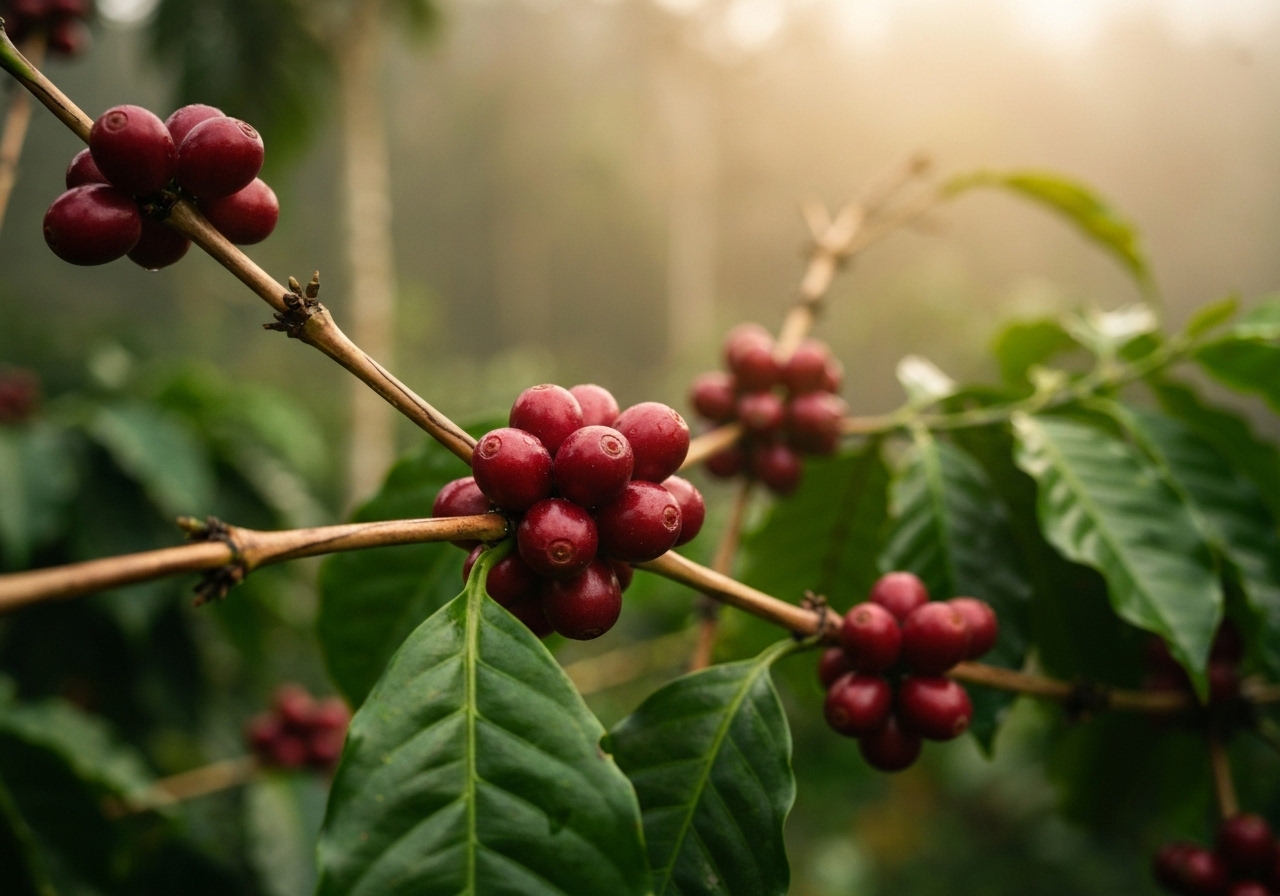
Arabica cherries at peak ripeness — the deep red colour signals optimal sugar development and readiness for harvest
Origins and Genetics
Arabica originated in the highland forests of southwestern Ethiopia, where it still grows wild today beneath the canopy of montane cloud forests. Genetically, it is unusual among coffee species: it is a tetraploid with 44 chromosomes, the result of a natural hybridisation between Coffea canephora (Robusta) and Coffea eugenioides that occurred an estimated 10,000 to 50,000 years ago in what is now South Sudan. This polyploidy gives Arabica its unique chemical complexity — more sugars, more lipids, more aromatic precursors — but also makes it relatively genetically narrow, a vulnerability that plant breeders and organisations like World Coffee Research are working urgently to address.
All cultivated Arabica descends from a very small number of plants that left Ethiopia centuries ago. This extreme genetic bottleneck means that the entire commercial Arabica population has less genetic diversity than a single wild Ethiopian forest patch — a sobering fact as climate change intensifies.
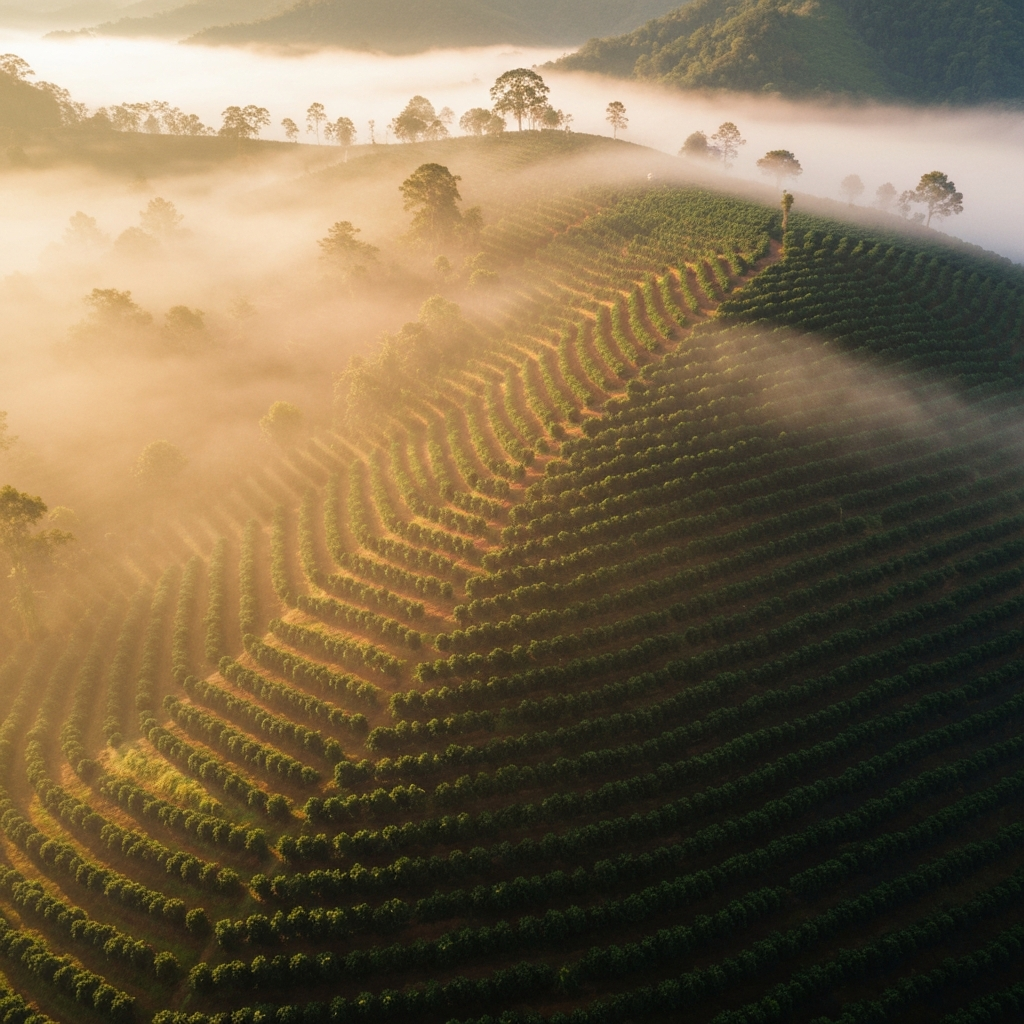
Arabica thrives at altitude — the best specialty lots typically grow above 1,200 metres, where cool temperatures slow cherry maturation and concentrate flavours
Growing Requirements
Arabica is a demanding plant. It requires altitudes of 800 to 2,200 metres (with the best specialty coffees typically above 1,200 metres), temperatures between 15°C and 24°C, and 1,200 to 2,200 millimetres of well-distributed annual rainfall. It is susceptible to coffee leaf rust (Hemileia vastatrix), coffee berry disease, and various pests — challenges that intensify as climate change pushes temperatures higher. According to research published by the International Coffee Organization, rising temperatures could reduce suitable Arabica-growing area by up to 50 percent by 2050. Shade-grown Arabica, cultivated under a canopy of taller trees, tends to produce slower-maturing cherries with more complex sugar development and better cup quality.
The Two Great Lineages
Almost all cultivated Arabica traces back to two foundational lineages that diverged centuries ago. Typica, the variety that spread from Yemen to the Dutch East Indies and then to the Americas in the 1700s, is known for clean sweetness, elegance, and a delicate, silky body. Bourbon, which developed on the island of Réunion (formerly Île Bourbon) from Yemeni seeds, tends toward richer sweetness, higher complexity, and a fuller body with notes of caramel and ripe fruit. From these two parents, the vast family tree of modern cultivars has branched: Caturra, Catuai, SL28, SL34, Mundo Novo, Pacamara, Gesha, and dozens more — each carrying a different balance of its ancestral traits.
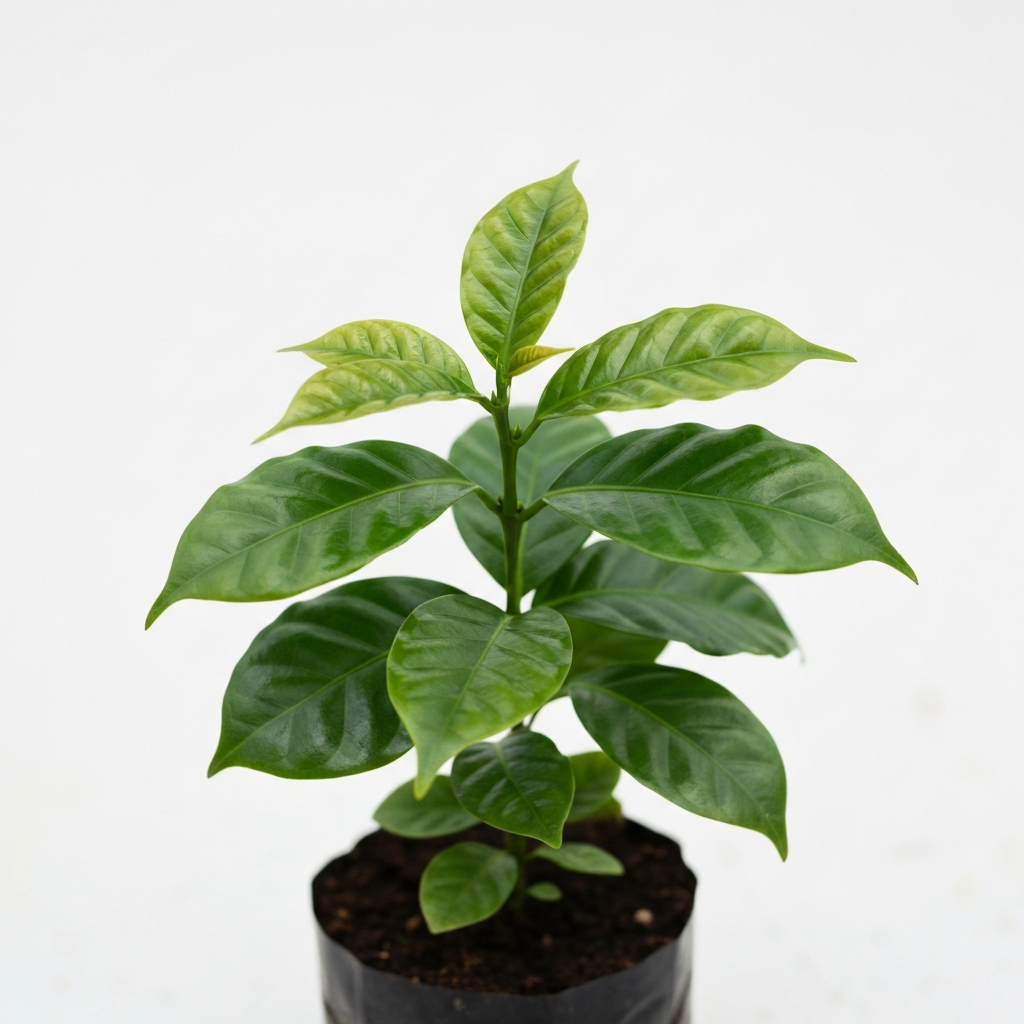
Young Arabica seedlings — it takes 3 to 4 years before a new plant produces its first harvest, and 5 to 7 years to reach full production
Flavour Characteristics
What makes Arabica special in the cup is its chemical composition. Compared to Robusta, Arabica contains about 60 percent more lipids and nearly twice the concentration of sugars — 6 to 9 percent versus 3 to 7 percent by dry weight. It has roughly half the caffeine of Robusta (1.0 to 1.5 percent versus 2.2 to 2.7 percent), which translates directly to less bitterness. These differences create the conditions for nuanced, sweet, complex cups with definable acidity — the hallmarks of specialty coffee. Within Arabica, flavour varies enormously depending on variety, terroir, and processing: jasmine-scented Gesha, chocolatey Bourbon, citrus-bright SL28, berry-laden Ethiopian heirlooms. The species contains multitudes.
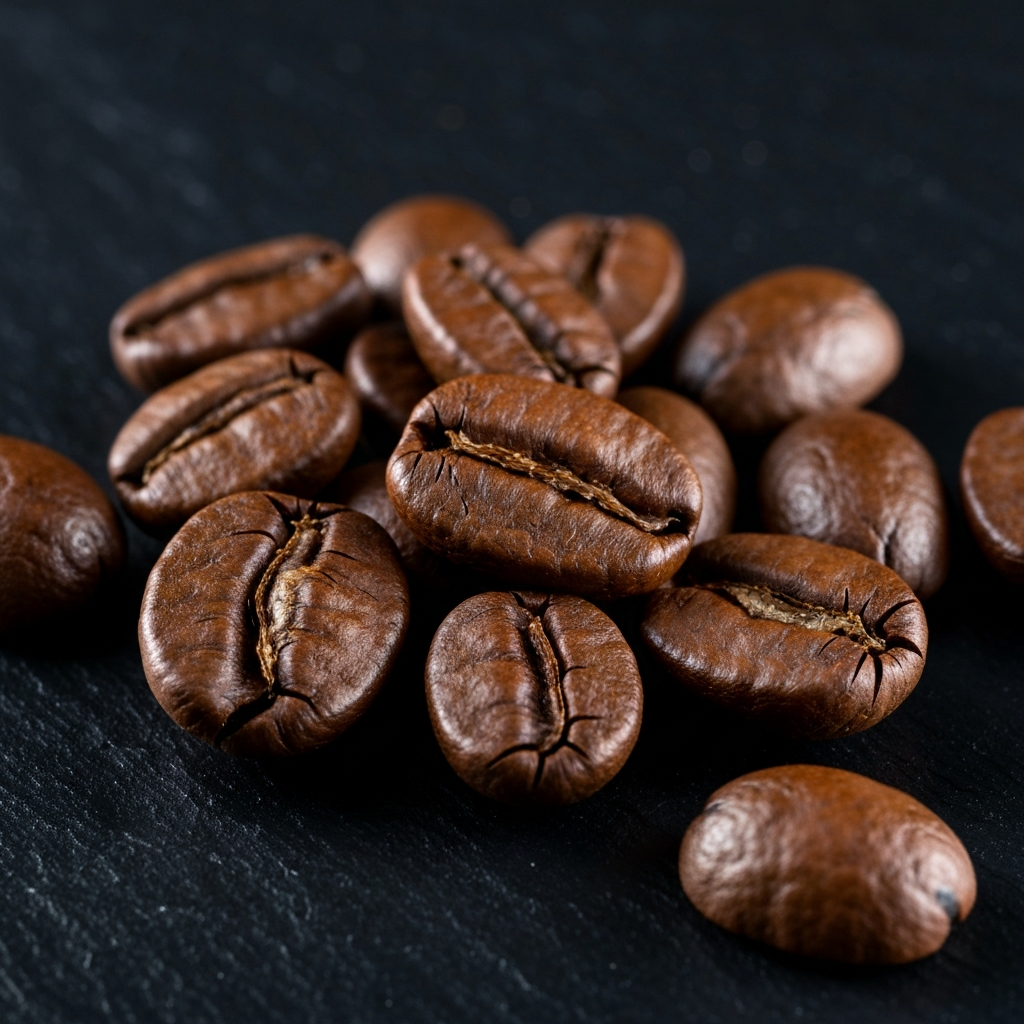
Roasted Arabica beans — the higher lipid and sugar content compared to Robusta gives these beans their aromatic complexity and sweeter taste
The Future of Arabica
Arabica faces existential challenges. Climate models suggest drastically reduced growing areas within decades. Coffee leaf rust epidemics have already devastated crops in Central America and Colombia, wiping out billions of dollars in production. Researchers at World Coffee Research and national institutions are racing to develop new F1 hybrid varieties that combine disease resistance with high cup quality — varieties like Centroamericano and Starmaya show promising results. Meanwhile, preserving the wild Arabica gene pool in Ethiopia’s forests — the species’ ultimate insurance policy — has become an urgent conservation priority. As Jeff Koehler documents in Where the Wild Coffee Grows, these forests hold genetic secrets that could save the future of coffee. The fate of your morning cup depends, quite literally, on whether we protect them.
Further Reading
- The World Atlas of Coffee by James Hoffmann — the definitive guide to Arabica’s origins, varieties, and global journey
- Where the Wild Coffee Grows by Jeff Koehler — the story of Arabica’s endangered birthplace in Ethiopia’s cloud forests
- World Coffee Research — leading research on Arabica breeding, climate resilience, and variety development
- ICO Coffee Development Report — global Arabica production statistics and market data
Sub-topics
Typica
Typica is Arabica's foundational cultivar, known for clean sweetness, silky body, and delicate acidity — the genetic root of most modern coffee varieties worldwide.
intermediateBourbon
Bourbon is Arabica's second foundational cultivar — named after Réunion island, prized for rich sweetness, chocolate notes, full body, and complex fruit.
advancedGesha (Geisha)
Gesha is the most celebrated variety in specialty coffee — tracing its origins to Ethiopia, then Panama, where it stunned the world with jasmine florals and bergamot complexity.
Related Topics
What are Coffee Varieties?
Coffee varieties — Typica, Bourbon, Gesha, SL28 — are the genetic blueprints behind every cup. A guide to what they are, how they differ, and why variety matters for flavour.
varietyTypica
Typica is Arabica's foundational cultivar, known for clean sweetness, silky body, and delicate acidity — the genetic root of most modern coffee varieties worldwide.
varietyBourbon
Bourbon is Arabica's second foundational cultivar — named after Réunion island, prized for rich sweetness, chocolate notes, full body, and complex fruit.
varietyGesha (Geisha)
Gesha is the most celebrated variety in specialty coffee — tracing its origins to Ethiopia, then Panama, where it stunned the world with jasmine florals and bergamot complexity.