 English
  Українська
  Čeština
 Honey processing has nothing to do with bees. The name comes from the sticky, golden mucilage left clinging to the bean as it dries — viscous and glistening, it looks and feels remarkably like honey. This hybrid processing method occupies the fertile ground between washed and natural: the cherry’s outer skin is mechanically removed, but instead of fermenting and washing away all the fruit material, producers deliberately leave some or all of the mucilage intact as the coffee dries. The result is a cup that marries the clarity and acidity of a washed coffee with the sweetness, body, and complexity of a natural — a balance so appealing that honey processing has become one of specialty coffee’s most exciting and rapidly evolving techniques.
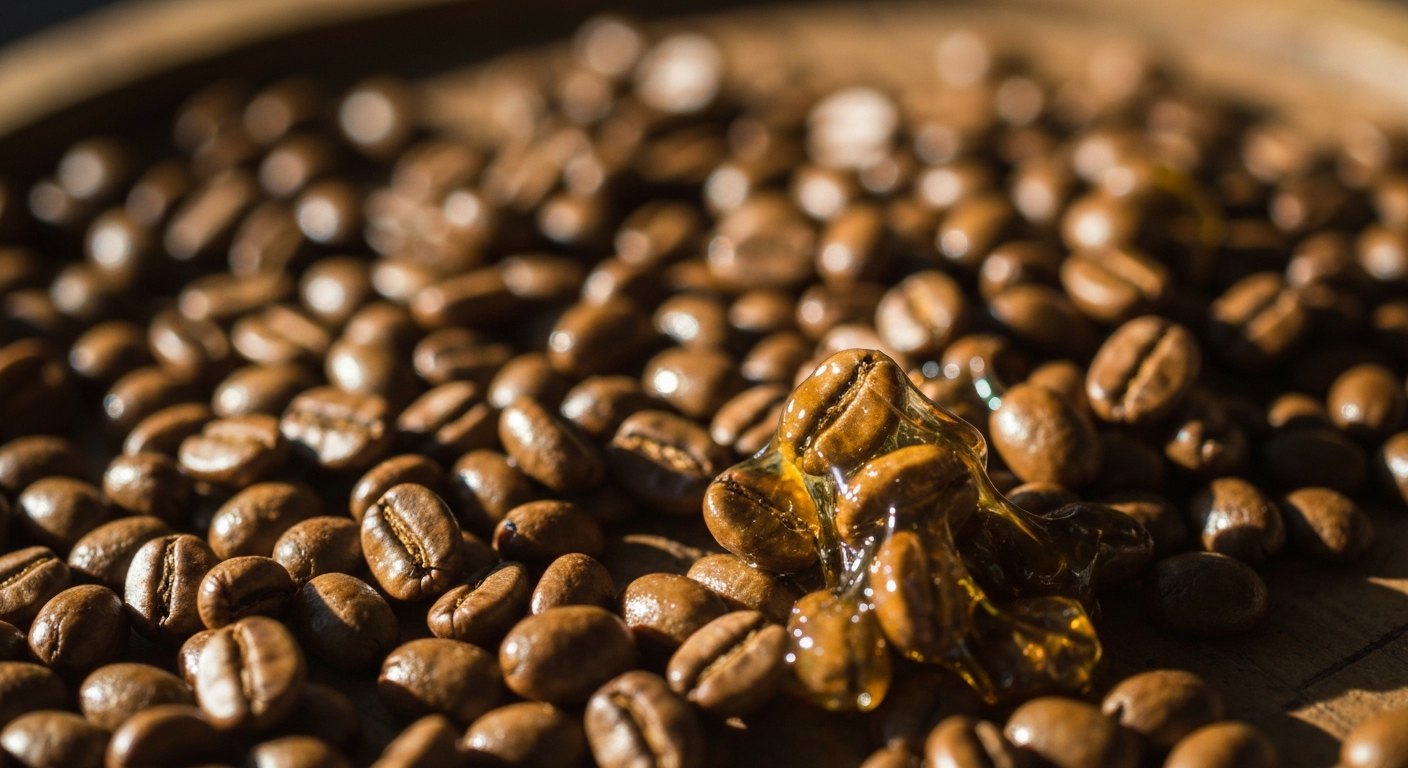
Honey-processed beans with their sticky mucilage layer intact — the “honey” that gives this method its name
The Spectrum of Honey
Unlike washed or natural processing, honey is not a single technique but a spectrum, classified by how much mucilage remains on the bean and how the drying is managed. Each variation produces a measurably different cup.
White honey removes the majority of mucilage (roughly 80 to 90 percent) and dries the coffee quickly in direct sunlight. The result sits closest to a washed profile — clean, bright, and delicate, with just a whisper of added sweetness.
Yellow honey retains more mucilage (around 50 to 75 percent) and typically dries in partial shade over a slightly longer period. The cup gains noticeable body and a gentle honey-like sweetness while preserving good acidity.
Red honey keeps most of the mucilage intact and dries more slowly, often under shade cloth or in overcast conditions. This extended contact builds pronounced sweetness, fuller body, and stone-fruit complexity — apricot, nectarine, plum.
Black honey leaves virtually all mucilage on the bean and dries under cover over an extended period, sometimes three weeks or more. The cup approaches the fruity intensity of a natural, with deep sweetness, heavy body, and flavours that can evoke dried fig, dark chocolate, and red wine. As James Hoffmann notes in The World Atlas of Coffee, black honey requires “enormous attention and labour” because the thick mucilage layer makes the beans highly susceptible to mould and over-fermentation.
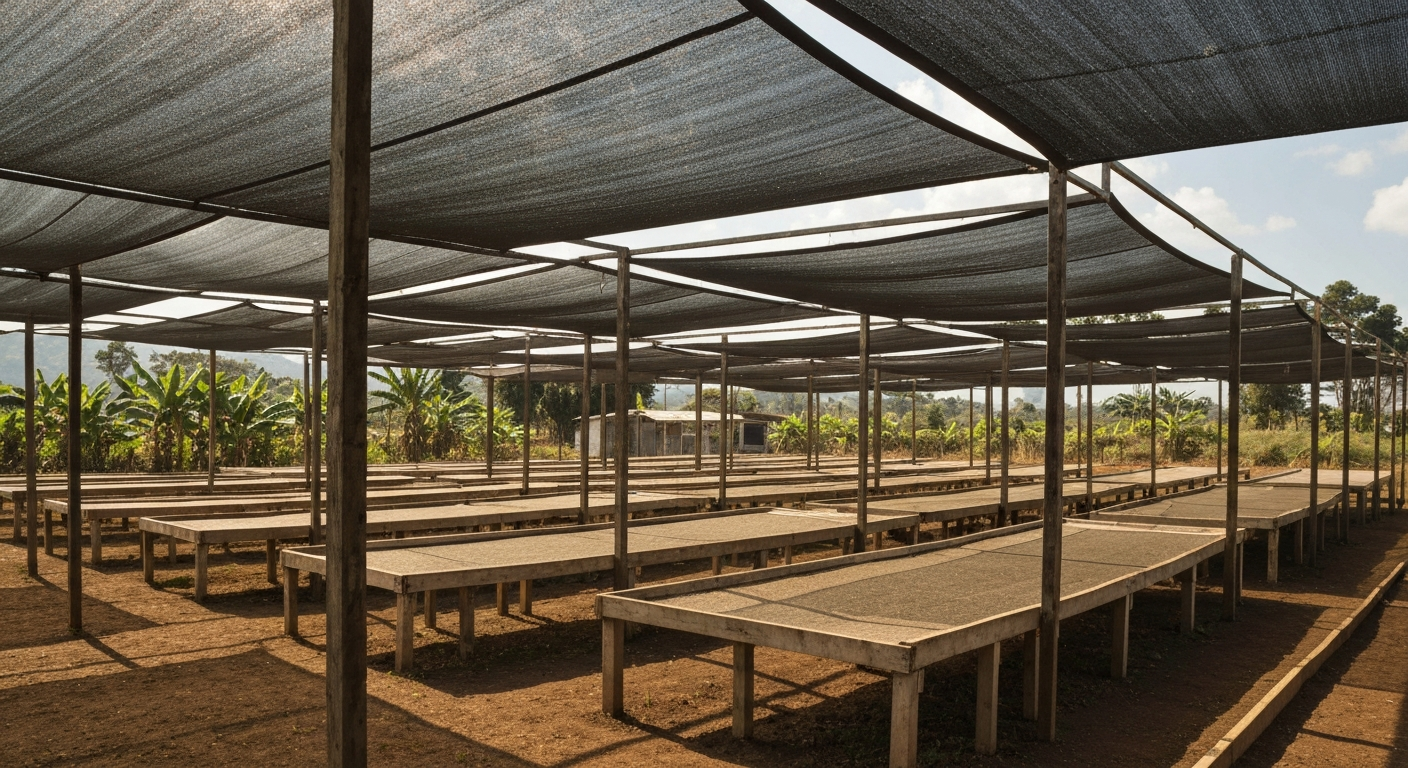
Shade structures and raised beds at a honey-processing farm — controlling sun exposure is key to managing mucilage fermentation
Costa Rica’s coffee sector adopted honey processing as a national strategy after the 2008-2009 global market crisis, proving that a small country could compete on innovation and quality rather than volume. Today, Costa Rican honeys are a specialty staple and a model for producers worldwide.
Flavour Impact
Honey-processed coffees are often described as offering the “best of both worlds,” and the description is earned. The residual mucilage sugars — primarily fructose, glucose, and sucrose — caramelise during the slow drying process, imparting a sweetness that washed coffees rarely achieve. Think brown sugar, raw honey, ripe stone fruit, and butterscotch. Meanwhile, enough of the bean’s intrinsic acidity and aromatic clarity remains to keep the cup lively, structured, and defined.
Body tends to be medium to full, and the finish is often round, smooth, and lingering — a tactile quality that SCA cuppers sometimes describe as “syrupy” or “velvety.” For drinkers who find washed coffees too restrained and naturals too wild, honey process frequently hits the sweet spot. It is no coincidence that honey-processed lots have become favourites for pour over brewing, where their balance of sweetness and clarity rewards careful extraction.
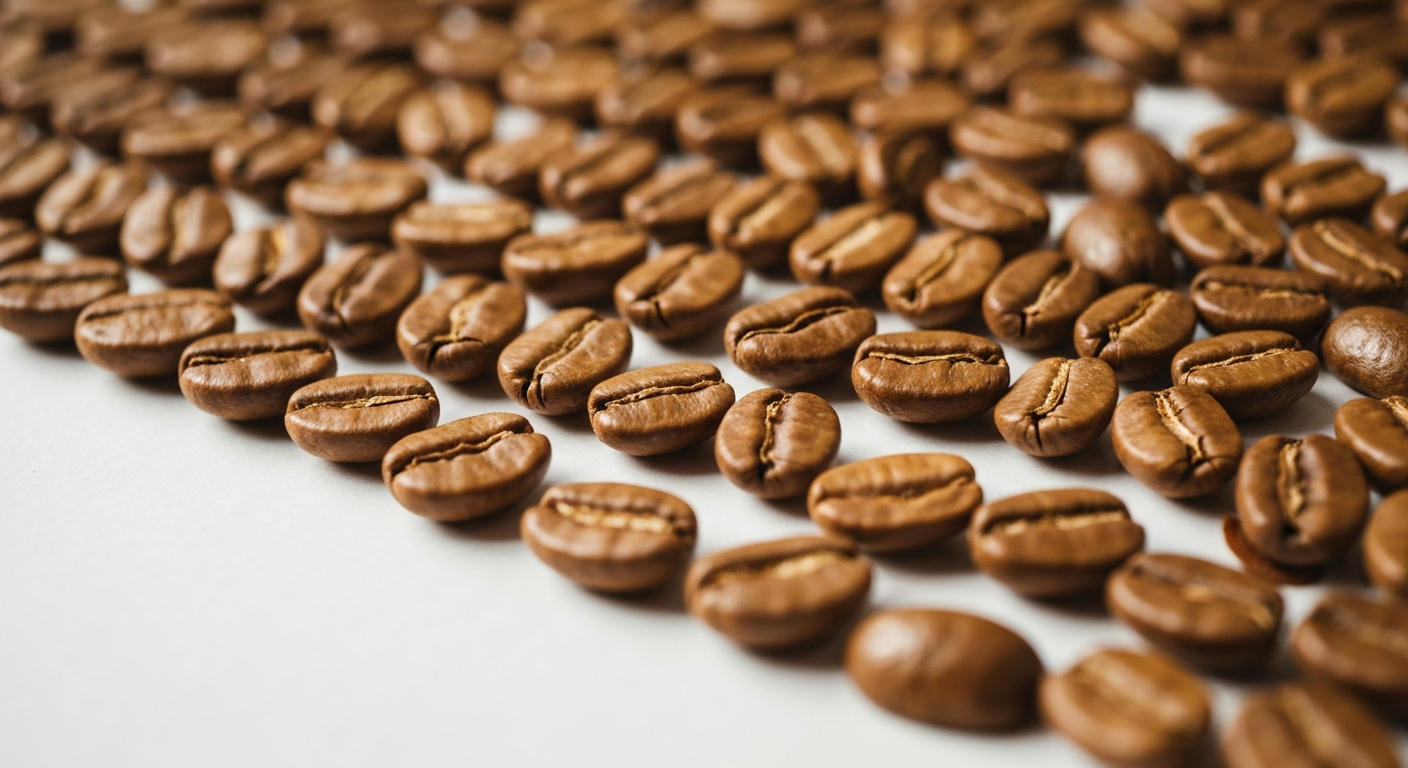
Regular turning prevents clumping and mould — honey-processed beans demand even more attention than washed or natural lots
Costa Rica and Beyond
Costa Rica made honey processing famous in the specialty world, but the method’s influence has spread far beyond its borders. Central American neighbours El Salvador, Honduras, and Guatemala all produce excellent honey lots, with many featuring Bourbon cultivar cherries prized for their inherent sweetness. In El Salvador, honey-processed Pacamara lots — large-beaned, complex, and intensely sweet — have become some of the most coveted competition coffees in the Americas.
Brazil’s “pulped natural” method — where cherries are mechanically depulped but dried with mucilage intact — is essentially honey processing by another name, developed independently and now producing millions of bags annually. Brazilian pulped naturals deliver the chocolatey, nutty, low-acidity profiles that form the backbone of many espresso blends.
Even producers in East Africa — including Kenya and Ethiopia — and across Asia have begun experimenting with mucilage retention, adapting the technique to local climates, varietals, and market demands. According to World Coffee Research, honey processing’s water savings (it uses roughly 80 percent less water than traditional washed methods) make it an increasingly attractive option as climate change puts pressure on water resources in coffee-growing regions.
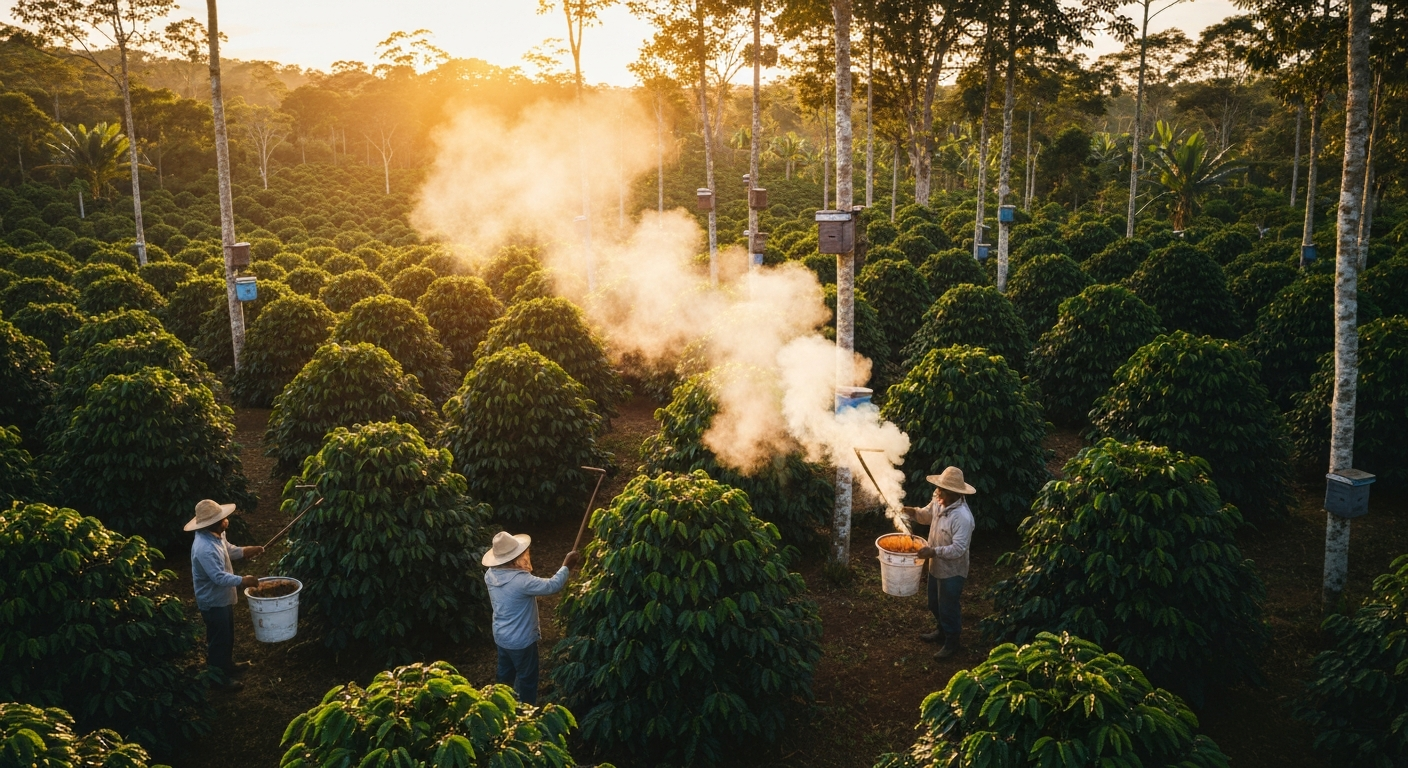
From Costa Rica to Ethiopia, honey processing is spreading to new origins — adapting to local climates and traditions
Further Reading
- The World Atlas of Coffee by James Hoffmann — clear explanation of the honey spectrum and its flavour implications
- Craft Coffee: A Manual by Jessica Easto — accessible guide to how processing affects your daily brew
- World Coffee Research — studies on post-harvest processing and water conservation
- SCA Research — specialty coffee standards and processing quality protocols
Related Topics
Washed (Wet) Processing
Washed coffee processing removes all fruit before drying to reveal clean, bright cups — floral, terroir-transparent, and prized by the specialty world. The benchmark method.
processNatural (Dry) Processing
Natural processing dries whole coffee cherries in the sun before milling — the oldest method, and the one most responsible for fruity, wine-like, and berry-forward cups.
getting-startedWhat is Coffee Processing?
Coffee processing — washed, natural, honey — transforms harvested cherries into green beans and shapes the cup more than almost any other variable, including roast level.