 English
  Українська
  Čeština
 The Stovetop Icon
Few coffee brewers are as instantly recognisable as the Moka pot. Its octagonal aluminium silhouette — an Art Deco geometry that has barely changed in nine decades — sits on kitchen shelves from Naples to Buenos Aires, from Lisbon to Melbourne. The Moka pot occupies a fascinating middle ground in brewing: it uses steam pressure to push water through finely ground coffee, producing a concentrated, intense brew that is far stronger than drip coffee yet technically distinct from true espresso. For millions of households, it is simply how coffee is made — no electricity, no pods, no pretension. Just fire, water, and ground coffee.

The Moka pot — nine decades of design perfection, unchanged because it never needed changing
Alfonso Bialetti and the Birth of a Classic
In 1933, Alfonso Bialetti, an Italian engineer and metalworker from Crusinallo in the Piedmont region, patented a small stovetop device that would democratise strong coffee. Before the Moka pot, concentrated coffee was the domain of café bar machines — large, expensive, and temperamental contraptions that required trained operators. Bialetti’s genius was translating the principle of pressure brewing into something that could sit on any kitchen stove.
The original design — the Moka Express — featured the now-iconic octagonal shape, chosen not for aesthetics alone but because the faceted form was easier to manufacture with the aluminium casting techniques available at the time. Alfonso produced them modestly in his workshop, but it was his son, Renato Bialetti, who turned the Moka Express into an industrial phenomenon after World War II. Renato invested heavily in advertising, including the famous “l’omino con i baffi” (the little man with the moustache), a caricature of himself that still appears on every Bialetti Moka Express sold today. By the 1950s, the Moka pot was as Italian as pasta and Vespas.
As Harold McGee observes in On Food and Cooking, the Moka pot “brought the intensity of the coffee bar into the domestic kitchen, changing the way an entire nation — and eventually much of the world — thought about home-brewed coffee.”
How Steam Pressure Works
The Moka pot is a study in elegant simplicity. It consists of three chambers: a bottom boiler that holds water, a funnel-shaped filter basket that holds the ground coffee, and an upper collection chamber where the finished brew emerges. The principle is straightforward: as the water in the lower chamber heats, it generates steam. The rising pressure — typically around 1 to 2 bar — forces the hot water upward through the coffee bed in the filter basket. The brewed coffee then travels through a central column and collects in the upper chamber, announcing its arrival with a distinctive gurgling hiss that Italians call the “sputtering.”

The moment of truth — pressurised coffee rises through the central column into the upper chamber
This pressure-driven extraction is what separates the Moka pot from gravity-fed methods like pour-over or immersion methods like the French press. The forced contact between water and coffee grounds under pressure extracts more soluble compounds in less time, producing a brew with higher concentration and a more intense flavour profile.
Not Espresso, But Stronger Than Drip
One of the most persistent myths about the Moka pot is that it makes espresso. It does not — at least not by modern standards. A commercial espresso machine operates at 9 bar of pressure, roughly five to nine times what a Moka pot generates. True espresso produces crema — that auburn, emulsified foam — through the high-pressure emulsification of oils and CO₂, something the Moka pot’s lower pressure cannot reliably achieve.
What the Moka pot does produce is a brew with a total dissolved solids concentration roughly two to three times that of standard drip coffee, resulting in a punchy, full-bodied cup with a slight syrupy quality. It carries prominent bittersweet notes, a reduced perception of acidity compared to filter methods, and — when brewed well — a clean, lingering finish. Italian roast profiles, typically medium-dark with chocolate, toasted nut, and caramel characteristics, are the traditional pairing. Varieties like Bourbon and blends featuring Robusta for added body and crema-like foam are common choices.
As James Hoffmann notes in The World Atlas of Coffee, the Moka pot “does not make espresso, but it does make something delicious and uniquely its own — a strong, rich coffee that is more than the sum of its simple parts.”
An Italian Cultural Icon
The Moka pot transcends its function as a brewer. It is a cultural object — a symbol of Italian domesticity, post-war optimism, and democratic luxury. In 1946, there was roughly one Moka pot for every two Italian households. By the 1990s, the Bialetti Moka Express was in an estimated 90 percent of Italian homes. In 2019, the Museum of Modern Art (MoMA) in New York added the Moka Express to its permanent design collection, recognising it as a masterpiece of industrial design.

In Italy, the Moka pot is not a coffee gadget — it is a member of the family
The ritual surrounding the Moka pot is as important as the coffee it produces. The sound of the gurgle, the smell filling a small kitchen, the act of pouring into small cups — these are sensory anchors for millions of people, tied to mornings, family, and home. When Renato Bialetti died in 2016, his ashes were placed inside a large Moka pot — a final tribute to the brewer that defined his family’s legacy and an entire nation’s coffee culture.
Tips for Best Results
The Moka pot is forgiving, but a few adjustments elevate the brew dramatically:
-
Start with hot water. Fill the lower chamber with water that has already been heated in a kettle. This reduces the time the pot spends on the stove, which means the coffee grounds are exposed to less residual heat and the brew tastes cleaner, with less bitterness.
-
Grind finer than drip, coarser than espresso. The ideal grind sits between table salt and fine sand — finer than a French press grind but noticeably coarser than the powdery consistency used for espresso. Too fine and the water cannot push through; too coarse and the brew will be thin and under-extracted.
-
Do not tamp the grounds. This is perhaps the most common mistake. Unlike an espresso portafilter, the Moka pot’s filter basket should be filled loosely and levelled with a finger. Tamping compacts the bed, creating excessive resistance that can cause uneven extraction, channelling, or — in extreme cases — a dangerous pressure build-up.
-
Use low to medium heat. High flames cause the water to boil too aggressively, pushing it through the grounds too fast and scalding the coffee. Gentle, steady heat produces a slow, even extraction. Remove the pot from the heat as soon as the sputtering begins — that gurgle means the water is nearly exhausted and steam is starting to pass through the grounds, which adds harshness.
-
Cool the base immediately. Wrapping the bottom chamber in a cold, wet towel the moment you remove it from heat stops the extraction instantly and prevents the bitter tail end of the brew from reaching your cup.
Why It Matters
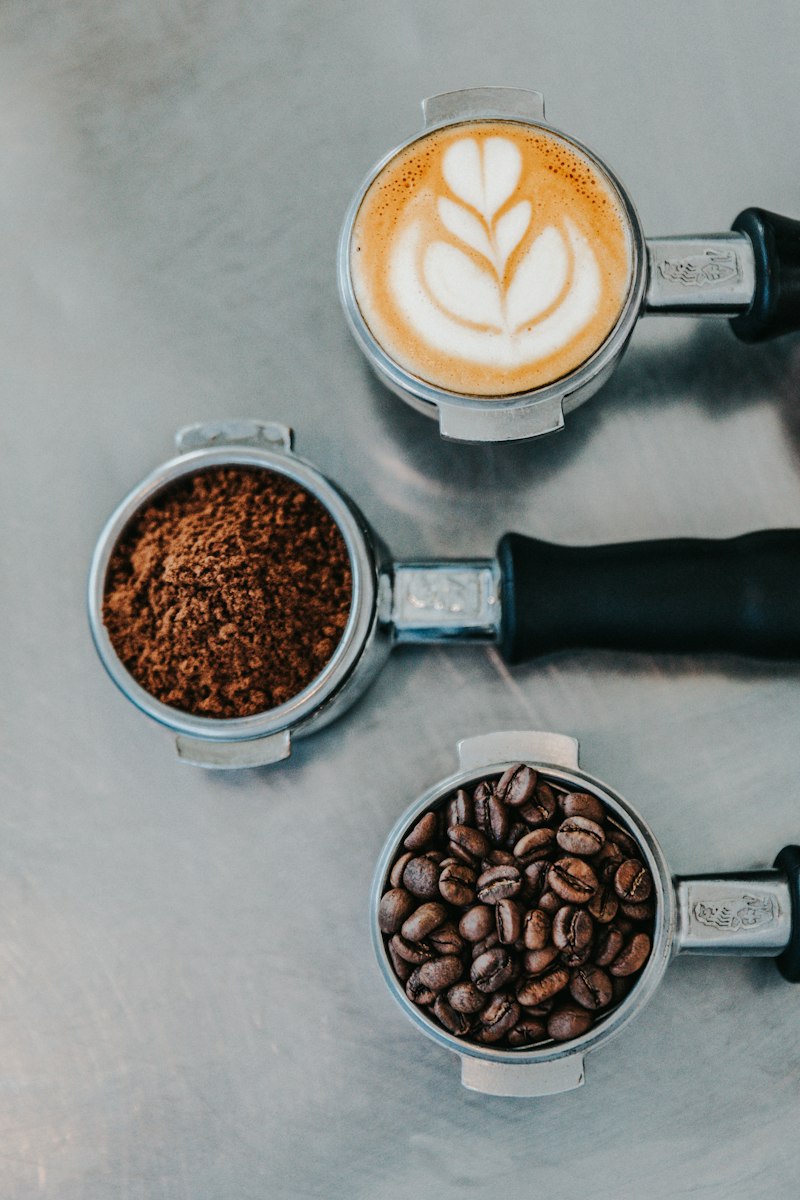
Moka pot coffee served in small cups — concentrated, intense, and meant to be savoured
In an age of single-serve capsules and app-controlled machines, the Moka pot endures because it answers a simple question with uncommon elegance: how do you make strong, satisfying coffee with nothing but heat and water? It requires no electricity, no filters, no proprietary pods. It costs less than a week’s worth of café lattes and, with basic care, lasts a lifetime. The Moka pot reminds us that great coffee does not require complexity — it requires understanding. Alfonso Bialetti understood that in 1933, and ninety years later, his little octagonal brewer has lost none of its relevance.
Further Reading
- The World Atlas of Coffee by James Hoffmann — covers Moka pot technique and its place among home brewing methods
- Uncommon Grounds by Mark Pendergrast — the history of coffee culture, including the Moka pot’s role in post-war Italy
- On Food and Cooking by Harold McGee — the science behind pressure extraction and how it differs from immersion and gravity methods
- SCA Brewing Standards — extraction guidelines applicable across all brewing methods including stovetop
Related Topics
What is Coffee Brewing?
Coffee brewing extracts soluble flavour from roasted grounds using water — and grind size, temperature, time, and ratio all determine whether the cup sings or disappoints.
getting-startedEspresso
Espresso forces near-boiling water through finely ground coffee at 9 bars of pressure — producing concentrated, crema-topped shots in 25 to 30 seconds.
getting-startedFrench Press
French press coffee steeps ground beans in hot water for 4 minutes, producing rich, full-bodied cups with velvety texture and deep, rounded chocolate flavour.
getting-startedArabica (Coffea arabica)
Arabica accounts for 60% of global coffee production and virtually all specialty coffee. Here is what separates it from Robusta — genetics, altitude, and cup character.