 English
  Українська
  Čeština
 Pick up a bag of specialty coffee from a good roaster and you are holding a document. Every line of text — the farm name, the washing station altitude, the cryptic note about “nectarine and caramelised cashew” — is a signal, placed there by someone who believes the information changes how you experience what is inside. The question is whether you know how to read it.
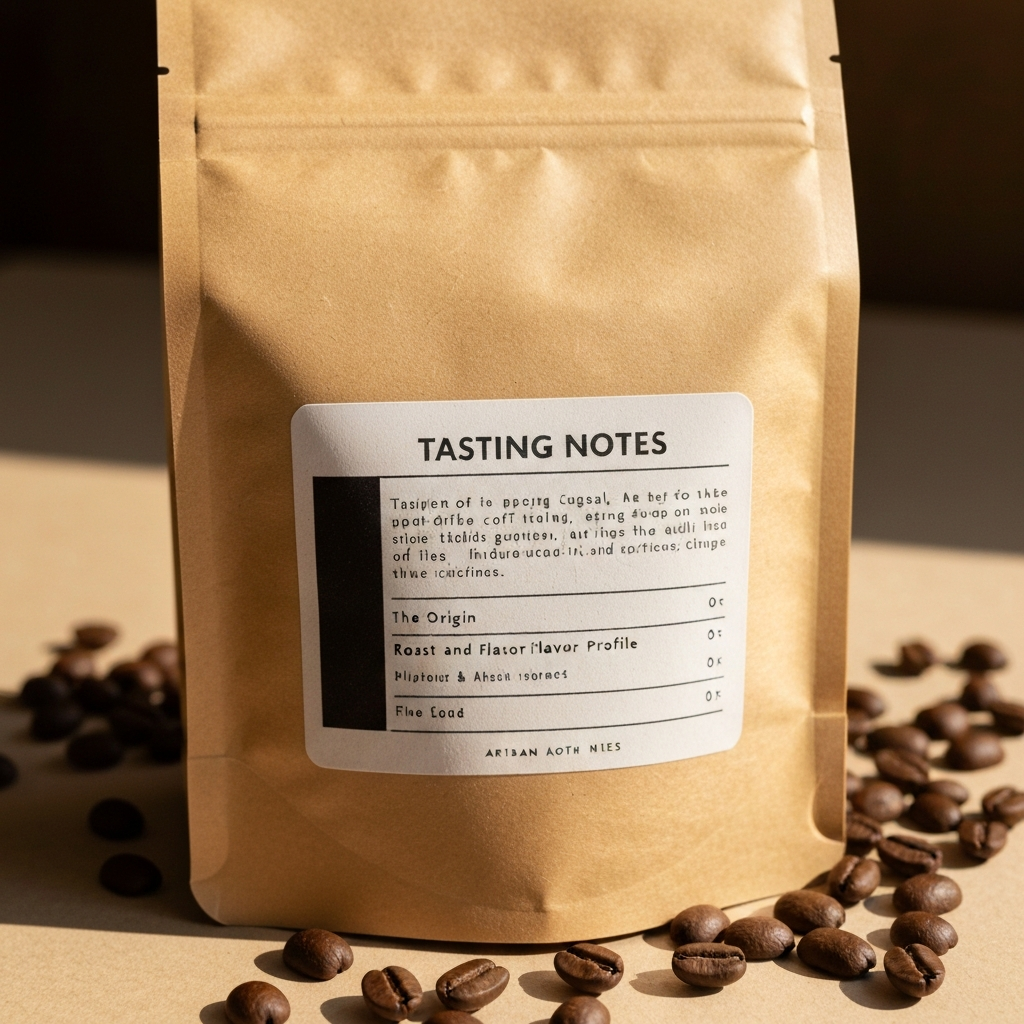
A specialty coffee bag is a compressed biography of the coffee inside — origin, process, variety, and roast date all tell part of the story
The Roast Date
Start here, always. The roast date is the single most actionable piece of information on any specialty coffee bag, and the fact that most commercial coffee omits it entirely tells you something important about how the industry treats freshness.
Coffee degrades from the moment it leaves the roaster. Carbon dioxide, produced during roasting, escapes over the first few days — this is why freshly roasted coffee “blooms” so dramatically when hot water hits it, and why very fresh coffee can actually taste flat or harsh until the CO₂ dissipates. The optimal window for most brewing methods is between 5 and 30 days post-roast. For espresso, some roasters recommend 10–21 days. Beyond 4–6 weeks, most coffees have lost the aromatic volatiles that made their tasting notes worth printing. If a bag carries no roast date, assume it has been sitting in a warehouse.
Origin and Traceability
Origin information on specialty bags runs from broad to granular. “Ethiopia” is a country. “Ethiopia, Yirgacheffe” is a region. “Ethiopia, Yirgacheffe, Gedeo Zone, Aricha washing station” is a specific processing facility. “Ethiopia, Yirgacheffe, Konga Kebele, Zenebe Girma, Plot 4” is a single farmer’s field.
The more granular the information, the more the roaster paid for traceability — and the more meaningful it becomes when you find a flavour you love and want to find it again. Country alone tells you very little, because terroir operates at the level of microclimate and microbiome. Altitude, specifically, matters enormously: coffee grown above 1800 metres develops more slowly, concentrating sugars and acids, typically producing more complex and vibrant cups than lower-grown lots.
Processing Method
After origin, the processing method is perhaps the most reliable predictor of how a coffee will taste. Washed coffees — where the fruit is removed before drying — tend to be clean, bright, and transparent, letting the terroir speak. Natural-process coffees, dried whole as cherries, absorb sugars from the fruit during drying, producing heavier body, lower perceived acidity, and flavours ranging from ripe berries to dark chocolate. Honey process sits in between, with varying degrees of fruit mucilage left on the bean.
If you see “washed” or “fully washed,” expect clarity. If you see “natural” or “dry process,” expect richness. “Honey” — named yellow, red, or black depending on how much mucilage remains — expect something in between. Newer methods like anaerobic fermentation are increasingly common on specialty bags; these signal intentional microbial intervention and often produce intense, wine-like or tropical fruit characteristics that either fascinate or polarise.
Variety
Coffee variety works like grape variety in wine — it tells you something about the genetic potential of the cup. Bourbon and Typica are classic, often associated with sweetness and balance. Gesha (or Geisha) has become synonymous with extraordinary floral and tea-like complexity, though at extraordinary prices. SL28 and SL34 are Kenyan varieties prized for juicy, blackcurrant-forward acidity. Catuai and Caturra are compact, productive cultivars common in Latin America.
Variety alone does not guarantee quality — a Gesha grown at low altitude without care will not taste like the legendary Panama Geishas — but it shapes the ceiling of what a coffee can achieve. When you see an unfamiliar variety on a bag, it is often worth looking up; producers are increasingly experimenting with rare Ethiopian landrace varieties and hybrid cultivars that offer genuinely novel cup profiles.
Tasting Notes
Treat tasting notes as invitations rather than guarantees. A roaster writing “red plum, dark chocolate, brown sugar” is not claiming the coffee tastes artificially of these things — they are describing the closest natural analogues they found during calibration cuppings. Whether you taste the same notes depends on your palate, your water, your brewing method, and your equipment.
Notes do predict flavour direction usefully, however. Citrus and stone fruit suggest bright, high-acid coffees. Chocolate and caramel suggest fuller body and lower acidity. Florals and tea-like descriptors often signal light-roasted, delicate coffees. Berry notes — especially in naturals — indicate sweetness and fruit-forward profiles. If you consistently enjoy one flavour direction, use notes as a filter.
Elevation
Altitude is measured in metres above sea level (masl) and appears on most specialty bags. Above 1500 masl is generally considered high-grown; above 2000 is exceptional. High altitude means cooler temperatures, which slow cherry development, increase density, and concentrate sugars and acids. Dense, high-grown beans also tend to be more soluble — they extract more readily and evenly — which is why they respond so well to precision brewing.
Putting It Together
A bag reading “Ethiopia / Yirgacheffe / Gedeo / Natural / Gesha / 2050 masl / Roasted 18 March” is telling you a coherent story: a rare, high-altitude variety, dried whole, from one of the world’s most celebrated origins, roasted recently enough to drink at its best. That is not marketing. That is a map.
Where to Go Next
- Your First Cup: A Tasting Guide — learn to taste what the bag promised
- Coffee Processing Methods — understand washed, natural, and honey in depth
- Altitude and Terroir — how altitude, soil, and climate shape everything on that label
Related Topics
What Is Specialty Coffee?
The 80-point SCA scale separates extraordinary coffee from commodity. Here is what that number actually means, how it is scored, and why it matters in the cup.
getting-startedYour First Cup: Learning to Taste Coffee
Acidity, sweetness, body, finish — the sensory vocabulary of coffee is not intimidating once you know what you are actually looking for. Here is how to start tasting.
getting-startedWhat is Coffee Processing?
Coffee processing — washed, natural, honey — transforms harvested cherries into green beans and shapes the cup more than almost any other variable, including roast level.
scienceCoffee Altitude & Terroir: How Elevation Shapes Flavor
Altitude is the single most reliable predictor of coffee quality. Learn how elevation shapes bean density, acidity, sugar development, and why terroir matters in the cup.