 English
  Українська
  Čeština
 The Workhorse of Brazilian Coffee
If Bourbon is the poet of Arabica and Typica the aristocrat, then Catuai is the dependable artisan — a variety bred for productivity without abandoning sweetness. Developed at Brazil’s Instituto Agronômico de Campinas (IAC), Catuai emerged from a deliberate cross between two already successful cultivars: the vigorous Mundo Novo and the compact Caturra. The result was a short, sturdy, high-yielding plant that could withstand wind, rain, and the relentless pace of commercial production — all while delivering a clean, balanced cup with enough character to earn a place on specialty tables. Today, Catuai is the most widely planted variety in Brazil and a fixture across Latin America, quietly filling bags and winning over roasters who prize consistency and sweetness in equal measure.
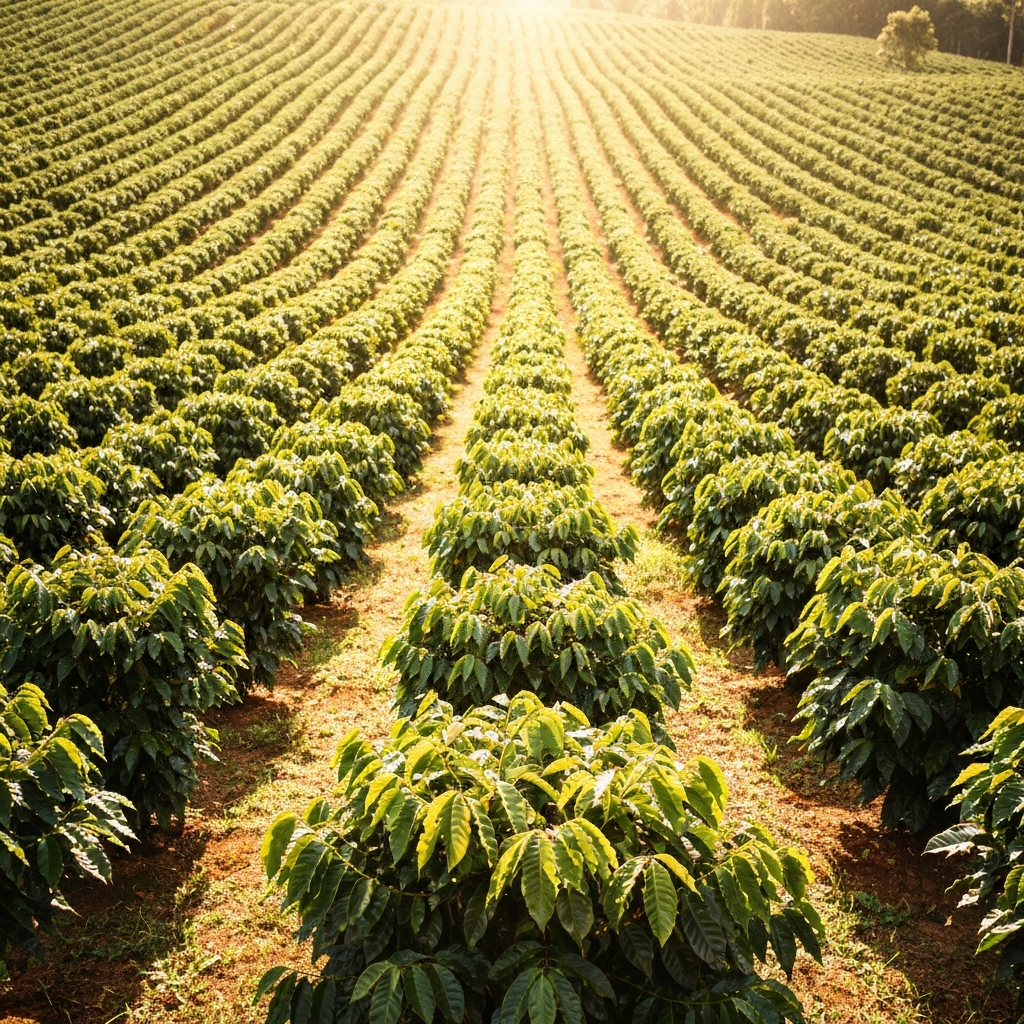
Catuai’s compact, densely branched habit allows tight planting rows — a key advantage on the mechanised farms of Brazil’s Cerrado and Sul de Minas regions
Born in Brazil
Catuai’s story begins in 1949 at the IAC in Campinas, São Paulo, when plant breeder Alcides Carvalho crossed Mundo Novo — itself a natural hybrid of Bourbon and Typica — with Caturra, a compact natural mutation of Bourbon discovered in the Brazilian state of Minas Gerais. The goal was clear: combine Mundo Novo’s exceptional vigour and high yields with Caturra’s short stature and tight internodes, creating a plant that was easier to harvest, simpler to manage, and capable of dense planting. After decades of selection and field trials, the first Catuai lines were officially released in the late 1960s and early 1970s. As Andrea Illy and Rinantonio Viani document in Espresso Coffee: The Science of Quality, this cross was one of the most consequential breeding achievements in modern coffee — it gave farmers a plant that was both productive and manageable without sacrificing the Arabica flavour profile that buyers demanded.
Catuai was designed to solve a practical problem: how to get more coffee from less space. That it also tastes good is the reason it endured.
Red vs Yellow Catuai
Like its Bourbon and Caturra parents, Catuai comes in two principal colour variants defined by cherry colour at full ripeness. Red Catuai — the more widely planted of the two — produces cherries that ripen to a deep crimson and tends to deliver a rounder, more chocolatey cup with notes of brown sugar and soft fruit. Yellow Catuai, whose cherries mature to a bright golden-orange, often shows a lighter, crisper profile with citrus, honey, and mild floral tones. Brazilian specialty producers have long debated which is superior, and cupping competitions have rewarded both. In practice, the distinction matters less than terroir, altitude, and processing method — but Yellow Catuai has developed a loyal following among roasters seeking brightness in a typically mellow Brazilian cup.
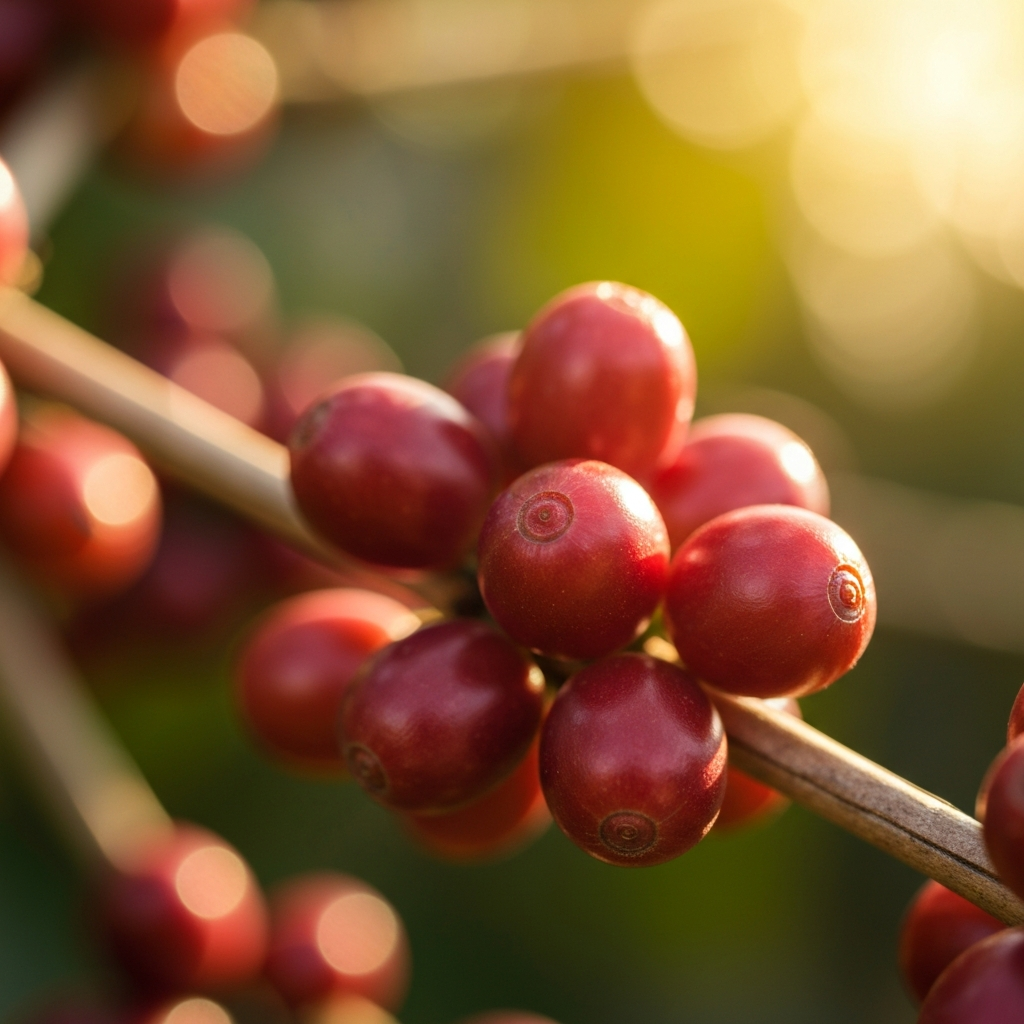
Red Catuai cherries at peak ripeness — the red variant accounts for the majority of Catuai plantings across Brazil and Central America
High Yield and a Compact Plant
Catuai’s agronomic strengths made it a revelation for Brazilian farmers. The plants are short — typically 2 to 2.5 metres — with closely spaced lateral branches and dense foliage that protects developing cherries from direct sun. This compact architecture allows planting densities of 5,000 to 10,000 trees per hectare, compared to 2,500 to 4,000 for taller varieties like Mundo Novo. The result is a dramatic increase in yield per hectare without a proportional increase in labour or land costs. Catuai is also well adapted to mechanical harvesting, which dominates in Brazil’s flat cerrado landscapes — the short, uniform canopy allows strip-picking machines to operate efficiently. These traits combined to make Catuai the engine of Brazil’s rise to become the world’s largest coffee producer, a position it has held since the 1800s and defended with varieties like Catuai since the 1970s.
Standing Up to the Wind
One of Catuai’s less celebrated but critical advantages is its wind resistance. Unlike taller, more top-heavy varieties, Catuai’s low centre of gravity and strong lateral branching make it remarkably resilient in exposed conditions. In the highlands of Costa Rica, where farms at 1,400 to 1,800 metres face persistent Alisio trade winds, Catuai has proven its durability where other varieties suffer branch breakage and cherry drop. This wind tolerance extends to storm resistance — Catuai plantings in Honduras and Guatemala survived hurricane damage that devastated taller cultivars. For farmers in vulnerable microclimates, this structural robustness translates directly to harvest security and reduced replanting costs.
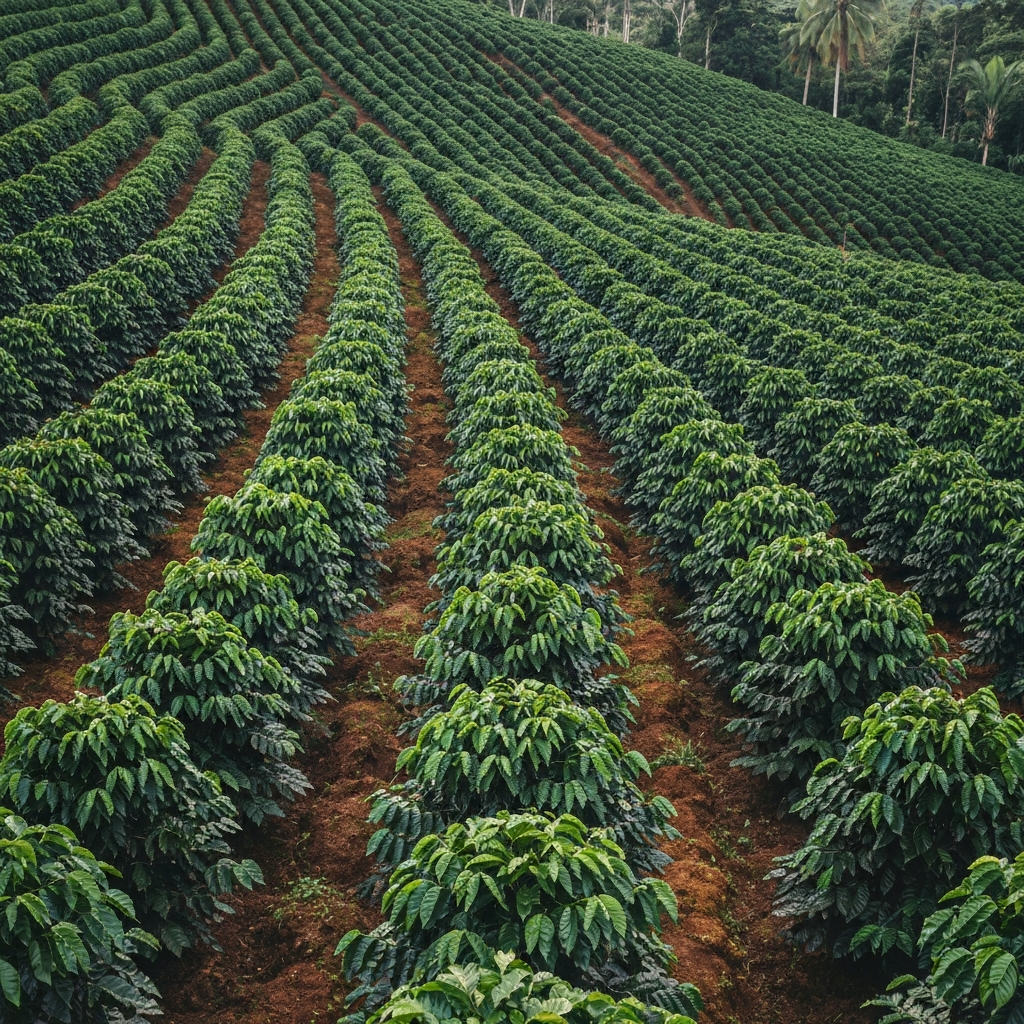
Catuai’s sturdy, low-growing habit gives it structural advantages in windy and exposed growing conditions
Flavour Profile
Catuai is not the variety that will dazzle you with exotic florals or wild fruit fermentation. Instead, it offers something arguably more valuable: reliability. A well-grown, carefully processed Catuai delivers a clean, sweet cup with moderate acidity, a round body, and flavour notes centred on nuts — cashew, almond, hazelnut — complemented by milk chocolate, caramel, and brown sugar. At higher altitudes and with washed processing, Catuai can develop pleasant citric acidity and stone fruit notes. As James Hoffmann notes in The World Atlas of Coffee, Brazilian Catuai forms the backbone of many espresso blends precisely because its balanced sweetness and low bitterness provide a forgiving, crowd-pleasing base. In specialty single-origin contexts, natural-processed Yellow Catuai from regions like Cerrado Mineiro or Mogiana can surprise with dried mango, raisin, and honey sweetness that challenges assumptions about the variety’s ceiling.
Spread Through Latin America
From its Brazilian origins, Catuai spread rapidly across the coffee belt of Latin America from the 1970s onward. Costa Rica adopted it widely, and Catuai now accounts for a significant share of the country’s specialty production in the West Valley, Tarrazú, and Central Valley regions. Honduras, Guatemala, and Colombia followed, drawn by the variety’s adaptability to different altitudes and soils. In Central America, Catuai has often replaced older, taller varieties as farmers intensify production on smaller plots. It also appeared in parts of East Africa and Asia, though less prominently. Its success outside Brazil confirmed what IAC breeders had hoped — Catuai was not merely a Brazilian solution but a broadly adaptable cultivar. However, like its Bourbon and Caturra parents, Catuai remains susceptible to coffee leaf rust (Hemileia vastatrix), which has driven the development of rust-resistant descendants such as Catimor and Sarchimor, even as many specialty producers continue to choose Catuai for its cup quality.

Catuai’s sweet, balanced profile — with notes of nuts, chocolate, and caramel — makes it a natural fit for both espresso blends and clean single-origin offerings
Why It Matters
Catuai may lack the romantic origin story of Bourbon or the exotic allure of a Geisha, but it has arguably shaped modern coffee production more than either. It proved that breeding could deliver both quantity and quality — that a variety designed in a research station could satisfy farmers’ need for yield and roasters’ demand for sweetness in the same plant. In an era when climate change and disease pressure are forcing difficult choices about what to plant, Catuai remains a rational, proven option. Its genetic flexibility has also made it a parent for newer generations of hybrids being developed by organisations like World Coffee Research. Every time you drink a Brazilian specialty coffee, there is a good chance Catuai is in the cup — quiet, sweet, and doing exactly what it was bred to do.
Further Reading
- The World Atlas of Coffee by James Hoffmann — coverage of Brazilian varieties including Catuai’s role in the country’s specialty sector
- Espresso Coffee: The Science of Quality by Andrea Illy and Rinantonio Viani — the agronomic science behind Catuai and other IAC-developed cultivars
- World Coffee Research Variety Catalog — agronomic data and sensory profiles for Red and Yellow Catuai
- Uncommon Grounds by Mark Pendergrast — the history of coffee breeding in Brazil and its global impact
Related Topics
Caturra
A natural dwarf mutation of Bourbon discovered in Brazil, Caturra combines high yields with bright acidity and has become the backbone of Latin American coffee production.
varietyBourbon
Bourbon is Arabica's second foundational cultivar — named after Réunion island, prized for rich sweetness, chocolate notes, full body, and complex fruit.
varietyWhat are Coffee Varieties?
Coffee varieties — Typica, Bourbon, Gesha, SL28 — are the genetic blueprints behind every cup. A guide to what they are, how they differ, and why variety matters for flavour.
originBrazil
The world's largest coffee producer by far, Brazil supplies one-third of global output — low-acid naturals and pulped naturals with nutty, chocolate, and caramel profiles.