 English
  Українська
  Čeština
 The Hourglass on Your Counter
Few coffee brewers are instantly recognisable from across a room. The Chemex is one of them — an hourglass of borosilicate glass cinched at the waist with a polished wood collar and a neat leather tie. It looks like it belongs in a design museum, which is fitting, because it does. But the Chemex is far more than a pretty silhouette. Its thick bonded filters produce one of the cleanest, most transparent cups in all of coffee, a style of brewing that strips away oils and sediment to let a bean’s origin character speak with crystalline clarity. If pour-over is the discipline of precision, the Chemex is its most elegant instrument.
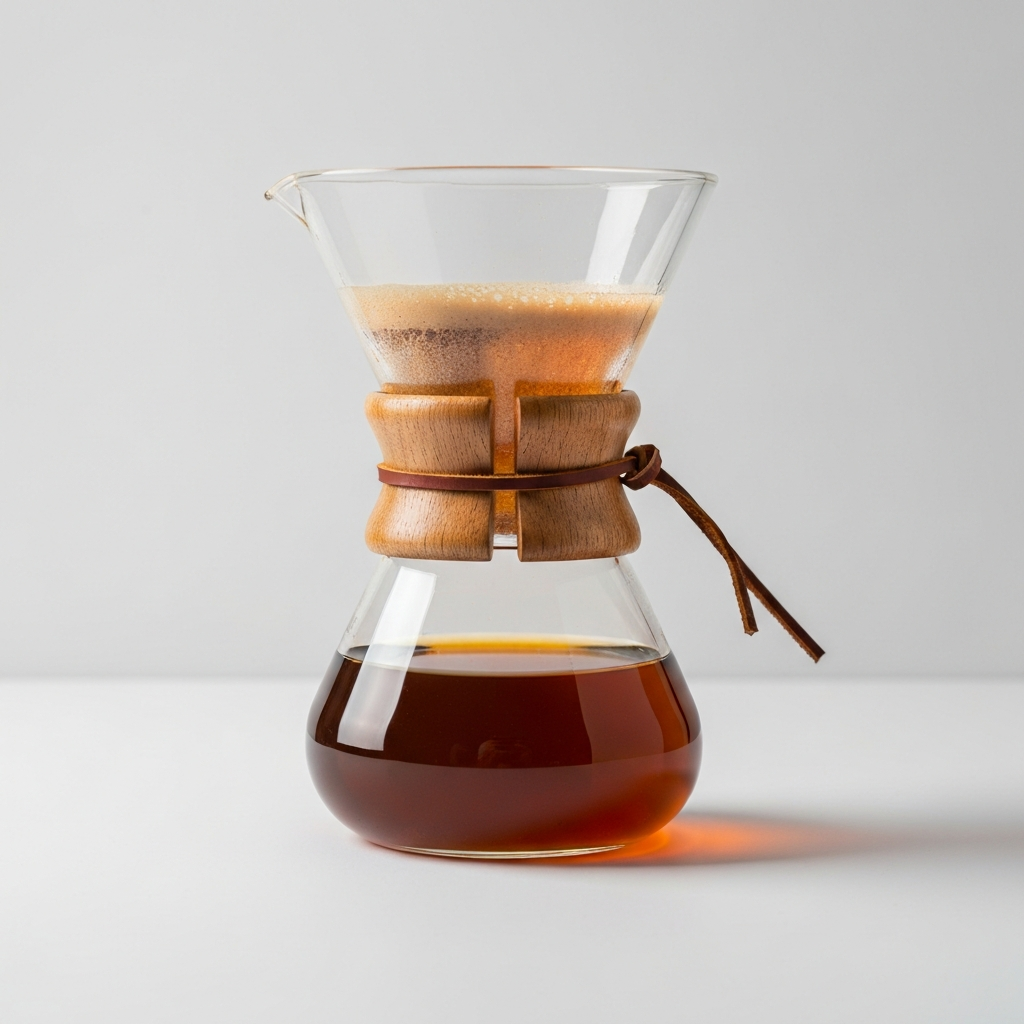
The Chemex — an hourglass of borosilicate glass, a wood collar, and a leather tie. Eighty-five years old and not a single design element out of place
Peter Schlumbohm and the Year 1941
The Chemex was invented by Peter Schlumbohm, a German-born chemist living in New York, who held over 300 patents across everything from cocktail shakers to automobile engines. Schlumbohm was obsessed with making everyday objects more functional and more beautiful — a philosophy he called “civilised living.” In 1941 he combined a laboratory glass funnel and an Erlenmeyer flask into a single vessel, added a wooden handle so you could pour without burning your hand, and created a brewer that needed nothing else: no moving parts, no electricity, no plastic, no gaskets. The entire device is the carafe. As Schlumbohm himself reportedly said, “With this, you will make coffee that is a coffee.” Within a decade, the Chemex had become a fixture in the homes of architects, artists, and intellectuals — a brewer that signalled taste in both senses of the word.
A Place in the Permanent Collection
In 1944, just three years after its invention, the Chemex was selected for the permanent design collection at the Museum of Modern Art in New York. It later appeared in the collections of the Corning Museum of Glass, the Smithsonian, and the Philadelphia Museum of Art. The Illinois Institute of Technology named it one of the 100 best-designed products of modern times. For a coffee brewer, this is rarefied company — and it speaks to the Chemex’s rare achievement of being both a functional tool and a genuine object of art. The design has barely changed since 1941. The glass is a little more refined, the filters are produced with modern machinery, but the essential form remains exactly what Schlumbohm drew on his first sketches.
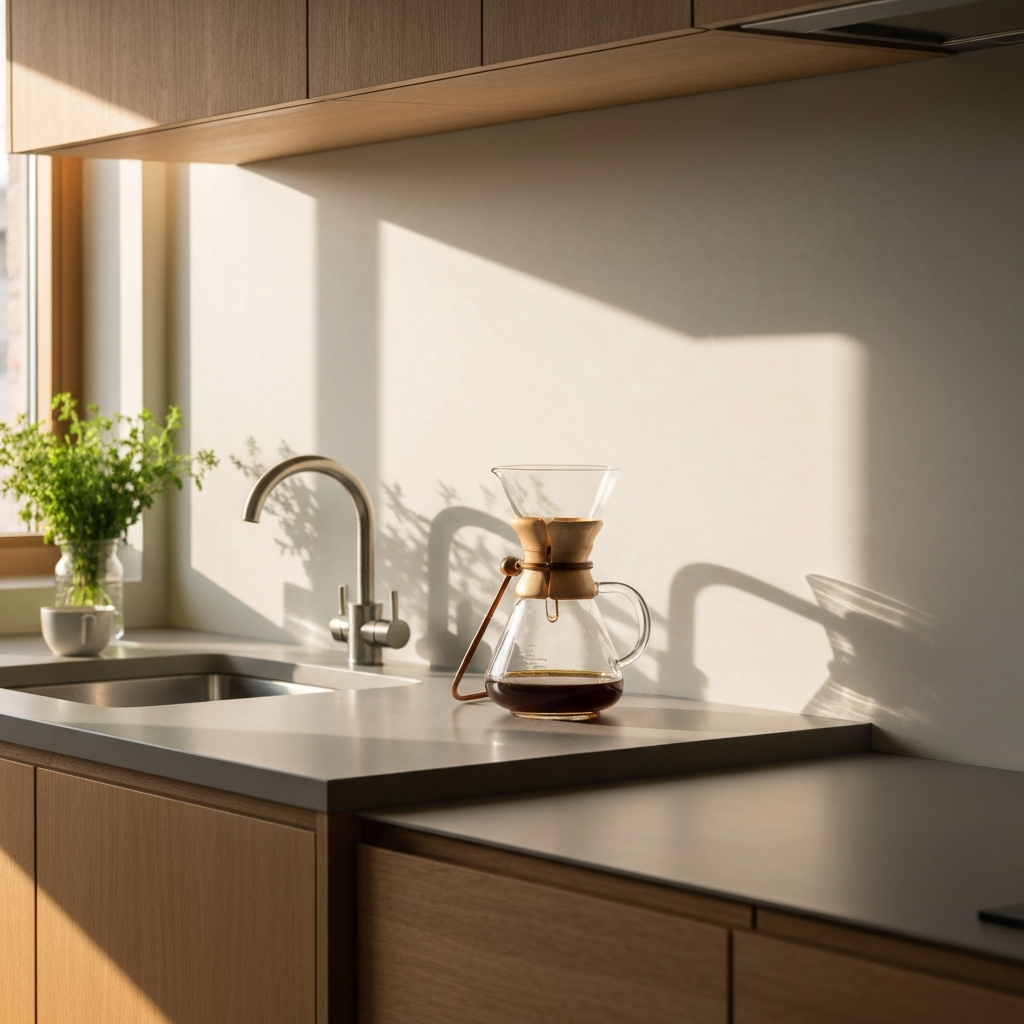
Eighty-five years of unchanged design — the Chemex sits comfortably in any era, from mid-century modern to contemporary minimalism
The Thick Bonded Filters
The secret to the Chemex cup is not the glass — it is the filter. Chemex filters are 20 to 30 percent thicker than standard pour-over papers, made from bonded fibres that trap more of the coffee’s oils and nearly all of its fine particulate matter. This produces a cup that is noticeably lighter in body than what you would get from a French press or even a thinner-filtered V60. The trade-off is intentional: what you lose in richness, you gain in clarity. Delicate floral and fruit notes that might be masked by oils in a heavier brew ring out with startling precision through a Chemex filter. The result is often described as tea-like — a descriptor that frustrates some coffee purists but delights those who prize transparency above all.
A practical note: because the filter is so thick, the drawdown is slower. Most Chemex recipes call for a slightly coarser grind than a V60 — closer to sea salt than table salt — and a total brew time of around four to five minutes for a full six-cup pot. The bloom phase remains essential: 30 to 45 seconds of degassing with about twice the coffee weight in water before the main pour begins. James Hoffmann recommends a ratio of 1:15 to 1:17, adjusting grind size to hit the target time rather than changing the dose.
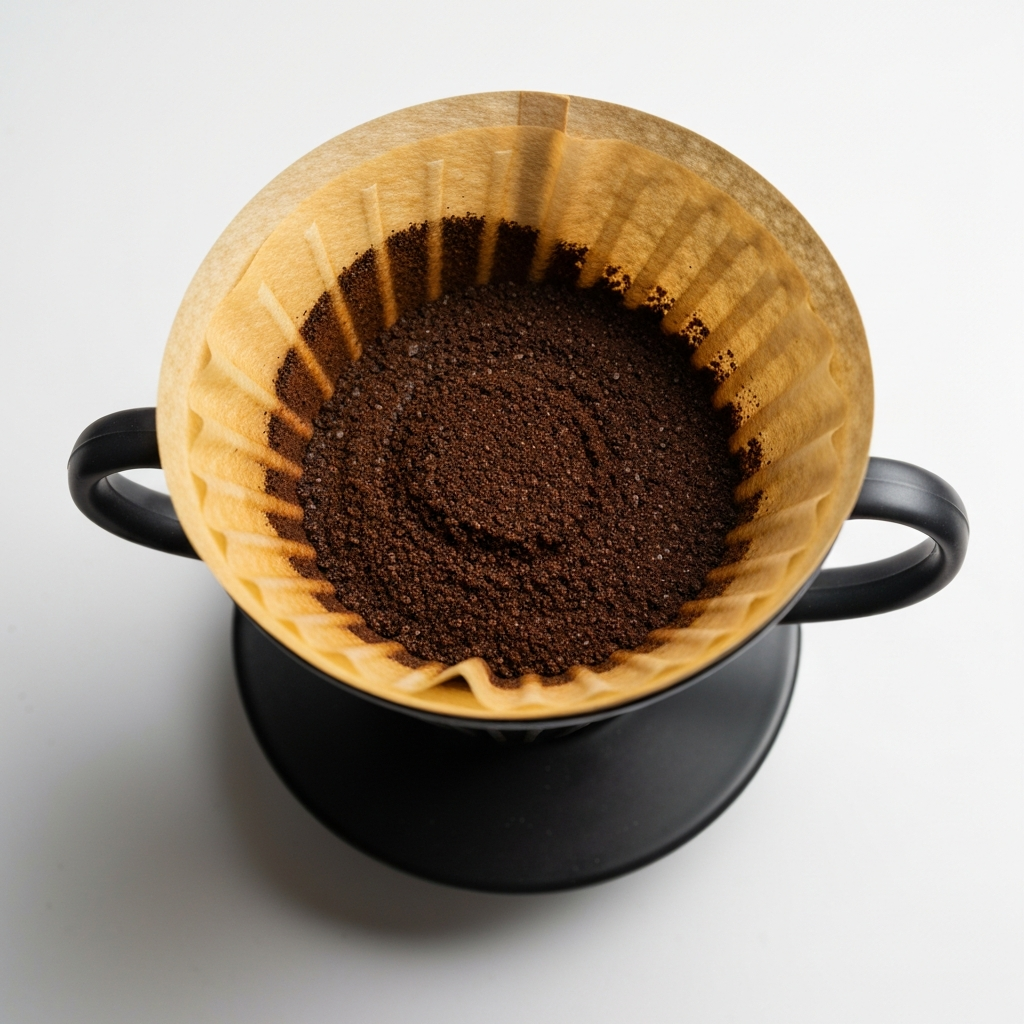
The thick bonded filter is the Chemex’s defining feature — it removes oils and fines that other papers let through, producing a cup of uncommon clarity
Chemex vs V60
The comparison is inevitable, and it reveals two distinct philosophies of brewing. The Hario V60 is a brewer for control: its thin paper, spiral ribs, and single large drain hole let the barista manipulate flow rate, agitation, and contact time with surgical precision. The Chemex is a brewer for consistency and clarity: its thick filter does much of the work for you, smoothing out minor technique errors and delivering a reliably clean cup. A skilled barista can coax extraordinary complexity from a V60, but a Chemex in the hands of a beginner will still produce something beautiful. As Scott Rao notes in Everything but Espresso, the Chemex’s forgiving nature makes it an excellent entry point for anyone exploring manual brewing.
The Chemex tends to flatten a coffee’s body while amplifying its high notes — acidity, florals, citrus. The V60 preserves more texture and sweetness. Neither is objectively better; they are different lenses on the same bean.
Best for Light Roasts
The Chemex’s filtering power makes it a natural partner for light-roasted, washed-process coffees — beans where the farmer and roaster have worked to preserve delicate origin flavours rather than develop roast character. A washed Ethiopian Yirgacheffe through a Chemex can deliver jasmine, lemon zest, and stone fruit with a precision that heavier methods simply cannot match. Similarly, a high-altitude Kenyan AA will show its blackcurrant and tomato-like acidity with vivid clarity. If your goal is to taste where a coffee came from — the soil, the altitude, the variety — the Chemex strips away everything that might stand between you and that information.
That said, darker roasts and natural-process coffees can feel a little thin through a Chemex. Their chocolatey, full-bodied character benefits from the oils and sediment that thinner filters or immersion methods preserve. Know your bean, and choose your brewer accordingly.
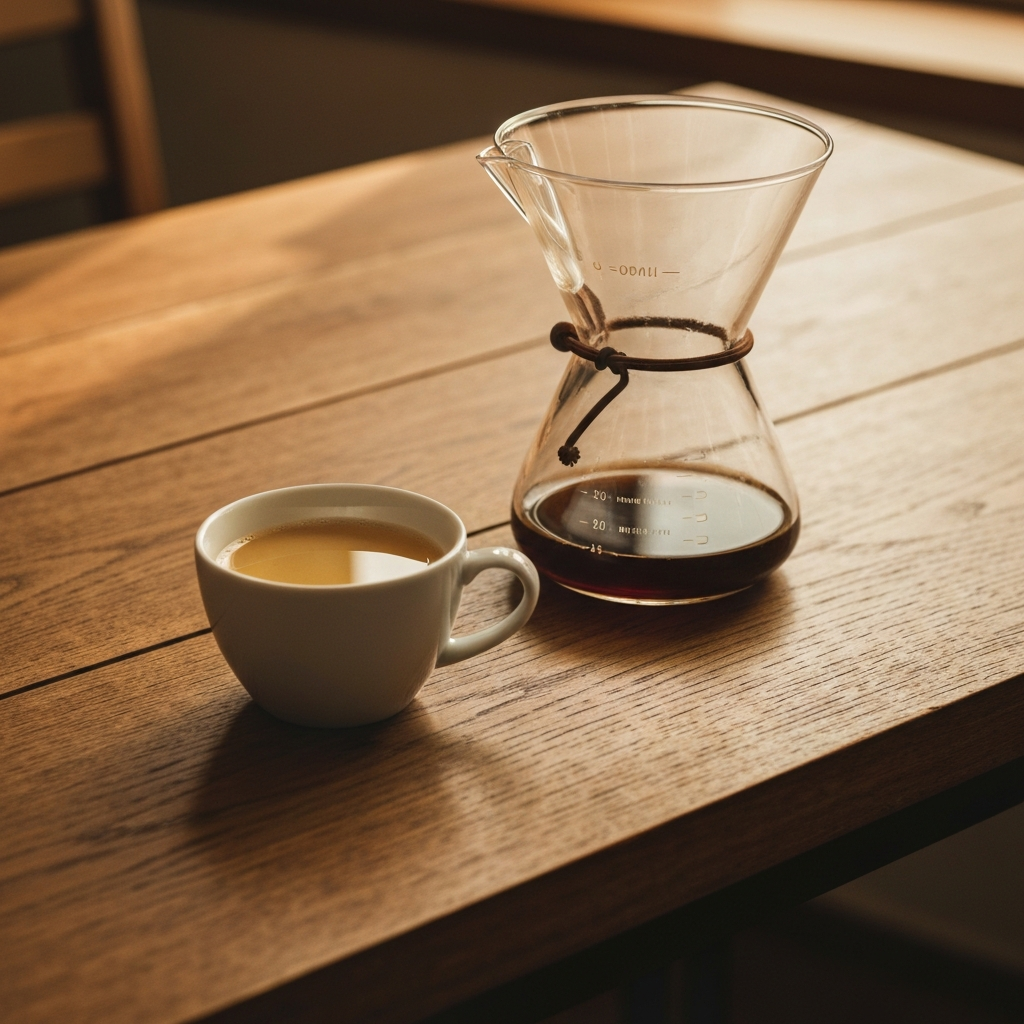
Light roasts and washed-process beans are where the Chemex truly shines — the cup is bright, clean, and startlingly transparent
Why It Matters
The Chemex matters because it proves that simplicity and beauty are not at odds with function — they are, in the best designs, inseparable from it. Peter Schlumbohm’s 1941 invention has outlasted every electric drip machine, every pod system, and every gadget-laden brewer that followed it. It sits in museums and on kitchen counters with equal ease. It requires no batteries, no firmware updates, and no replacement parts beyond a box of filters. And it makes, in the right hands and with the right beans, a cup of coffee that is almost impossibly clean — a cup that reveals rather than conceals, that illuminates rather than obscures. In an age of complexity, the Chemex remains a quiet argument for doing less, better.
Further Reading
- Craft Coffee: A Manual by Jessica Easto — includes detailed Chemex recipes, grind guidance, and comparisons with other pour-over brewers
- The World Atlas of Coffee by James Hoffmann — covers the Chemex in the context of brewing science and extraction theory
- Everything but Espresso by Scott Rao — the definitive guide to filter brewing, with extensive discussion of grind, water, and contact time
- Chemex Official Brewing Guide — the manufacturer’s recommended method and filter selection
Related Topics
What is Coffee Brewing?
Coffee brewing extracts soluble flavour from roasted grounds using water — and grind size, temperature, time, and ratio all determine whether the cup sings or disappoints.
brewingPour Over
Pour-over is a manual coffee brewing method using paper filters and controlled water flow, producing clean, nuanced cups that reveal single-origin character.
getting-startedFrench Press
French press coffee steeps ground beans in hot water for 4 minutes, producing rich, full-bodied cups with velvety texture and deep, rounded chocolate flavour.
processWashed (Wet) Processing
Washed coffee processing removes all fruit before drying to reveal clean, bright cups — floral, terroir-transparent, and prized by the specialty world. The benchmark method.