 English
  Українська
  Čeština
 Sidamo — now officially known as the Sidama region following a 2020 referendum that granted it autonomous statehood — is one of Ethiopia’s most important and diverse coffee-growing zones. Stretching across the southern highlands at altitudes between 1,500 and 2,200 metres, Sidamo produces coffees that span an astonishing flavour spectrum: from delicately floral washed lots reminiscent of bergamot and lemon curd, to explosively fruity naturals that burst with ripe blueberry and strawberry jam. The region’s deep volcanic soils, ample rainfall (1,200 to 1,800 mm annually), and warm days paired with cool nights create ideal conditions for the slow cherry maturation that yields complex, layered cups.
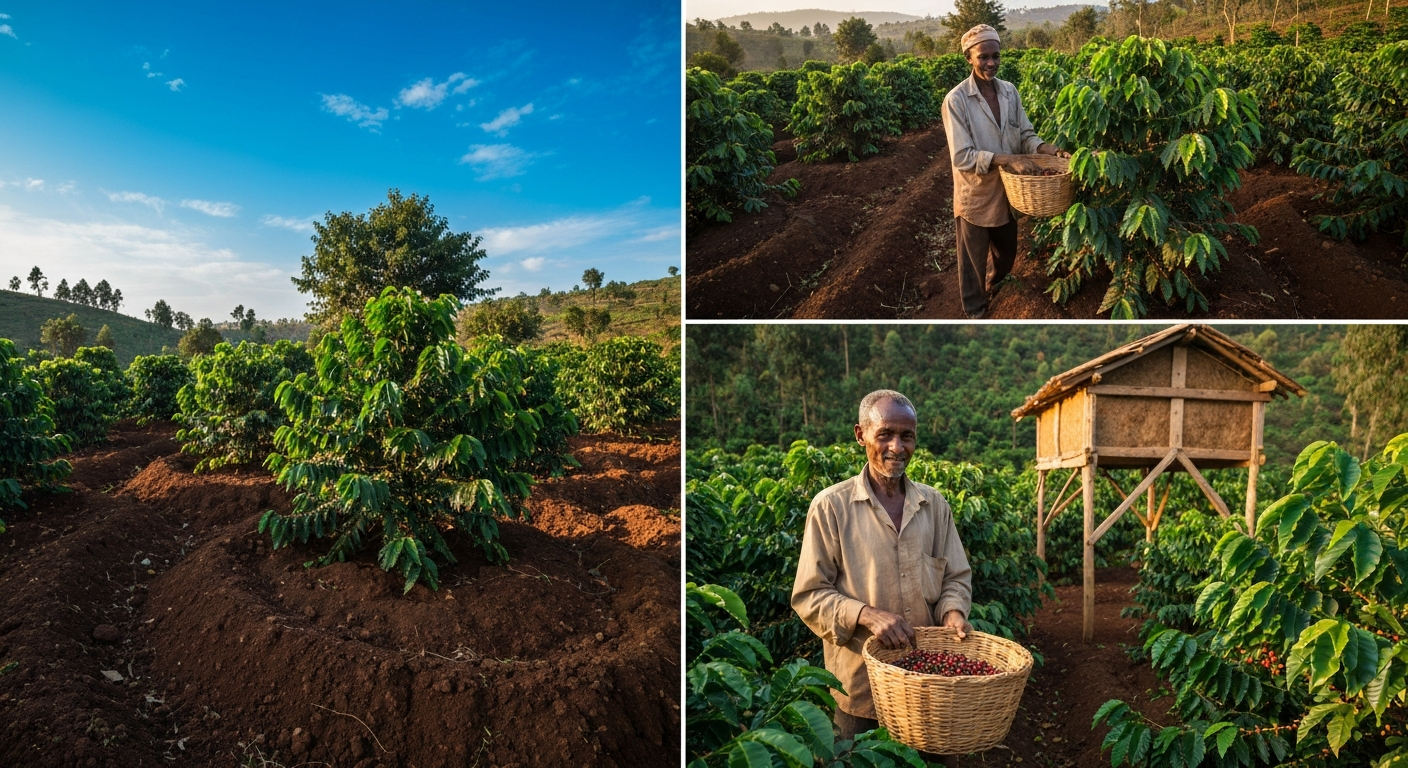
The misty highlands of southern Ethiopia — Sidamo’s volcanic soils and high altitudes produce some of Africa’s finest coffees
James Hoffmann, in The World Atlas of Coffee, describes Sidamo as “a region of enormous variation” where “a single zone can encompass wildly different terroirs.” That observation holds true today more than ever, as specialty buyers have begun to distinguish between Sidamo’s many sub-zones with the same precision once reserved for wine appellations.
Sub-Regions and Terroir
Sidamo is not a single flavour but a mosaic of micro-terroirs, each shaped by subtle differences in altitude, soil composition, and processing tradition. Notable sub-zones include:
Bensa — known for refined washed coffees with jasmine and lemon notes, cultivated at 1,900 to 2,200 metres on steep, well-drained hillsides. Bensa’s best lots deliver an almost tea-like delicacy with remarkable clarity.
Nensebo — produces syrupy naturals bursting with strawberry, mango, and tropical fruit. The warm, dry conditions during harvest season make Nensebo ideal for sun-drying whole cherries on raised African beds.
Dale — whose coffees often carry a distinctive wine-like body, with notes of dark cherry and cocoa. Dale sits at slightly lower elevations (1,600 to 1,900 metres), producing fuller, rounder cups.
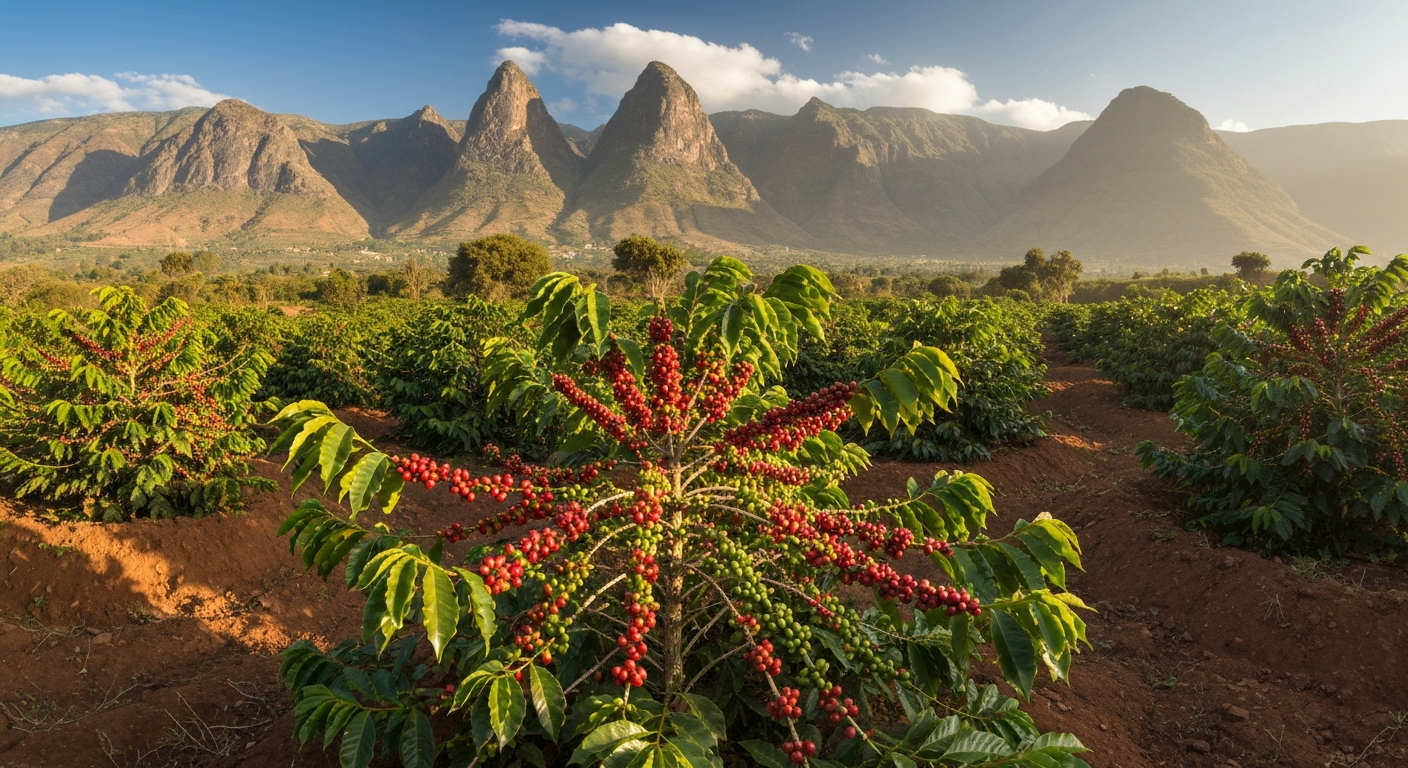
Natural-processed cherries drying on raised beds — the method that gives Sidamo naturals their explosive fruit character
The Guji zone, once grouped under the Sidamo umbrella, has since gained recognition as its own distinct origin — a testament to how much flavour variation exists within this part of Ethiopia. Guji’s emergence as a standalone name reflects the specialty market’s growing appetite for precision and traceability.
Processing and Flavour
Both washed and natural processing are widely practised across Sidamo, and the choice of method reveals entirely different dimensions of the same terroir.
Washed lots tend to be clean and luminous, highlighting citrus acidity and floral aromatics with a lighter, more transparent body. The washed process — depulping, fermenting for 36 to 72 hours, then drying on raised beds — strips away the fruit and lets the bean’s intrinsic character shine. Washed Sidamos are prized for their clarity and elegance.
Natural lots lean toward heavy sweetness, berry jam, and a winey fermentation character that has made Sidamo a favourite among specialty roasters seeking bold, complex profiles. The best Sidamo naturals achieve cupping scores well above 88 points, with tasting notes that read like a dessert menu: blueberry compote, dark chocolate, red wine, candied orange peel.
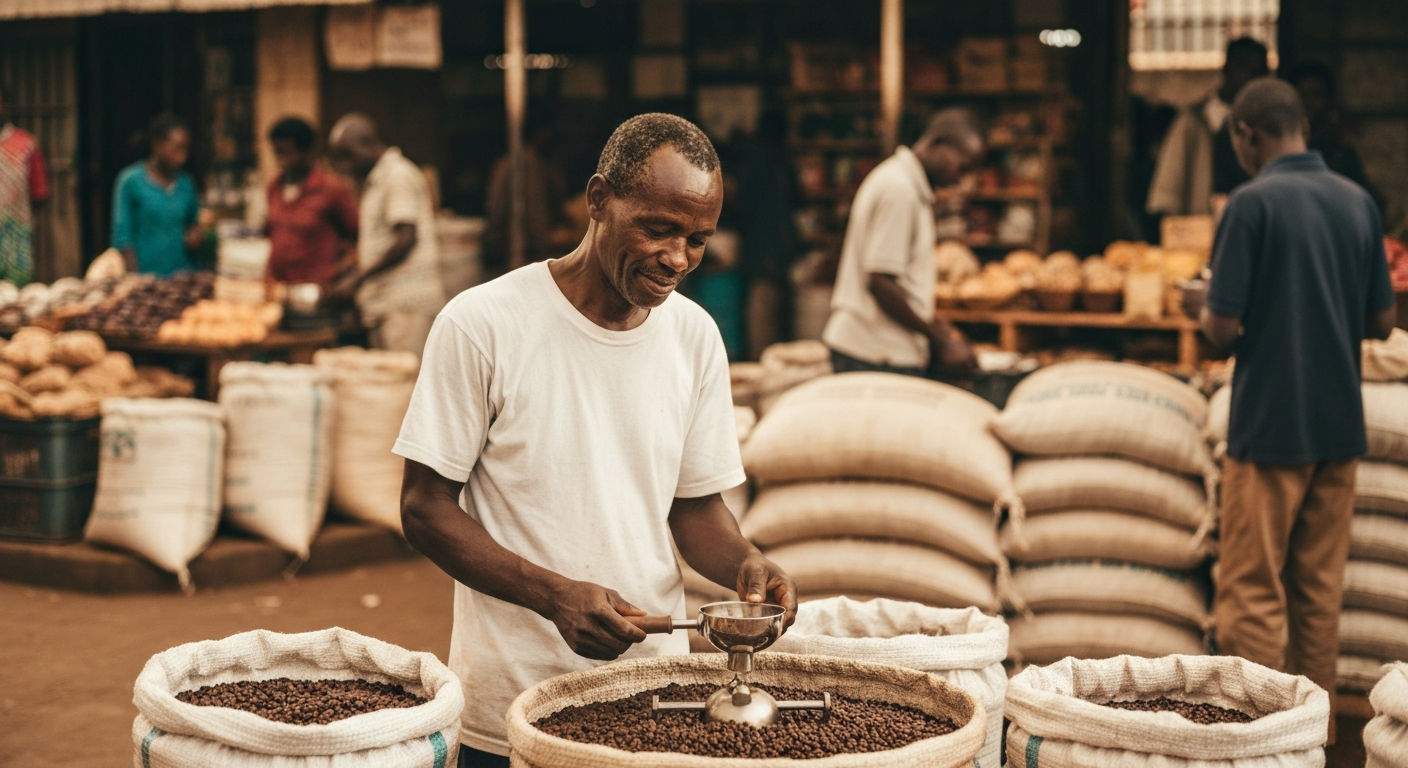
A washing station in Sidamo — washed processing produces the region’s cleaner, more floral expressions
Many washing stations in the region produce both styles from the same harvest, allowing buyers to taste the same terroir through two very different lenses — an extraordinary opportunity for comparison that few other origins offer.
A well-processed Sidamo natural can deliver tasting notes of ripe blueberry, dark chocolate, and red wine — a flavour combination almost impossible to find in any other origin.
Altitude and Quality
The highest farms in Sidamo push past 2,100 metres, producing some of the densest, most complex beans in all of Ethiopia. At these extreme elevations, cherries take 9 to 11 months to ripen — compared with 6 to 8 months at lower altitudes. This extended maturation concentrates sugars and organic acids, yielding cups with layered sweetness, vibrant acidity, and a long, lingering finish that unfolds across the palate.
According to the Specialty Coffee Association (SCA), altitude is one of the single greatest predictors of cup quality in African coffees. Sidamo’s topography — ridges and valleys that create constant variation in elevation, sun exposure, and drainage — is precisely why the region produces such a wide range of profiles. For buyers seeking Ethiopian coffees that combine both power and elegance, Sidamo consistently delivers.
Further Reading
- The World Atlas of Coffee by James Hoffmann — profiles of Ethiopian regions including Sidamo’s sub-zones
- Where the Wild Coffee Grows by Jeff Koehler — Ethiopia’s coffee heritage and the forests that sustain it
- SCA — Specialty Coffee Association — cupping standards and flavour research
Related Topics
Ethiopia — Yirgacheffe
Yirgacheffe sits within the birthplace of coffee and produces some of the most aromatic washed coffees on earth — jasmine, lemon, bergamot, and peach at altitude.
originEthiopia
The birthplace of Arabica and still its most genetically diverse origin — Ethiopia produces florals, berries, and citrus from thousands of heirloom varieties across its highlands.
processNatural (Dry) Processing
Natural processing dries whole coffee cherries in the sun before milling — the oldest method, and the one most responsible for fruity, wine-like, and berry-forward cups.