 English
  Українська
  Čeština
 Kenya occupies a singular position in the specialty coffee world. Despite producing a fraction of what Brazil or Colombia ships — roughly 800,000 60-kilogram bags annually, according to the ICO — Kenyan coffees regularly command premium prices at auction thanks to their unmistakable intensity. The best lots deliver a flavour experience unlike any other origin: ripe blackcurrant, fresh tomato, pink grapefruit, and blood orange layered over a juicy, almost syrupy body. James Hoffmann describes Kenya in The World Atlas of Coffee as “a country that produces some of the most complex, exciting coffees in the world.”
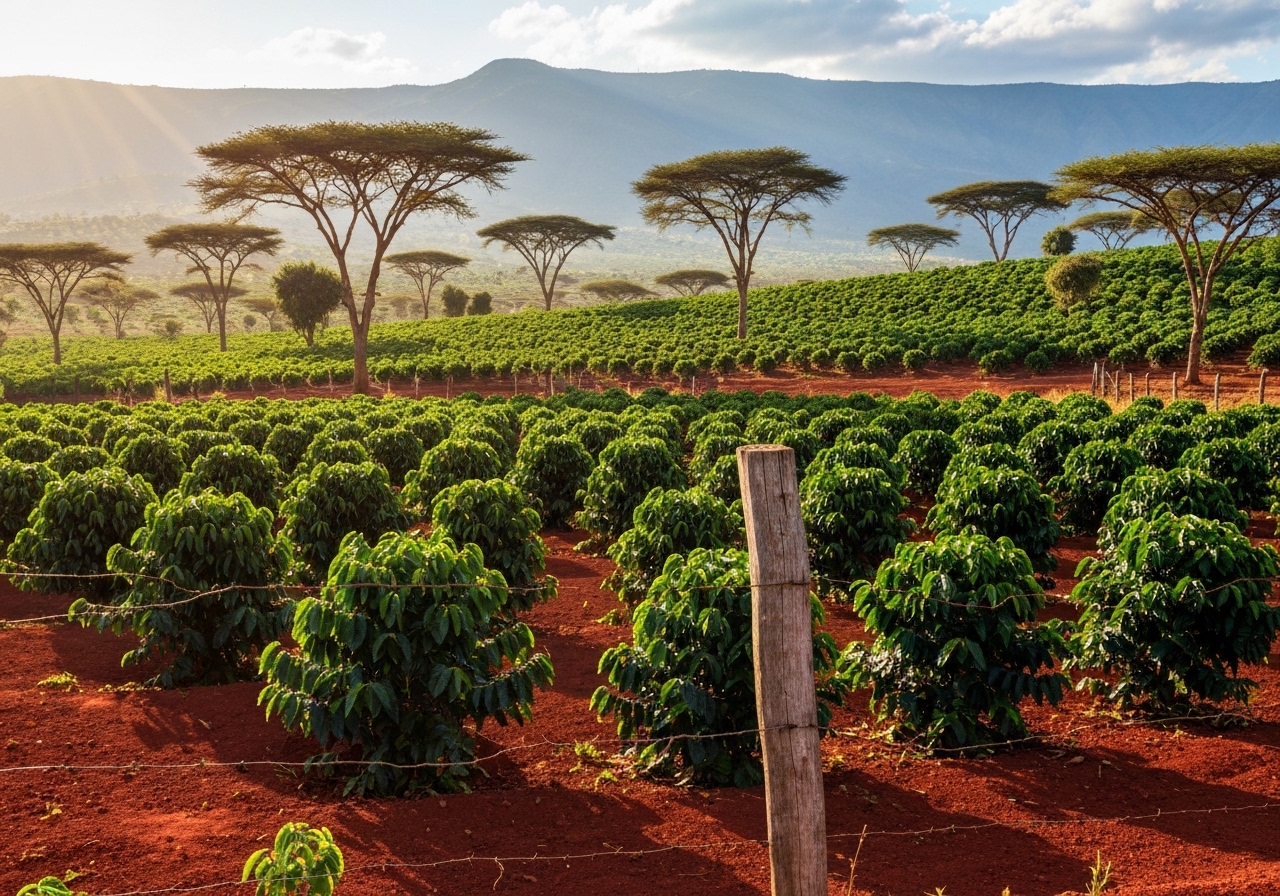
Kenya’s central highlands — volcanic soils and equatorial sunlight produce coffees of extraordinary intensity
That distinctive character has made Kenya a benchmark for what high-acidity, complex coffee can be. For cuppers and roasters worldwide, a top Kenyan lot is the reference point against which all bright, fruit-forward coffees are measured.
The SL28 and SL34 Advantage
Much of Kenya’s flavour identity comes from two celebrated cultivars developed at Scott Agricultural Laboratories in the 1930s. SL28, derived from a drought-resistant Tanganyika selection, is prized for its deep, phosphoric acidity and complex berry fruit — it is widely considered one of the finest coffee varieties ever developed. SL34, a Bourbon-related variety adapted to high rainfall zones, contributes sweetness, body, and a rounder mouthfeel.
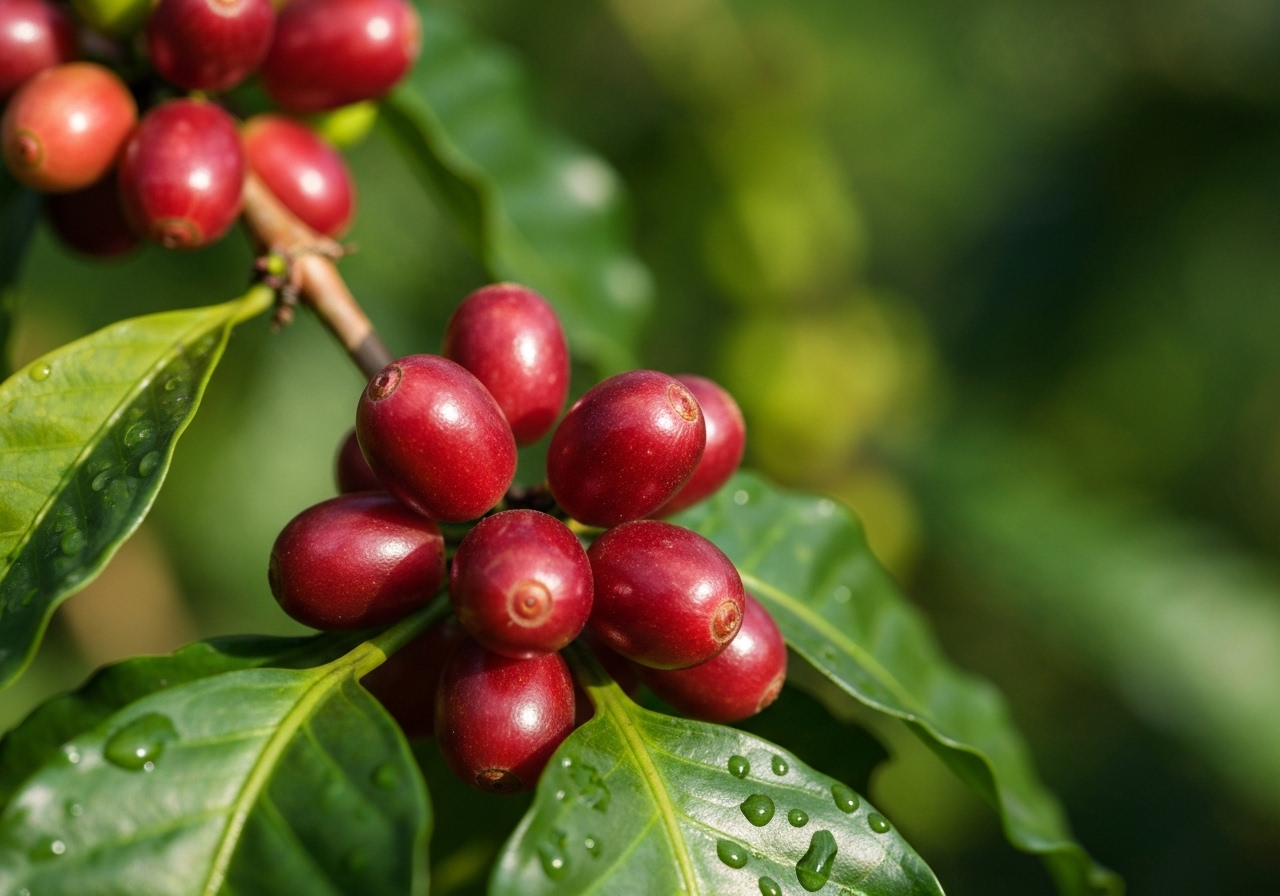
SL28 cherries ripening in the Kenyan highlands — a cultivar prized for its intense, phosphoric acidity and berry complexity
Together, SL28 and SL34 form the backbone of Kenyan specialty production, though newer cultivars are increasingly planted. Ruiru 11, a compact hybrid bred in the 1980s for resistance to coffee berry disease (CBD) and coffee leaf rust (CLR), sacrifices some cup complexity for agronomic resilience. Batian, released in 2010, aims to combine disease resistance with improved cup quality. The tension between tradition and practicality — heritage varieties that taste extraordinary versus modern cultivars that survive disease — is one of Kenyan coffee’s ongoing stories.
Kenyan AA refers to screen size (beans retained on a 6.80 mm screen), not quality grade. However, the largest beans often come from the best lots, so AA has become shorthand for top-tier Kenyan coffee in the global market.
The Auction System
Kenya’s coffee trade historically centres on a weekly auction at the Nairobi Coffee Exchange, a system established during the colonial era. Farmers deliver parchment coffee to cooperatives (locally called “societies” or “factories”), which handle wet processing and milling before submitting lots for auction. Licensed dealers taste, evaluate, and bid competitively — a process that tends to reward quality with higher prices, creating a financial incentive for excellence that few other origin systems match.
In recent years, a growing “second window” of direct trade has emerged, allowing licensed exporters to purchase directly from cooperatives and bypass the auction floor. This shift has improved traceability for specialty buyers, enabling single-factory, single-day lot purchases that were impossible under the older system. According to the Coffee Research Institute in Ruiru, roughly 30 percent of specialty-grade Kenyan coffee now moves through direct channels.
Growing Regions
Kenya’s finest coffees come from the central highlands surrounding Mount Kenya, where volcanic soils, altitudes of 1,400 to 2,000 metres, and equatorial sunlight create ideal growing conditions.
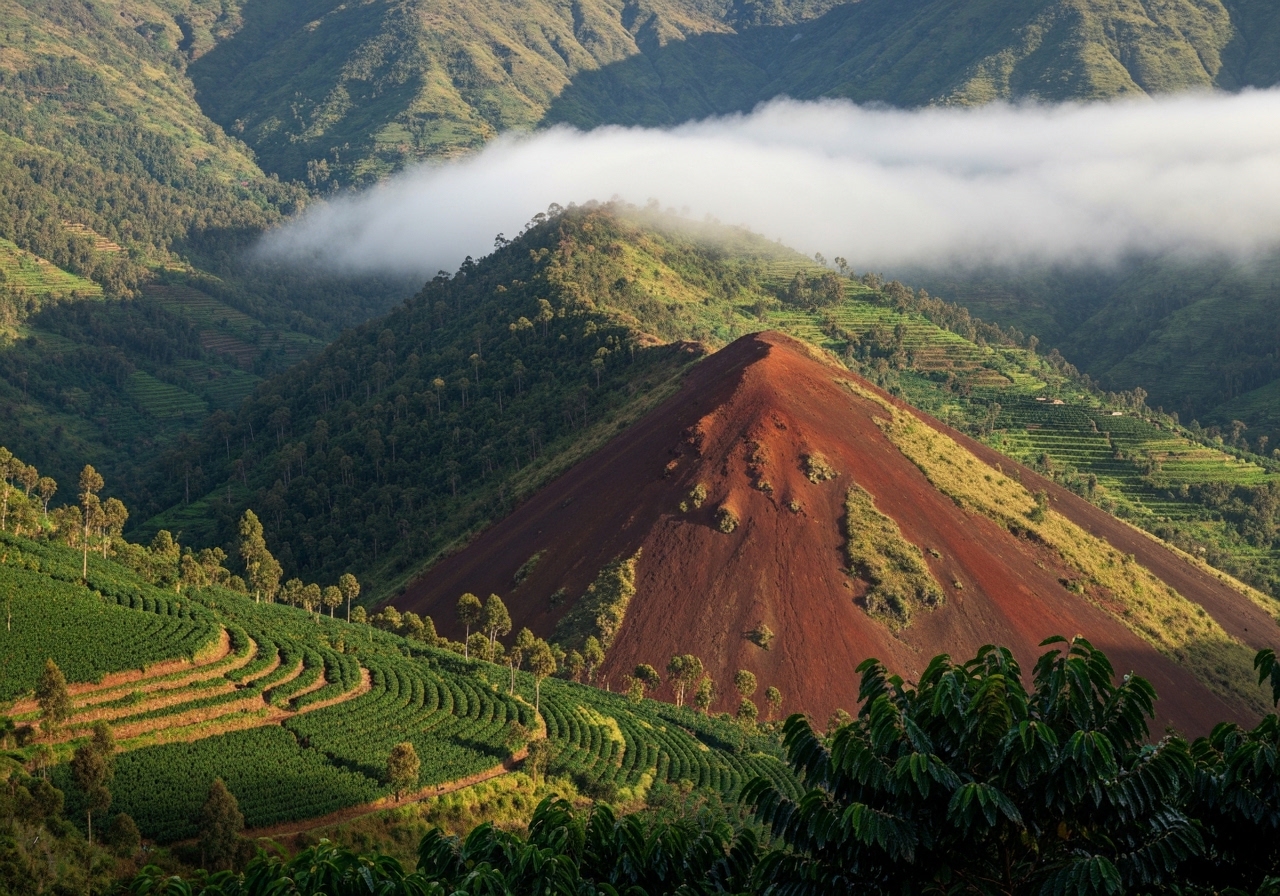
The slopes of Mount Kenya — the volcanic highlands that produce Kenya’s most celebrated lots
Nyeri, on the mountain’s western slopes, produces some of the country’s most celebrated lots — intensely sweet, with layers of blackcurrant, tropical fruit, and a vibrant, sparkling finish. Nyeri factories like Gatomboya and Kieni have become iconic names in specialty circles.
Kirinyaga, to the southeast, is known for clean, balanced cups with bright citrus acidity and floral top notes. Its slightly lower altitude produces coffees with more body and less of Nyeri’s razor-sharp intensity.
Kiambu, closer to Nairobi, has a long history of quality production, though urbanisation has reduced its coffee acreage. Further west, Kisii and Bungoma contribute lower-altitude Arabica and some Robusta, though specialty focus remains firmly in the highlands.
Processing and Quality
Kenyan processing is meticulous and distinctive. The typical washed method involves a double fermentation — an initial dry fermentation of 12 to 24 hours, followed by an underwater soak (often called “double wash”) of up to 24 hours more — that enhances clarity, boosts acidity, and produces the luminous, transparent cups Kenya is known for. Beans are then dried slowly over 7 to 15 days on raised African beds, turned regularly to ensure even moisture reduction.
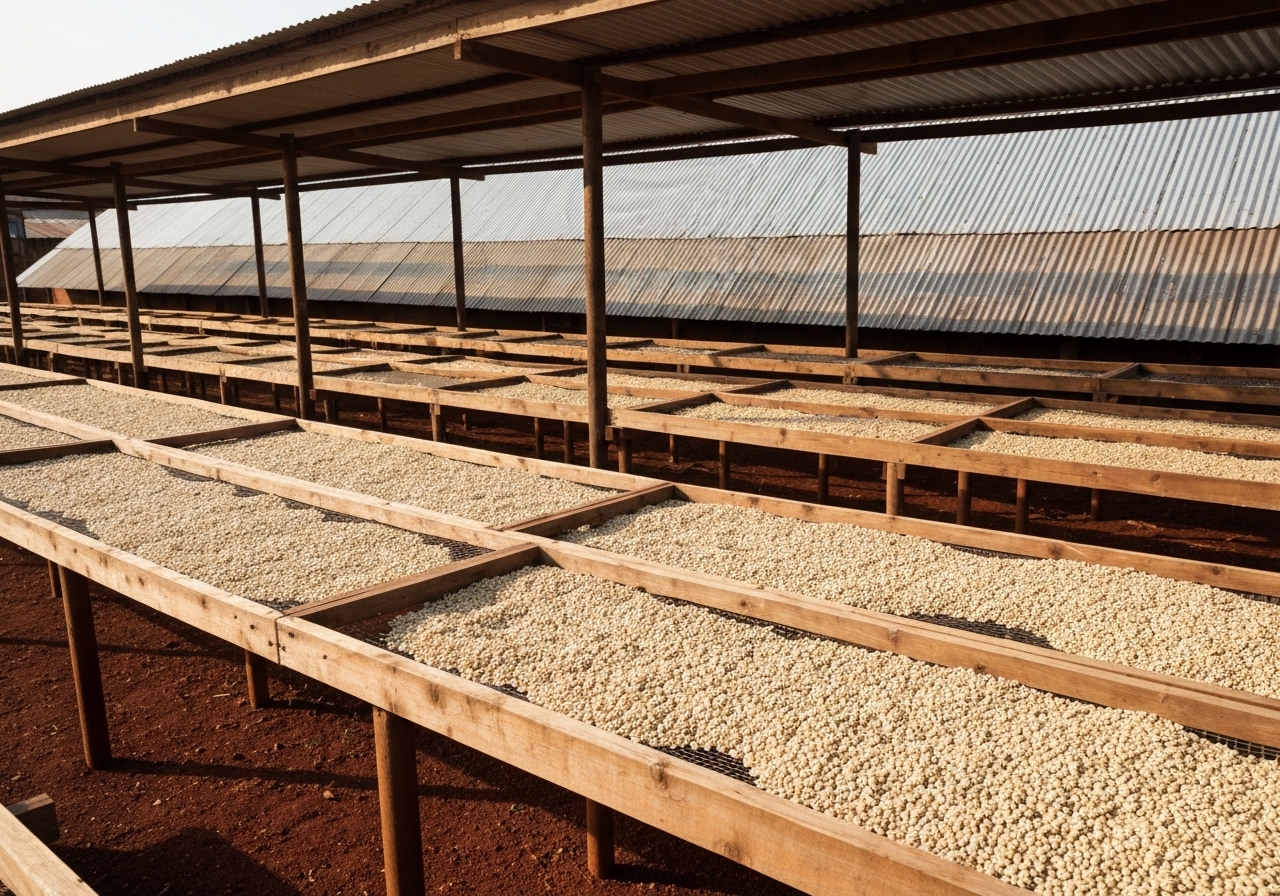
Raised drying beds at a Kenyan washing station — slow, careful drying is essential to preserving the beans’ vibrant acidity
This painstaking approach, combined with the unique SL cultivars and mineral-rich volcanic soils, produces coffees that are among the most distinctive and sought-after on the planet. For anyone who loves bright, vibrant, complex coffee, Kenya is an origin that never disappoints.
Further Reading
- The World Atlas of Coffee by James Hoffmann — detailed coverage of Kenyan regions, varieties, and the auction system
- God in a Cup by Michaele Weissman — the specialty coffee movement and the search for the world’s best coffees, including Kenyan lots
- Coffee Research Institute, Ruiru — Kenyan coffee science and variety development
Related Topics
Ethiopia
The birthplace of Arabica and still its most genetically diverse origin — Ethiopia produces florals, berries, and citrus from thousands of heirloom varieties across its highlands.
processWashed (Wet) Processing
Washed coffee processing removes all fruit before drying to reveal clean, bright cups — floral, terroir-transparent, and prized by the specialty world. The benchmark method.
getting-startedWhat is Coffee Origin?
Coffee origin is the story of place — altitude, soil, and climate shape every flavour note. From Ethiopian florals to Colombian caramel and Kenyan citrus.