 English
  Українська
  Čeština
 Ecuador is a small country with an outsized diversity of environments — and its coffee is beginning to reflect that. Straddling the equator on South America’s Pacific coast, Ecuador compresses coastal lowlands, Andean highlands exceeding 6,000 metres, Amazonian rainforest, and the volcanic archipelago of the Galapagos Islands into a territory smaller than the state of Nevada. Coffee has been grown here since the mid-19th century, but for most of its history, Ecuadorian coffee was a commodity afterthought — a modest Robusta producer whose Arabica was largely consumed domestically or blended anonymously into commercial lots. That is changing rapidly. A new generation of producers, buoyed by government investment and growing specialty market interest, is revealing Ecuador as an origin of genuine distinction.
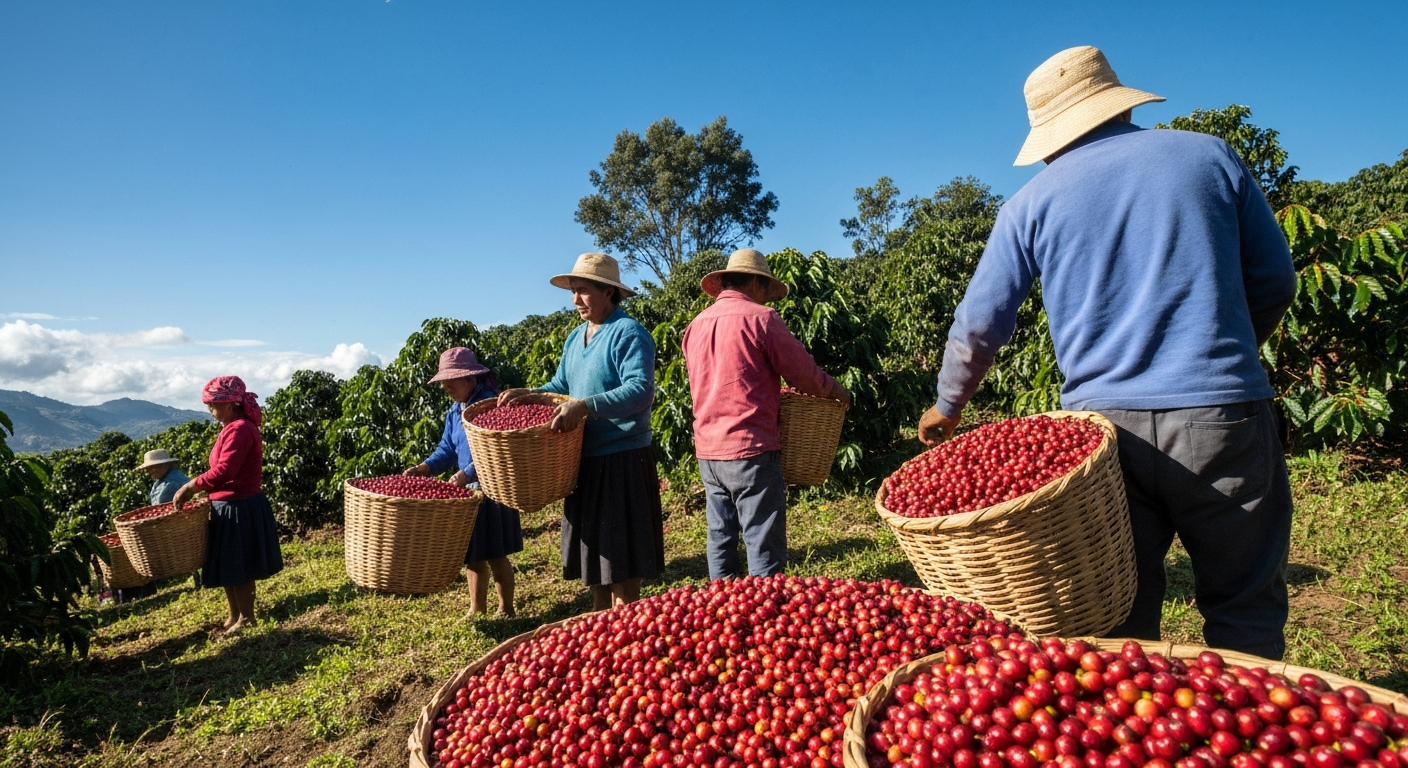
Ecuador’s Andean highlands — volcanic soil and extreme altitude create conditions for complex, bright Arabica coffee
Ecuador produces roughly 400,000 to 600,000 bags annually — a tiny fraction of neighbour Colombia’s output — split between Arabica in the highlands and Robusta in the coastal and Amazonian lowlands. But what Ecuador lacks in volume, it compensates with terroir variety. Few countries on Earth offer such dramatic shifts in geography, altitude, and microclimate within such a compact area, and forward-thinking producers are learning to translate that diversity into distinctive, site-specific coffees.
Growing Regions
Loja Province, in Ecuador’s far south near the Peruvian border, is the country’s undisputed specialty heartland. The Vilcabamba and Sozoranga valleys, at altitudes between 1,400 and 2,000 metres, produce the country’s most celebrated Arabica lots — clean, bright, and complex, with flavour profiles that can rival the best of southern Colombia’s Nariño department. Loja’s climate is drier than much of Ecuador’s highlands, with a pronounced dry season that aids cherry drying and reduces the risk of mould and over-fermentation.
Zamora-Chinchipe, east of Loja on the Amazonian side of the Andes, is an emerging region with a wetter, more tropical climate. Coffees here tend toward heavier body and more tropical fruit character — mango, guava, and passionfruit — distinct from Loja’s citrus-bright profile.
Pichincha, the province surrounding the capital Quito, produces small amounts of high-altitude Arabica on the slopes of the Pichincha volcano. These volcanic-soil lots are rare but can offer exceptional mineral complexity and floral aromatics.
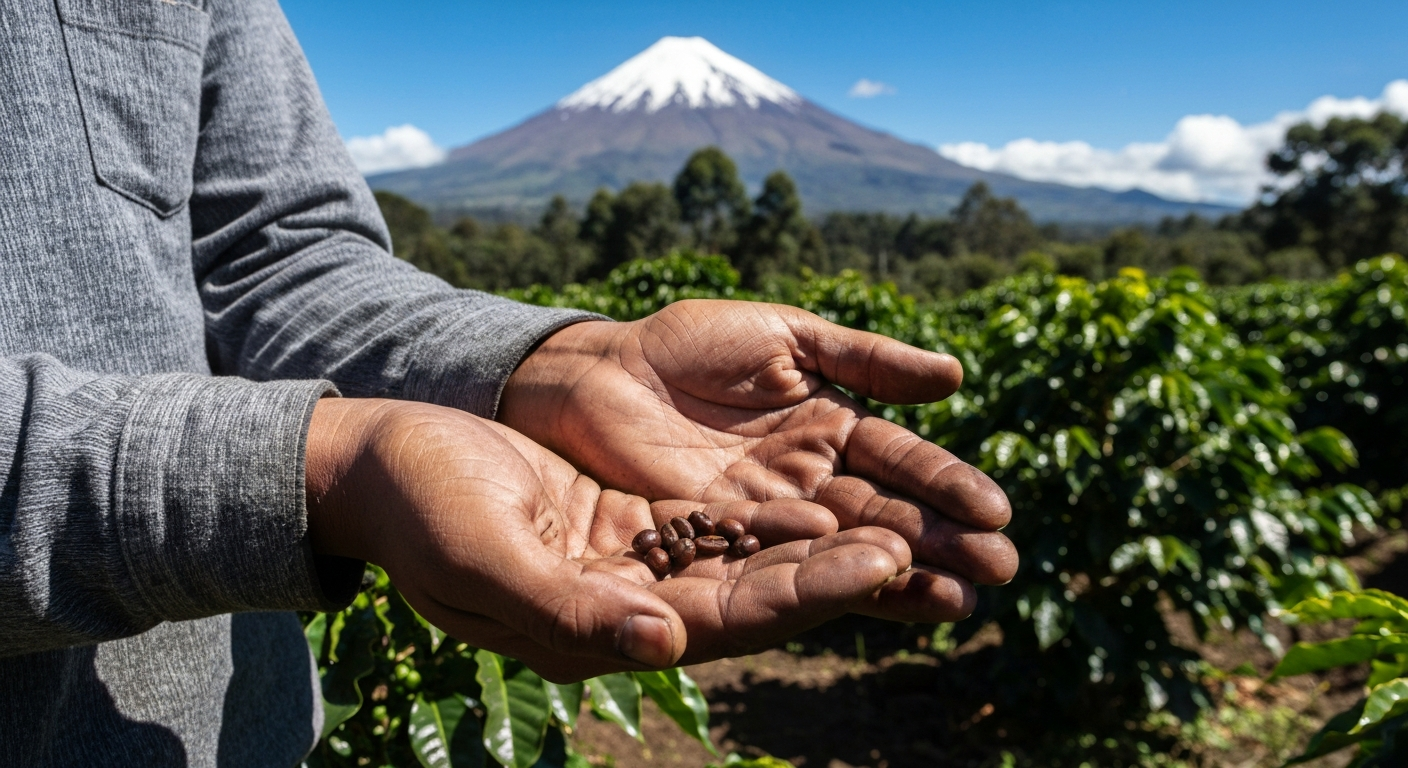
Ecuador’s volcanic geography — from Pichincha to the Galapagos, volcanic soil is a defining feature of the country’s best coffee terroir
The coastal lowlands of Manabi and Los Rios provinces produce the bulk of Ecuador’s Robusta (locally called Café Robusta), as well as the Nacional variety of Arabica, a Typica descendant also used in cacao production. These lower-altitude lots are typically sun-dried and enter the commercial market, though some specialty producers are beginning to experiment with quality Robusta processing.
Ecuador is one of the few countries that grows both fine-flavour cacao and specialty coffee — and some estates produce both, leveraging shared expertise in fermentation and post-harvest processing.
Galapagos Coffee — Island Terroir
The most extraordinary corner of Ecuadorian coffee is also its most improbable: the Galapagos Islands, roughly 1,000 kilometres off the Pacific coast. Coffee was introduced to the archipelago in the early 20th century, and a handful of farms — most famously the Hacienda El Cafetal on San Cristobal Island — continue to cultivate Bourbon and Typica at relatively low altitudes (200 to 400 metres) in volcanic soil of extraordinary mineral richness.
Galapagos coffee is singular. The islands’ isolation means no pesticides or chemical fertilisers are permitted (the archipelago is a UNESCO World Heritage Site with strict environmental controls), and the unique oceanic microclimate — cooled by the Humboldt Current despite being on the equator — creates growing conditions found nowhere else. The cup is typically medium-bodied, low in acidity, and remarkably sweet, with notes of chocolate, caramel, toasted nuts, and a clean, lingering finish. Production is tiny — a few thousand bags at most — and prices reflect the exclusivity.
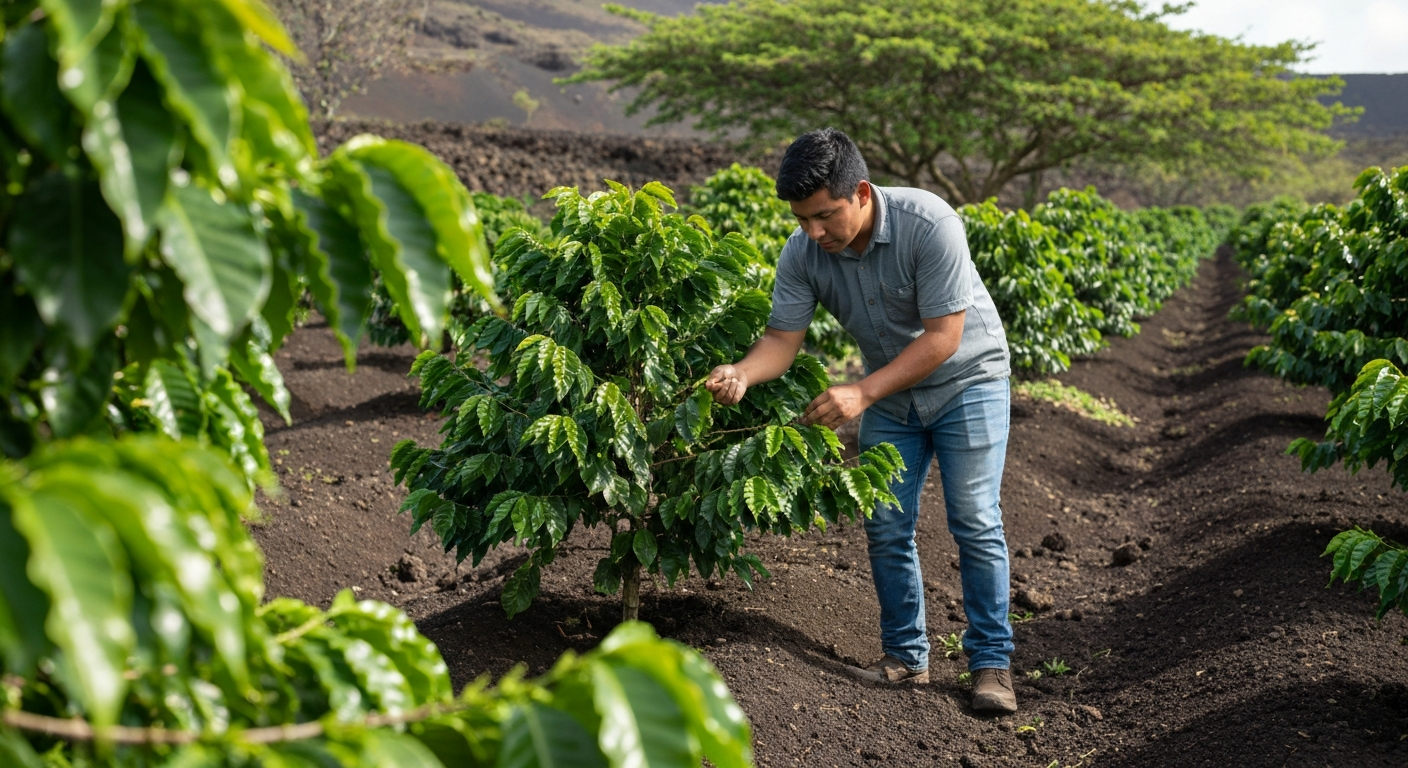
The Galapagos Islands — UNESCO-protected volcanic terroir producing some of the world’s rarest and most unusual coffee
Whether Galapagos coffee justifies its premium is debated in specialty circles. The terroir is genuinely unique, and the best lots are distinctive and clean. But the low altitude limits the density and acidity that many specialty drinkers prize. Think of it less as a competition-grade origin and more as a singular experience — coffee shaped by one of the most remarkable environments on the planet.
Varieties
Ecuador’s varietal landscape is dominated by traditional cultivars. Typica, the foundational Arabica variety, is widely planted in Loja and the highlands and produces the clean, sweet, delicate cups the country’s specialty sector is building its reputation on. Bourbon, present in smaller quantities, adds complexity and fruit character. Caturra, the compact Bourbon mutation that thrives across Latin America, is increasingly planted for its higher yields on smallholder plots.
The SL-28 and SL-34 varieties — famous for their role in Kenyan coffee’s intense acidity — have been introduced experimentally by some forward-thinking Ecuadorian producers, with early results showing promise. Sarchimor and Catimor hybrids, bred for rust resistance, are also present, though they are less favoured by specialty-oriented farmers who prioritise cup quality over disease tolerance.
Processing
Most Ecuadorian specialty coffee is fully washed, and the clean, bright profiles from Loja reflect this. Fermentation is typically short (12 to 18 hours), producing transparent, terroir-expressive cups. Natural processing is gaining ground, particularly in Zamora-Chinchipe and among producers targeting the experimental segment, yielding fruitier, more wine-like profiles.
Honey process experiments — where varying amounts of mucilage are left on the bean during drying — are emerging in Loja and producing interesting results: cups with the body and sweetness of a natural but the clarity of a washed. Ecuador’s cacao heritage has given some producers a sophisticated understanding of fermentation science, and this cross-pollination of knowledge is accelerating innovation in coffee processing.
Flavour Profile
Ecuadorian Arabica from Loja, at its best, is bright, clean, and elegantly complex. Expect lively citrus acidity — lemon, orange, sometimes bergamot — layered with panela (raw cane sugar), milk chocolate, and stone fruit (apricot, peach). The body is typically medium, and the finish is clean with a pleasant sweetness.
Lots from Zamora-Chinchipe lean more tropical and heavier in body. Galapagos coffee stands apart entirely — low acidity, chocolatey, nutty, and smooth. Across all regions, well-processed Ecuadorian coffee has an approachable sweetness that makes it versatile for both filter and espresso preparations.
Buying Tips
Ecuador is still an emerging origin, so availability can be inconsistent. Look for Loja or Vilcabamba on the label for the brightest, most complex lots. Galapagos coffee is a specialty unto itself — expensive, limited, and worth trying once for the experience. Cooperative names like Fapecafes and estate names signal traceability. Since Ecuadorian production is small, lots sell out quickly — when you see a well-reviewed Ecuadorian coffee from a specialty roaster, buy it before it disappears.
Ecuador is a country to watch. Its combination of Andean altitude, volcanic soil, traditional varieties, and a growing culture of quality-focused processing suggests that the best Ecuadorian coffees are still ahead — not behind.
Further Reading
- The World Atlas of Coffee by James Hoffmann — brief coverage of Ecuador’s potential as a specialty origin
- ANECAFE — Asociacion Nacional de Exportadores de Cafe — Ecuador’s national coffee exporters association
- Galapagos Coffee Company — background on island coffee production and conservation
- Cup of Excellence — international quality competition platform
Related Topics
Colombia
Colombia's Andean geography — three mountain ranges, volcanic soils, and year-round harvests — yields balanced washed Arabicas with caramel sweetness and bright stone fruit.
originPeru
One of the world's top organic coffee producers, Peru's smallholder cooperatives deliver clean, sweet cups from the Andes.
varietyTypica
Typica is Arabica's foundational cultivar, known for clean sweetness, silky body, and delicate acidity — the genetic root of most modern coffee varieties worldwide.
varietyBourbon
Bourbon is Arabica's second foundational cultivar — named after Réunion island, prized for rich sweetness, chocolate notes, full body, and complex fruit.