 English
  Українська
  Čeština
 Brazil is, quite simply, the most important coffee-producing country on Earth. Responsible for roughly one-third of the world’s total output — over 60 million 60-kilogram bags in peak harvest years, according to the ICO — Brazil’s crop can single-handedly move global commodity futures. Coffee arrived in Brazil in 1727, reportedly smuggled from French Guiana as a handful of seedlings, and found ideal conditions in the country’s vast interior plateaus. Today, coffee is cultivated across multiple states, primarily Minas Gerais, São Paulo, Espírito Santo, and Bahia, with farms ranging from small family plots of a few hectares to enormous mechanised estates covering thousands.
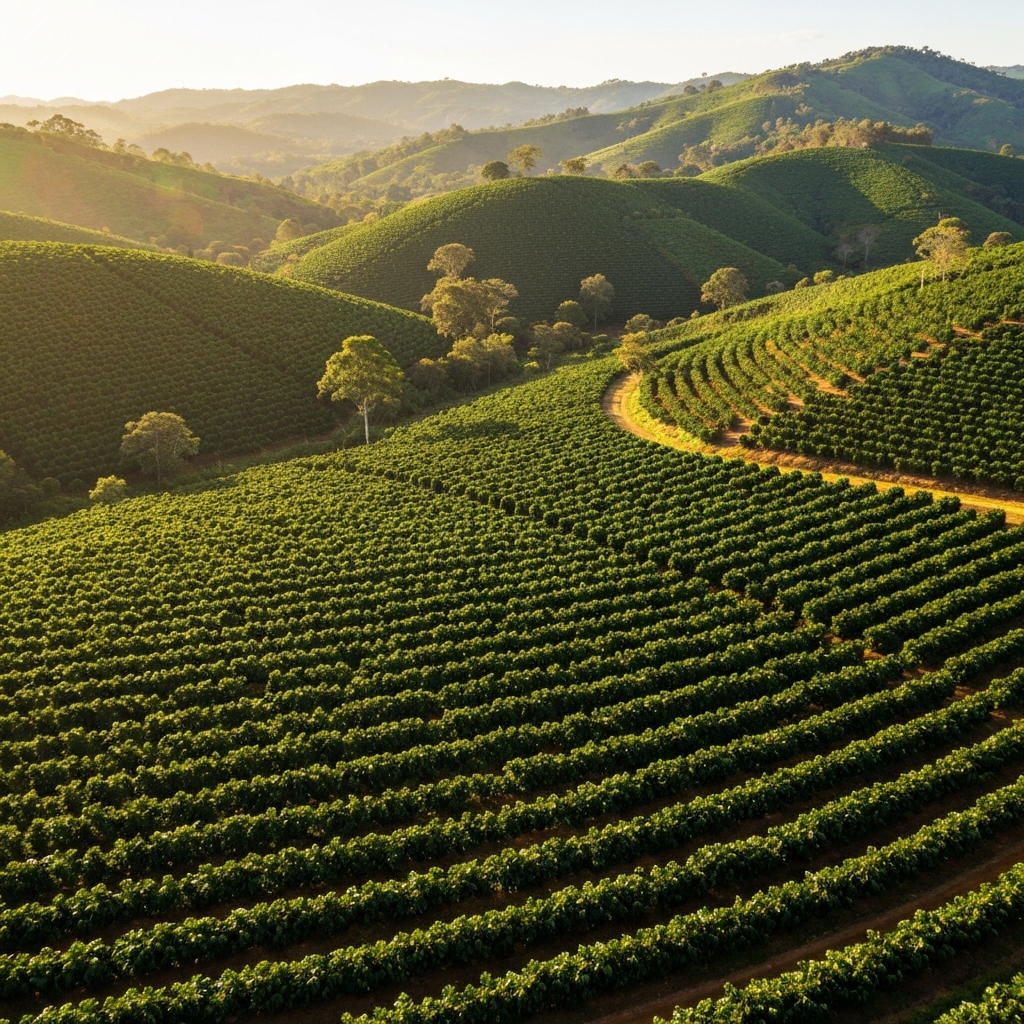
A Brazilian coffee estate — the country’s scale of production is unmatched, from small family farms to vast mechanised plantations
As Mark Pendergrast chronicles in Uncommon Grounds, Brazil’s coffee history is inseparable from the country’s economic and political evolution — from the fazenda slave plantations of the 19th century to the modern cooperative movement that drives today’s specialty sector.
Processing Innovations
Brazil pioneered the pulped natural (or “semi-washed”) process in the 1990s, a method where the cherry skin is mechanically removed but the sticky mucilage layer is left on the bean during drying. This technique produces the sweet, low-acidity, full-bodied profile that has come to define Brazilian specialty coffee — think chocolate truffle, hazelnut praline, and brown sugar dissolved in warm milk.
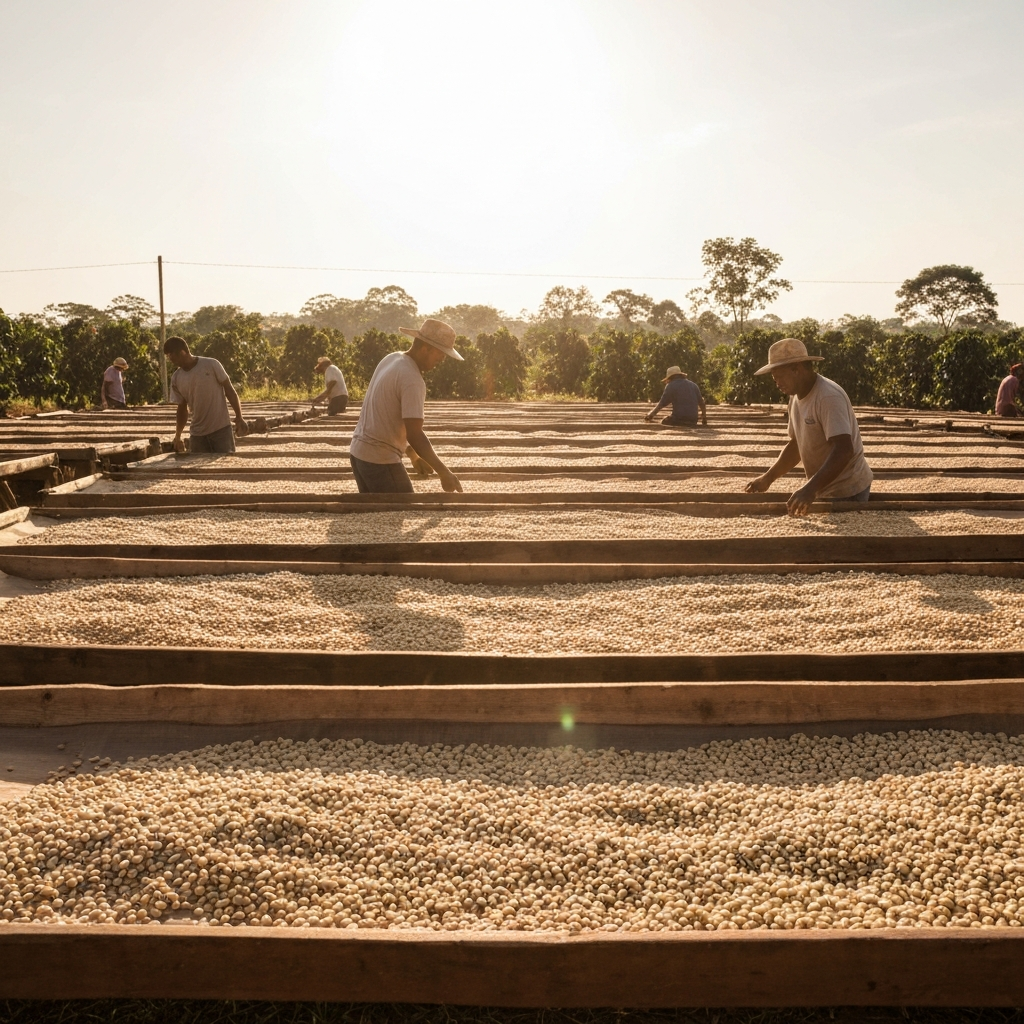
Brazilian processing innovation — from pulped naturals to experimental anaerobic fermentation, Brazil leads in method development
Traditional natural (dry) processing remains widespread, particularly in the Cerrado region, where the distinct dry season provides ideal conditions for sun-drying whole cherries on concrete patios or raised beds. Natural Brazils yield heavy, chocolatey, and nutty cups that form the base of most Italian-style espresso blends worldwide. Fully washed lots are less common but growing, especially among producers targeting the specialty market’s demand for cleaner, more complex profiles with fruit-forward acidity.
Brazil produces both Arabica and Robusta (locally called Conilon). The state of Espírito Santo alone produces more Robusta than most entire countries, feeding the instant coffee and espresso blend markets worldwide.
Regions and Terroir
Brazil’s coffee geography is vast, and its regions deliver distinct flavour identities shaped by altitude, latitude, and soil.
Cerrado Mineiro, a high savanna plateau in western Minas Gerais, became the first non-European coffee region to receive a Denomination of Origin in 2013. Its flat terrain allows mechanical harvesting and remarkable consistency, with flavours leaning toward milk chocolate, hazelnut, and brown sugar. The Cerrado’s defined dry season (May to September) makes it ideal for natural processing.
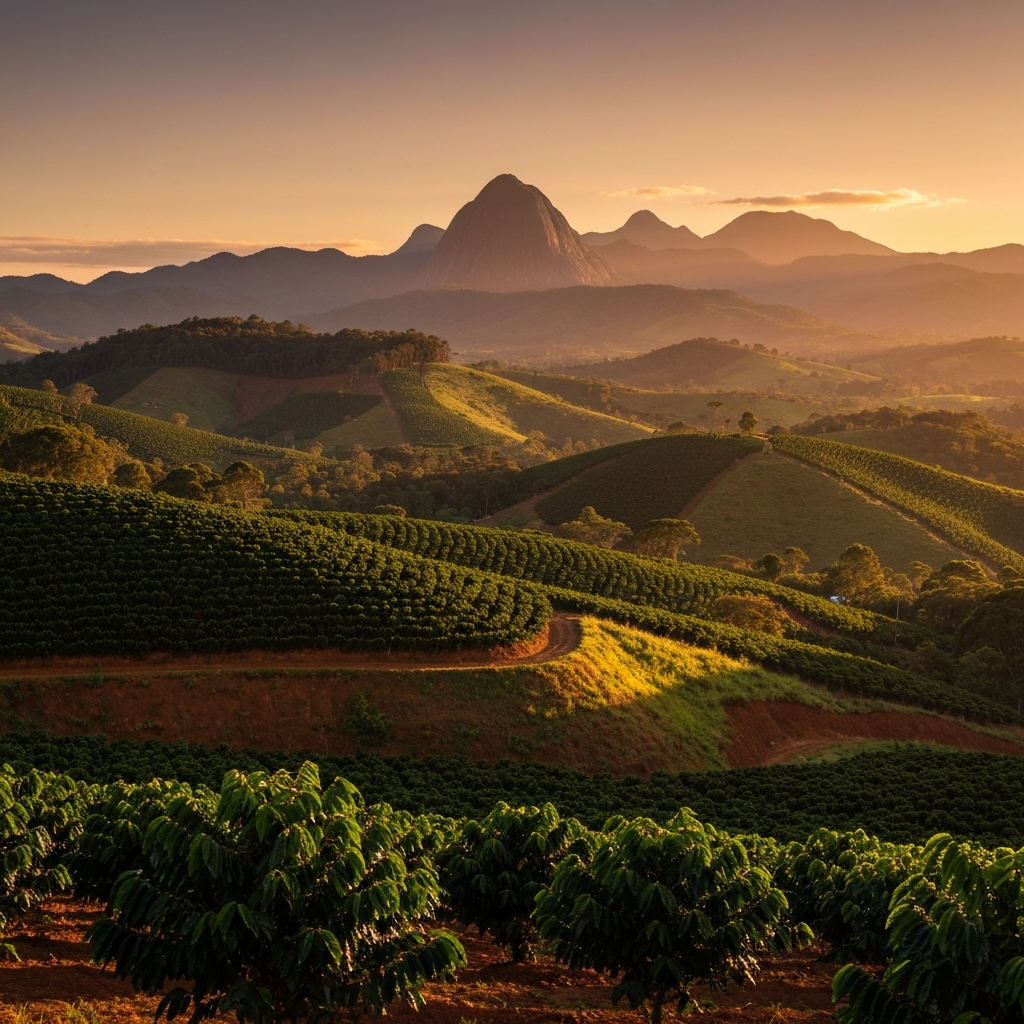
Brazil’s diverse geography — from the high savanna of Cerrado to the mountainous terrain of Sul de Minas
Sul de Minas, with its more varied topography and higher altitudes (up to 1,350 metres), produces brighter, more nuanced lots — stone fruit, citrus peel, and a cleaner finish than Cerrado coffees. It is the country’s largest producing region by volume.
Mogiana, straddling the São Paulo-Minas Gerais border, offers rich, full-bodied coffees with caramel sweetness and a syrupy mouthfeel. The region’s red-earth soils (terra roxa) impart a distinctive richness.
Newer frontier regions like Chapada Diamantina in Bahia are pushing altitude boundaries (farms above 1,200 metres on an ancient plateau) and producing coffees with brightness and complexity that challenge preconceptions about what Brazilian coffee can be.
Varieties
Brazil’s varietal landscape is broad and pragmatic. Mundo Novo, a natural Typica-Bourbon hybrid discovered in the 1940s, is a production workhorse known for its vigour, high yield, and decent cup quality. Catuaí, a cross between Mundo Novo and Caturra developed in the 1960s, is widely planted for its compact size and resilience.
Yellow Bourbon has become a specialty darling, producing sweet, complex cups with honey and stone-fruit notes when carefully processed — it is the variety behind many of Brazil’s highest-scoring Cup of Excellence lots. Increasingly, Brazilian farmers are experimenting with exotic varieties like Gesha, Laurina (a naturally low-caffeine Bourbon mutation), and Ethiopian heirlooms to access premium price tiers that were once reserved for Central American and African origins.
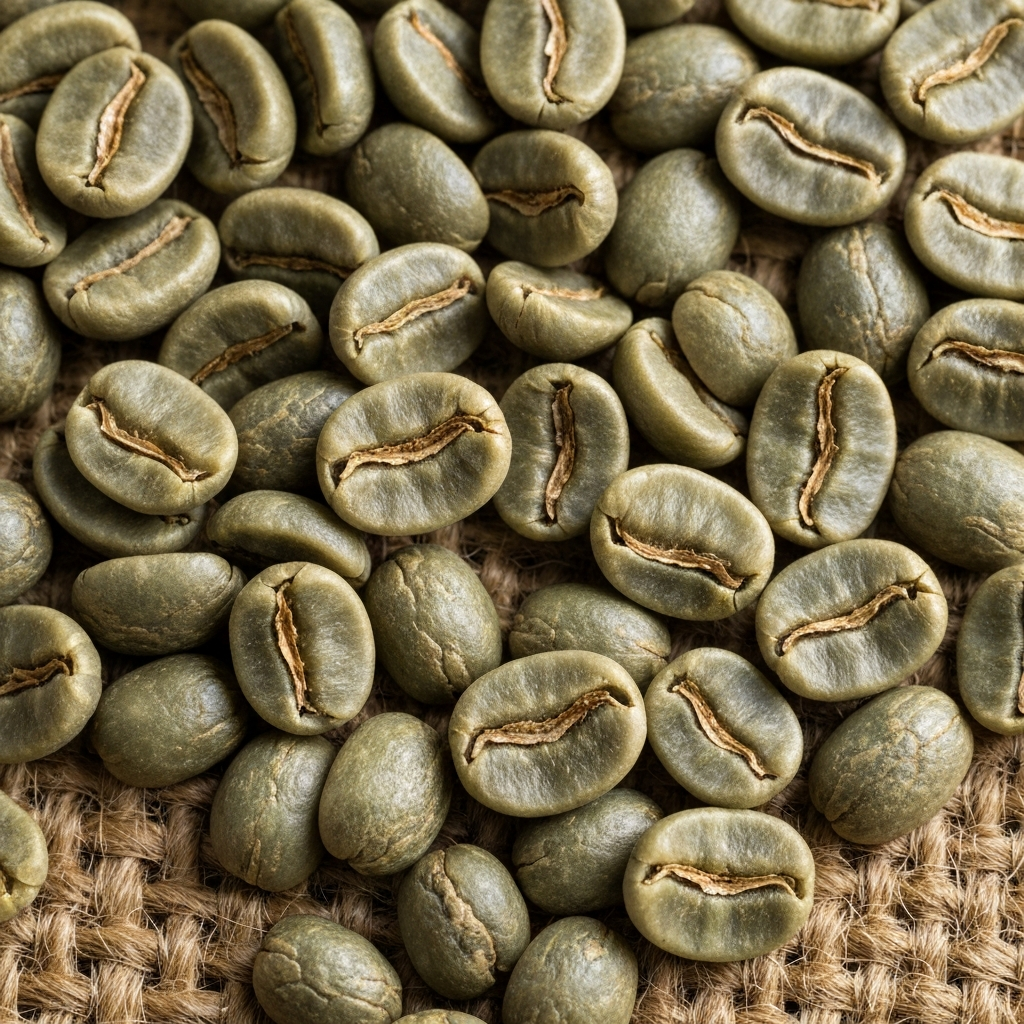
Brazilian green coffee — from Mundo Novo workhorses to exotic Yellow Bourbon lots, the varietal range is vast
Brazil’s Influence on Global Coffee
Beyond sheer volume, Brazil shapes how the world drinks coffee. Brazilian naturals form the chocolatey, low-acid foundation of most traditional espresso blends, providing the body and sweetness that balances brighter components from Africa or Central America. The country’s processing innovations — from pulped naturals to modern anaerobic and carbonic maceration experiments — are studied and adopted by producers on every continent.
The Cup of Excellence competition, which launched in Brazil in 1999, created a model for quality recognition and transparent auction that has since spread to over a dozen producing countries. As James Hoffmann notes in The World Atlas of Coffee, “Brazil’s influence on the global coffee industry is hard to overstate — it is both the engine of the commodity market and, increasingly, a force in specialty.”
Understanding Brazil is essential to understanding global coffee.
Further Reading
- The World Atlas of Coffee by James Hoffmann — comprehensive profiles of Brazilian regions, varieties, and processing methods
- Uncommon Grounds by Mark Pendergrast — the history of Brazil’s coffee economy and its global impact
- Cup of Excellence Brazil — annual quality competition and transparent auction
- ICO — International Coffee Organization — Brazilian production statistics and market data
Related Topics
Colombia
Colombia's Andean geography — three mountain ranges, volcanic soils, and year-round harvests — yields balanced washed Arabicas with caramel sweetness and bright stone fruit.
processNatural (Dry) Processing
Natural processing dries whole coffee cherries in the sun before milling — the oldest method, and the one most responsible for fruity, wine-like, and berry-forward cups.
getting-startedWhat is Coffee Origin?
Coffee origin is the story of place — altitude, soil, and climate shape every flavour note. From Ethiopian florals to Colombian caramel and Kenyan citrus.