 English
  Українська
  Čeština
 Mexico is a coffee country that rewards patience. The world’s attention tends to gravitate toward flashier Central American origins — Guatemala with its volcanic intensity, or Costa Rica with its meticulous processing innovation — but Mexico quietly holds a position that few other nations can claim: it is one of the largest organic coffee producers on Earth, and a stronghold of indigenous smallholder farming that has sustained shade-grown cultivation for generations. Ranked among the top ten producing countries globally, Mexico exports over 3 million 60-kilogram bags annually, with the vast majority grown by families working plots of fewer than five hectares each.
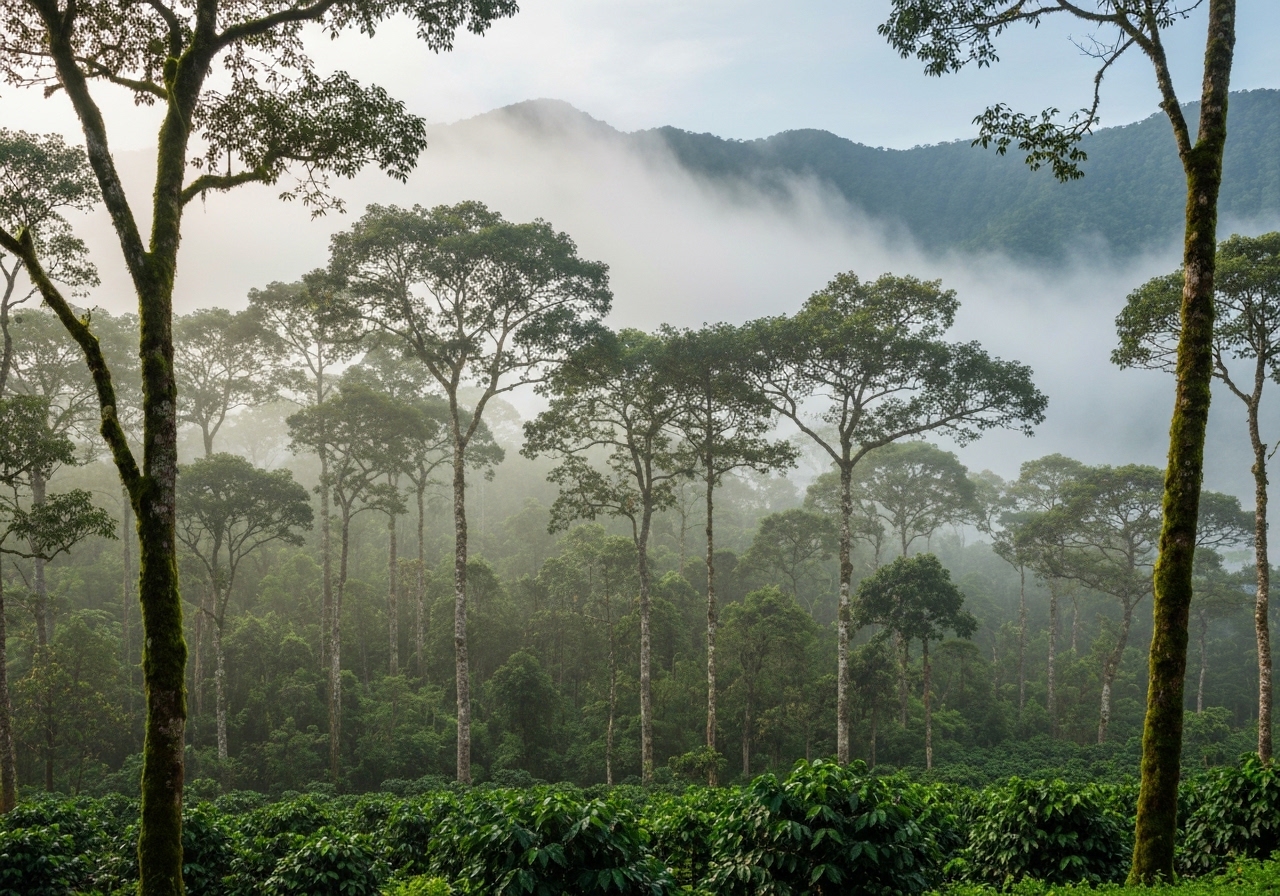
The cloud forests of southern Mexico — where most of the country’s coffee grows under dense canopy shade at elevations above 1,200 metres
As James Hoffmann notes in The World Atlas of Coffee, Mexico’s coffee story “is one of smallholders, cooperatives, and organic production rather than large estates,” a reality that shapes everything from flavour to economics. The best Mexican cups deliver a clean, gently sweet profile — milk chocolate, toasted almond, light caramel, and a delicate citrus acidity — that makes them extraordinarily versatile for blending and quietly compelling as single origins.
Growing Regions
Mexico’s coffee belt stretches across the southern states, where the Sierra Madre mountain ranges provide the altitude, rainfall, and volcanic soils that Arabica demands. Four states dominate production, each contributing its own character to the national cup.
Chiapas
Chiapas is Mexico’s largest coffee-producing state, responsible for roughly 40 percent of the national harvest. The Soconusco region near the Guatemalan border was one of the first areas planted in the late nineteenth century, and its farms — sitting between 1,000 and 1,800 metres — produce coffees with bright acidity, chocolate sweetness, and a clean finish. The highlands around the city of San Cristóbal de las Casas yield some of the most complex lots in the country.
Oaxaca
Oaxaca is the spiritual heart of Mexican specialty coffee. The Sierra Mazateca and Sierra Sur mountain ranges create microclimates that favour slow cherry development, and the state is home to the famous Pluma Hidalgo region. Oaxacan coffees tend toward a softer acidity with stone-fruit sweetness, nutty undertones, and a rounded body that lingers on the palate.
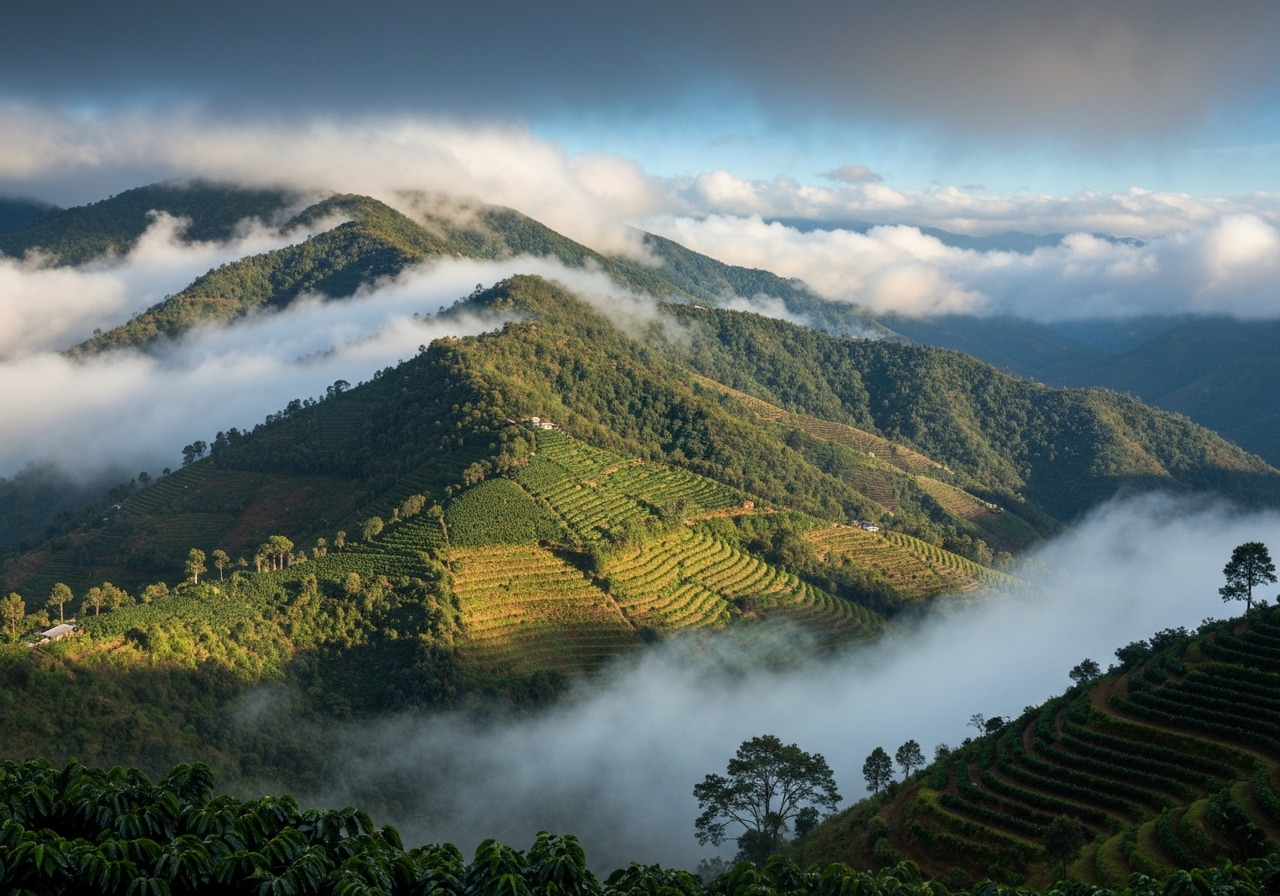
The misty highlands of Oaxaca — altitude and cloud cover slow cherry ripening, concentrating sugars and developing complexity
Veracruz
Veracruz sits on the eastern slopes of the Sierra Madre Oriental, where warm Gulf of Mexico moisture meets cool mountain air. The Coatepec region, just west of the state capital Xalapa, has been producing coffee since the 1800s and remains one of Mexico’s most recognised appellations. Veracruz cups are typically well-balanced with hazelnut notes and a medium body.
Puebla
Often overlooked, Puebla’s Sierra Norte region produces coffees at elevations exceeding 1,400 metres. Indigenous Nahua and Totonac communities cultivate Typica and Bourbon varieties under traditional shade systems, yielding clean cups with brown sugar sweetness and mild floral accents.
The Organic Pioneer
Mexico holds a singular distinction in the global coffee trade: it is consistently among the top three organic coffee producers in the world, and has been for decades. This is not the result of a marketing strategy — it is a consequence of economics. The vast majority of Mexico’s estimated 500,000 coffee-farming families are smallholders who could never afford synthetic fertilisers or chemical pesticides in the first place. Their coffee is organic by default, and the certification simply formalises what has always been true.
Mexico accounts for an estimated 8 to 10 percent of the world’s organic coffee production — a remarkable share for a country that ranks only tenth in total output.
The organic movement gained institutional momentum in the 1980s when cooperatives in Chiapas and Oaxaca began pursuing certification as a way to access premium markets. Today, organisations like CEPCO (Coordinadora Estatal de Productores de Café de Oaxaca) coordinate certification and export for thousands of member families.
Indigenous Communities & Cooperatives
Coffee in Mexico is inseparable from indigenous culture. Tzeltal, Tzotzil, Zapotec, Mixe, Nahua, and Totonac communities together account for a significant share of national production. The cooperative model — rather than the plantation model that shaped much of Latin American coffee history — is the dominant structure here. Cooperatives like ISMAM (Indígenas de la Sierra Madre de Motozintla) in Chiapas were among the first indigenous-led organisations to achieve both organic and fair-trade certification, proving that smallholder farmers could access specialty markets on their own terms.
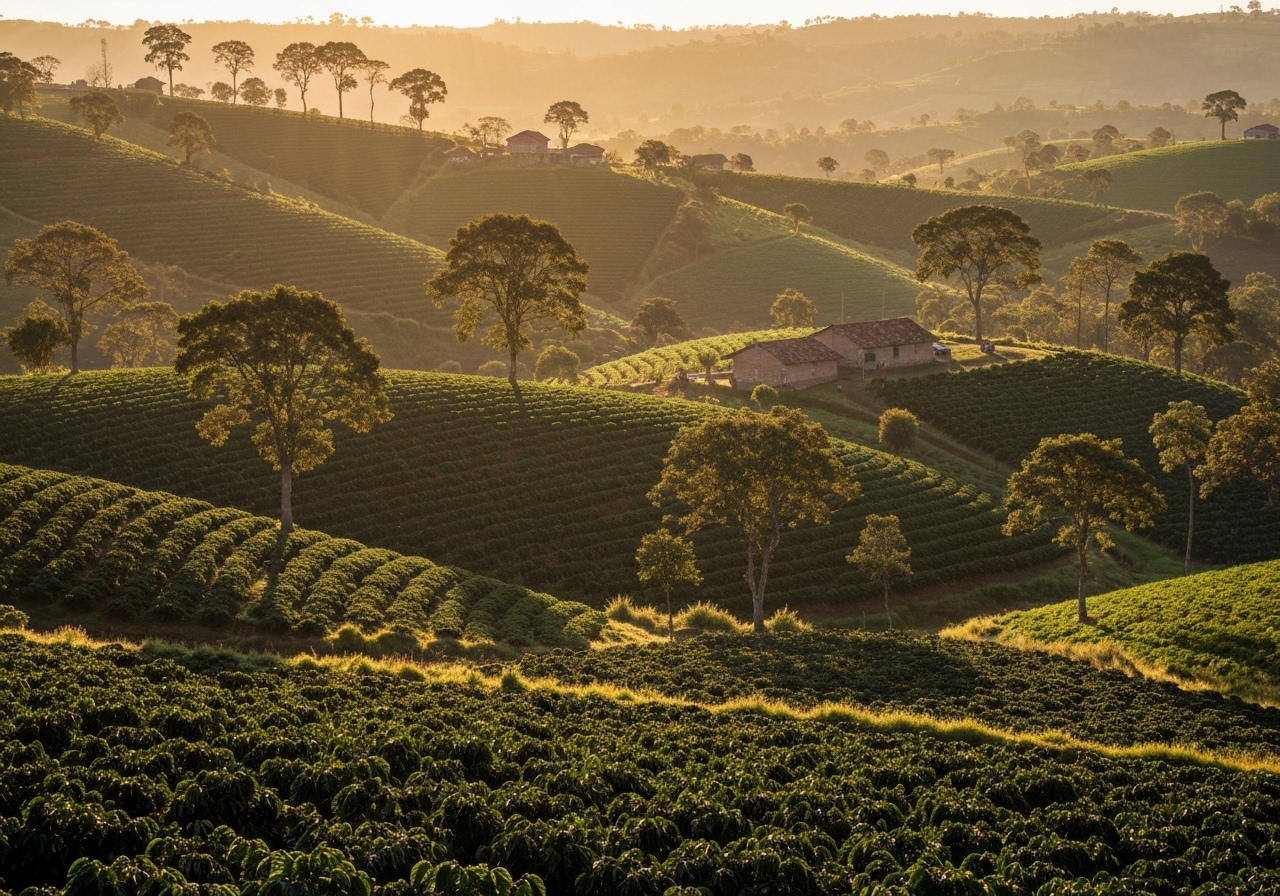
Dawn over Mexico’s coffee country — smallholder families begin the day’s work on plots that average fewer than five hectares
This cooperative tradition has also made Mexico a testing ground for fair trade. The first Fair Trade–certified coffee sold in Europe in the late 1980s came from UCIRI, a cooperative of indigenous farmers in Oaxaca — a detail that places Mexico at the very origin of the ethical sourcing movement.
Pluma Hidalgo
Among Mexican coffees, the name Pluma Hidalgo carries a special resonance. Grown in the coastal mountains of Oaxaca between 1,200 and 1,700 metres, Pluma (sometimes called Typica Pluma) is a locally adapted strain of Typica that has developed distinct characteristics over more than a century of cultivation. Its cup is silky, low in acidity, with dark chocolate and subtle tropical fruit — a profile that has earned it a protected designation of origin within Mexico and a devoted following among roasters who prize elegance over intensity.
The Shade-Grown Tradition
Mexico’s coffee forests are biodiversity corridors. The traditional practice of growing coffee beneath a canopy of Inga, cedar, and native hardwood trees — known as café de sombra — creates multi-layered ecosystems that shelter migratory birds, pollinators, and countless other species. Studies by the Smithsonian Migratory Bird Center have found that shade-grown Mexican coffee farms support bird diversity levels comparable to undisturbed forest, a finding that has driven the Bird Friendly certification programme.
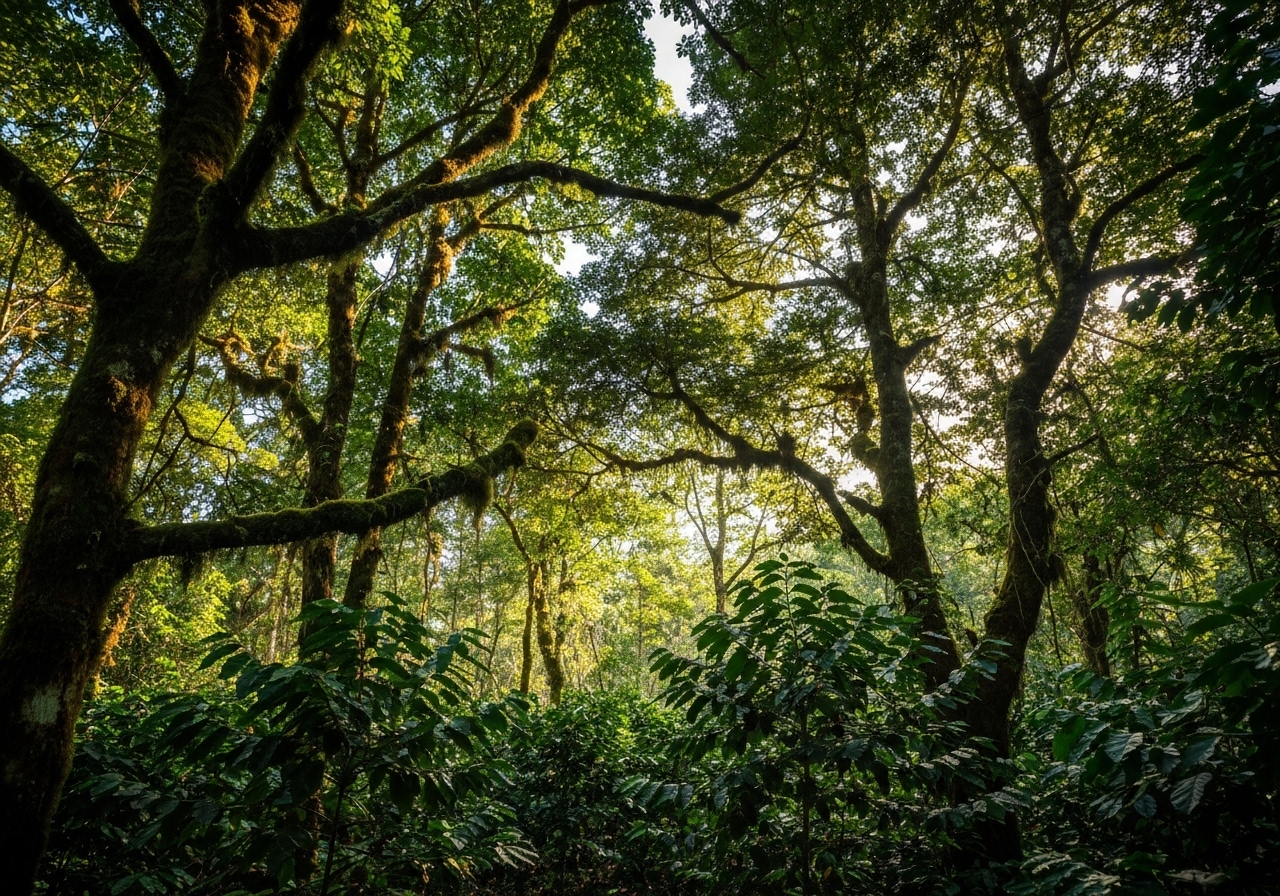
Shade canopy on a Mexican coffee farm — native trees protect coffee plants from direct sun while sheltering migratory birds and pollinators
This is not merely an environmental footnote. Shade-grown coffee ripens more slowly, developing greater sugar concentration and flavour complexity. The tradition is both ecologically vital and commercially valuable — a rare alignment that Mexico’s smallholders understand intuitively.
Why It Matters
Mexico may never dominate competition scoreboards or command the per-kilogram prices of a Panamanian Gesha. But its significance runs deeper than auction lots. It demonstrates that a coffee industry built on indigenous stewardship, organic farming by necessity, cooperative economics, and shade-grown biodiversity can be both viable and dignified. In an era when the specialty world increasingly values transparency, sustainability, and equity, Mexico’s model is not behind the curve — it is ahead of it.
For roasters and drinkers willing to look past the spectacle of record-breaking scores, Mexican coffee offers something quietly radical: proof that good coffee and good practices have never been in conflict.
Further Reading
- The World Atlas of Coffee by James Hoffmann — overview of Mexican growing regions and cooperative culture
- Uncommon Grounds by Mark Pendergrast — the economic history of coffee in Mexico and Central America
- Smithsonian Migratory Bird Center — research on shade-grown coffee and Bird Friendly certification
- ICO — International Coffee Organization — Mexican production statistics and market data
- World Coffee Research — variety catalogues including Typica and Bourbon lineages
Related Topics
Guatemala
Guatemala's volcanic soils and high altitudes — from Antigua to Huehuetenango — produce some of Central America's most complex coffees, rich with chocolate, citrus, and spice.
getting-startedWhat is Coffee Origin?
Coffee origin is the story of place — altitude, soil, and climate shape every flavour note. From Ethiopian florals to Colombian caramel and Kenyan citrus.
varietyTypica
Typica is Arabica's foundational cultivar, known for clean sweetness, silky body, and delicate acidity — the genetic root of most modern coffee varieties worldwide.
varietyBourbon
Bourbon is Arabica's second foundational cultivar — named after Réunion island, prized for rich sweetness, chocolate notes, full body, and complex fruit.