 English
  Українська
  Čeština
 Peru is quietly one of the world’s most important coffee origins — and one of the most underrated. Stretching along the western spine of South America, the country’s eastern Andean slopes descend into the Amazon basin through a labyrinth of fertile valleys and cloud forests that create ideal growing conditions for Arabica coffee. With roughly 380,000 smallholder families cultivating coffee across ten departments, Peru ranks among the top ten global producers and stands as the world’s leading exporter of organic coffee. Yet despite this scale, Peruvian coffee has spent decades in the shadow of its neighbours — a situation that is finally, decisively changing.
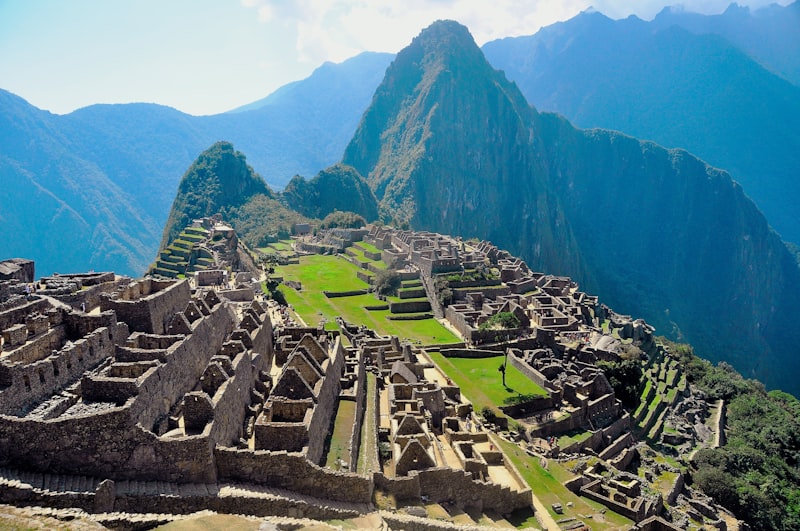
Peru’s eastern Andean slopes — where cloud forests and high-altitude valleys create some of South America’s finest coffee-growing terroir
As James Hoffmann observes in The World Atlas of Coffee, Peru’s coffee potential has long outpaced its reputation, with “a growing number of exceptional lots that challenge preconceptions about what Peruvian coffee can be.” The combination of extreme altitude, traditional farming methods, and an explosion of cooperative-driven quality improvements has placed Peru firmly on the specialty map.
Growing Regions
Peru’s coffee belt spans the eastern slopes of the Andes, from the northern border with Ecuador down to the Bolivian frontier. Each region brings its own character, shaped by altitude, microclimate, and the deep river valleys that carve through the mountains.
Cajamarca, in the north, has emerged as Peru’s most celebrated specialty region. Its provinces of Jaén and San Ignacio, nestled in valleys at 1,400 to 1,900 metres, produce coffees of remarkable clarity — bright citric acidity, milk chocolate sweetness, and delicate floral notes. Many of Peru’s Cup of Excellence winners have come from Cajamarca’s organised cooperatives, where investment in wet mills and careful cherry selection has lifted quality dramatically over the past decade.
Cusco, the ancient Inca heartland in the south, grows coffee in the lush Quillabamba and La Convención valleys where the Andes tumble into the Amazon. Altitudes reach up to 2,000 metres, and the cooled mountain air slows cherry maturation, producing dense beans with rounded body, brown sugar sweetness, and stone fruit complexity. Cusco’s remoteness has historically limited market access, but improved infrastructure and cooperative networks are bringing its exceptional lots to international buyers.

Hand-sorted coffee cherries at a cooperative washing station — meticulous selection is central to Peru’s quality revolution
Junín, in central Peru, is the country’s largest producing region by volume. The Chanchamayo and Satipo provinces — warm, humid, and generously watered — yield coffees with a heavier body, nutty sweetness, and mild acidity. Junín is the engine of Peru’s organic production, with thousands of small farms operating under certification through regional cooperatives.
San Martín, in the northeast, has a compelling story of transformation. Once dominated by coca cultivation, the region pivoted to coffee through government and NGO programs in the 1990s and 2000s. Today, San Martín produces clean, soft-bodied cups at moderate altitudes (1,000–1,500 metres) and has become a model for agricultural development in post-conflict communities.
Peru harvests coffee from March to September, with the main crop peaking between May and August. The single annual harvest — unlike Colombia’s near year-round picking — concentrates the country’s production into a tight window that demands efficient processing infrastructure.
Organic Pioneer
Peru’s dominance in organic coffee is not an accident — it is a consequence of economics and geography. The vast majority of Peruvian coffee farmers work plots of less than three hectares, often in remote mountain communities where synthetic fertilisers and pesticides are simply too expensive or logistically impractical to obtain. Farming has been de facto organic for generations. What changed was certification: beginning in the late 1990s, cooperatives and development organisations helped thousands of smallholders formalise their organic status, unlocking premium prices on the international market.
Today, Peru supplies roughly a quarter of the world’s certified organic coffee. The country is also a major source of Fair Trade, Rainforest Alliance, and UTZ-certified beans. For roasters seeking traceable, ethically sourced green coffee with credible sustainability credentials, Peru has become an indispensable origin.

Shade-grown coffee under native tree canopy — Peru’s traditional smallholder farming is inherently organic and biodiversity-friendly
Cooperatives and Fair Trade
The cooperative model is the backbone of Peruvian coffee. With farms too small to negotiate individually with exporters, smallholders pool their harvest through cooperatives that handle wet milling, dry milling, quality control, and export logistics. Organisations like CENFROCAFE in Cajamarca, Cecovasa in Puno, and the Central de Cooperativas Agrarias de la Selva Central (COCLA) in Cusco have become powerful engines of rural development — providing technical assistance, access to credit, and collective bargaining power that individual farmers could never achieve alone.
“The cooperative system has been transformative for Peruvian coffee quality,” notes the SCA’s research on Latin American origins. By centralising processing and cupping, cooperatives can identify high-scoring lots, separate them for specialty buyers, and return premiums directly to the farmers who produced them — a virtuous cycle that incentivises quality at every link in the chain.
The predominant varieties are Typica, Bourbon, and Caturra — classic Arabica cultivars that thrive in Peru’s high-altitude, shaded environment. Newer rust-resistant varieties like Catimor have gained ground since the devastating roya (coffee leaf rust) outbreak of 2012–2013, which destroyed up to 40 percent of Peru’s crop and reshaped the country’s varietal landscape.
Flavour Profile
Peruvian coffee at its best is clean, sweet, and gently complex. The classic washed profile delivers milk chocolate, caramel, and nutty sweetness with a soft, round body and mild, citric acidity — approachable and versatile, equally at home in a pour-over or as the sweet base note of an espresso blend. Higher-altitude lots from Cajamarca and Cusco push further, offering brighter acidity, floral aromatics, and stone fruit notes of peach and apricot.
Peruvian coffee brewed as a pour-over — the clean, sweet profile rewards careful extraction and lighter roasts
As specialty interest has grown, some cooperatives are experimenting with honey and natural processing, producing lots with heavier body, tropical fruit, and wine-like fermentation character. These remain a small fraction of total output, but they signal Peru’s willingness to innovate beyond its traditional strengths.
Why It Matters
Peru matters to the coffee world for reasons that extend beyond the cup. It demonstrates that smallholder farming, cooperative organisation, and organic production can coexist with rising quality — a model that developing coffee origins worldwide are watching closely. Its transformation of coca-growing regions into thriving coffee communities is a rare agricultural success story. And its sheer volume of certified organic and Fair Trade coffee makes it essential for any roaster committed to ethical sourcing.
For the curious drinker, Peru offers exceptional value: clean, sweet, and well-made coffees at price points that more fashionable origins cannot match. As infrastructure improves and cooperatives continue investing in quality, the gap between Peru’s potential and its reputation is closing fast. The quiet giant of Andean coffee is finding its voice.
Further Reading
- The World Atlas of Coffee by James Hoffmann — regional profiles of Peruvian coffee departments and their evolving quality
- Uncommon Grounds by Mark Pendergrast — the economic history of Latin American coffee production
- SCA Coffee Research — resources on origin profiles, processing methods, and sustainability certifications
- Cup of Excellence Peru — annual quality competition highlighting Peru’s top specialty lots
Related Topics
Colombia
Colombia's Andean geography — three mountain ranges, volcanic soils, and year-round harvests — yields balanced washed Arabicas with caramel sweetness and bright stone fruit.
getting-startedWhat is Coffee Origin?
Coffee origin is the story of place — altitude, soil, and climate shape every flavour note. From Ethiopian florals to Colombian caramel and Kenyan citrus.
varietyBourbon
Bourbon is Arabica's second foundational cultivar — named after Réunion island, prized for rich sweetness, chocolate notes, full body, and complex fruit.
varietyTypica
Typica is Arabica's foundational cultivar, known for clean sweetness, silky body, and delicate acidity — the genetic root of most modern coffee varieties worldwide.