 English
  Українська
  Čeština
 Burundi is one of the smallest countries in Africa, yet its coffee punches far above its weight. Nestled between Rwanda, Tanzania, and the Democratic Republic of Congo, this landlocked nation sits on a high volcanic plateau where altitudes of 1,500 to 2,000 metres, mineral-rich soils, and equatorial rainfall converge to create ideal growing conditions for exceptional Arabica coffee. Coffee accounts for over 60 percent of Burundi’s export earnings, and roughly 800,000 families — nearly one in every two households — depend on the crop for their livelihood. Despite political instability and infrastructure challenges that have long suppressed the country’s reputation, Burundi’s best lots now regularly score above 87 points on the SCA scale and command premium prices at international auctions.
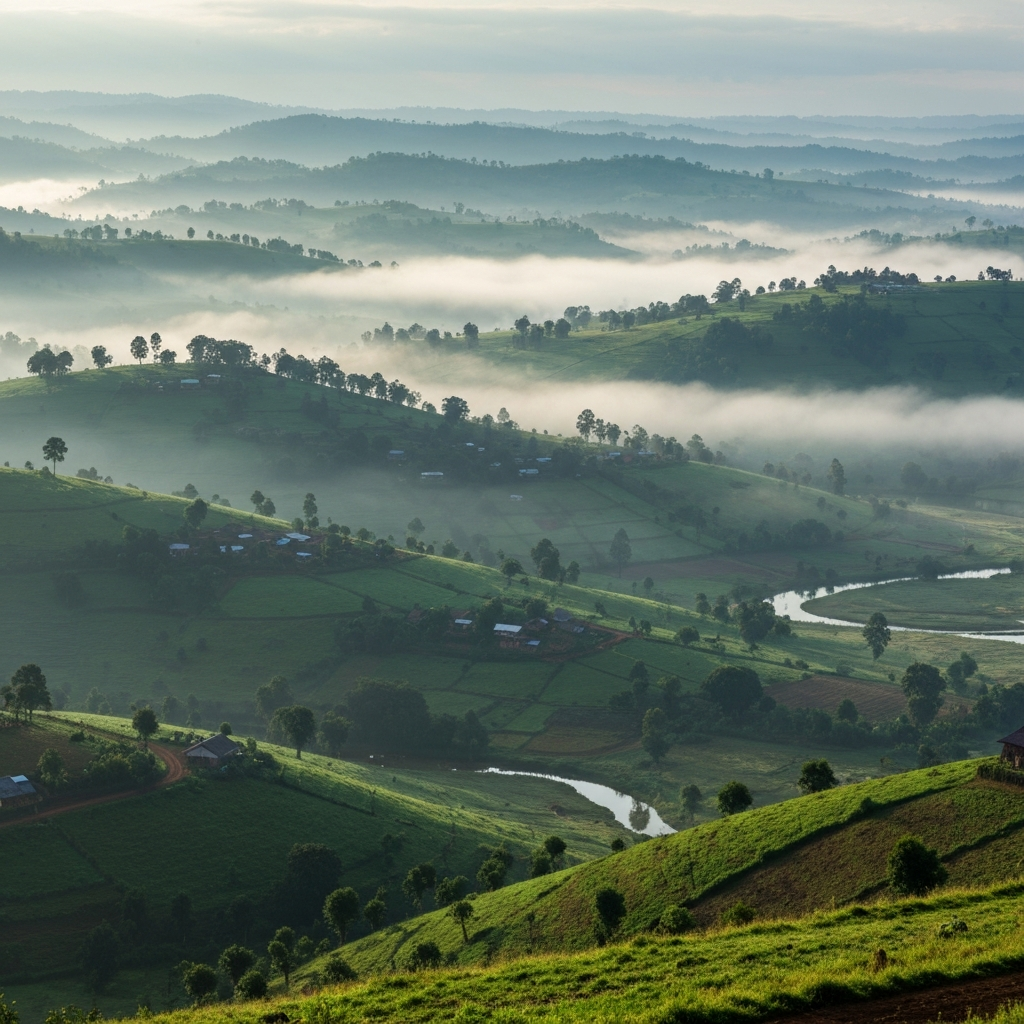
Burundi’s highland plateau — volcanic soils and altitudes above 1,500 metres create ideal conditions for complex Arabica coffee
As James Hoffmann observes in The World Atlas of Coffee, Burundi shares much of its terroir with neighbouring Rwanda, and the two countries produce coffees that are strikingly similar in profile — yet Burundi remains far less well known, representing one of the specialty world’s most compelling undiscovered origins.
Kayanza and Ngozi — The Heartland
The northern provinces of Kayanza and Ngozi are the epicentre of Burundi’s specialty production. Here, at altitudes between 1,700 and 2,000 metres, smallholder farmers — typically cultivating fewer than 250 trees each — deliver ripe cherry to centralised washing stations (sogestal) that dot the hillsides. These stations are the critical infrastructure that transformed Burundian coffee from a bulk commodity into a specialty contender, beginning with privatisation reforms in the early 2000s.
Kayanza coffees are known for their sparkling acidity and complex fruit character — think lemon curd, ripe apricot, and orange blossom, wrapped in a silky, tea-like body. Ngozi lots tend toward darker fruit notes — blackcurrant, plum, and cranberry — with a heavier body and a lingering, sweet finish.
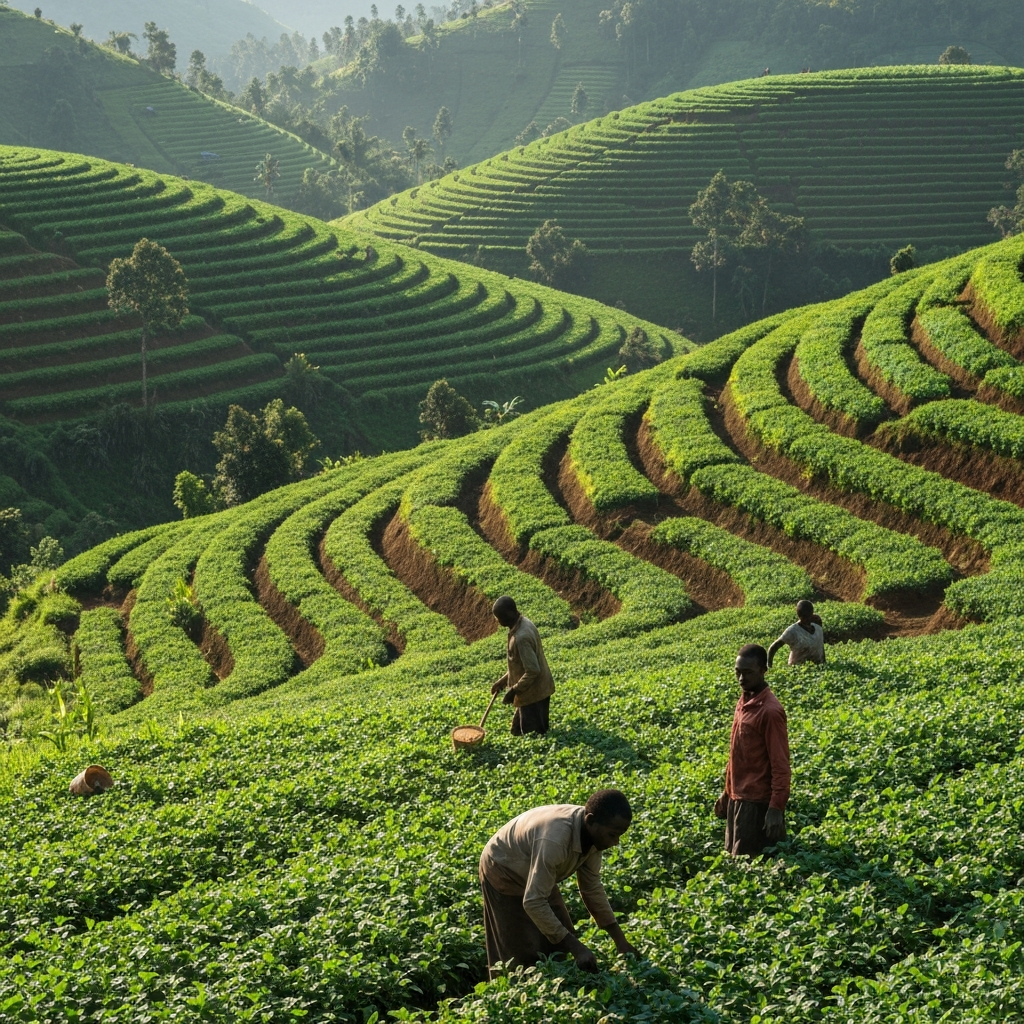
The rolling hills of northern Burundi — smallholder farms cover the slopes, each family tending a few hundred coffee trees
Other notable regions include Muyinga in the northeast and Gitega in the central highlands, though these are less established on the specialty market. The shores of Lake Tanganyika in the west offer lower-altitude production (around 1,200 metres) with a distinctly different, more mellow profile.
Burundi’s coffee sector was state-controlled until 2008, when reforms allowed private washing stations to operate independently. This single policy change ignited a quality revolution — within a decade, Burundi had won its first Cup of Excellence and established itself as a serious specialty origin.
Processing — The Washed Standard
The washed (wet) process dominates Burundian specialty production, and the country’s washing stations are central to its quality story. Ripe cherries are hand-sorted, depulped, and fermented in concrete tanks for 12 to 24 hours — conditions that the country’s cool highland nights help regulate naturally. After fermentation, beans are washed in clean channels fed by mountain streams and dried slowly on raised African beds over two to three weeks.
This meticulous washed processing is what gives Burundian coffee its hallmark clarity. The cup is transparent — you taste the altitude, the volcanic minerals in the soil, and the Bourbon variety’s inherent sweetness without any processing noise. The best Burundian washed lots are often compared to fine washed Kenyan or Ethiopian coffees in their vibrancy and complexity.
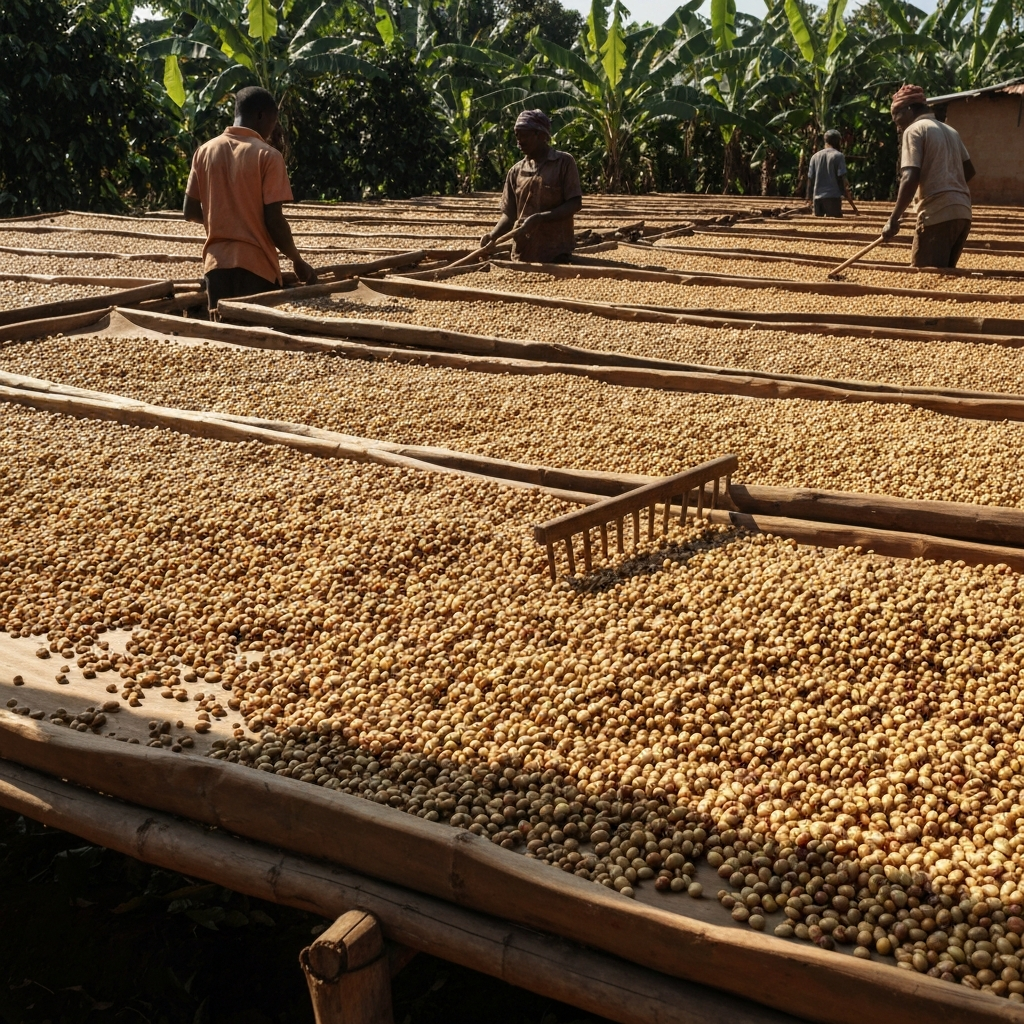
Raised drying beds at a Burundian washing station — slow, even drying over weeks develops the clean, bright profile the country is known for
Some stations are beginning to experiment with natural and honey processing, producing richer, fruitier lots that offer an interesting counterpoint to the washed standard. These experimental lots are still a small fraction of total production but are gaining traction with roasters seeking novelty.
Varieties — Bourbon’s Domain
Burundi’s varietal landscape is dominated by Bourbon — specifically the Jackson and Mibirizi selections that were introduced during the Belgian colonial period and have adapted beautifully to the country’s highland terroir over decades. These old Bourbon trees, many of them 40 to 60 years old, produce small, dense cherries with concentrated sweetness and a complexity that younger plantings struggle to match.
The Bourbon variety’s natural affinity for high altitude and its tendency toward lower yields but higher cup quality make it an ideal fit for Burundi’s smallholder model, where each tree’s output is precious. Some farms also grow SL28 and SL34 selections, which add further complexity, and there are small plantings of disease-resistant hybrids, though these are less prized by specialty buyers.
Flavour Profile
At its best, Burundian coffee delivers a cup of extraordinary brightness and clarity. Expect:
- Acidity: Sparkling, citrus-driven — lemon, bergamot, orange zest, sometimes a tart cranberry edge
- Sweetness: Honey, raw cane sugar, apricot jam
- Body: Medium, silky, often described as tea-like
- Finish: Clean, lingering, with floral undertones — jasmine and honeysuckle are common descriptors
These characteristics place Burundi firmly in the company of the great East African washed origins. The best lots rival Yirgacheffe for floral complexity and approach Kenya in acidity, while maintaining a gentler, more accessible balance.
An Emerging Origin
Burundi’s journey from overlooked bulk producer to specialty contender is one of the most inspiring stories in modern coffee. The country entered its first Cup of Excellence competition in 2012, and winning lots have since sold for prices that would have been unimaginable a decade earlier. Organisations like Long Miles Coffee Project — founded by American-Burundian couple Ben and Kristy Carlson — have invested directly in washing station infrastructure, farmer training, and transparent sourcing, creating a model that other emerging origins are studying.

Burundi in the cup — bright, citrus-driven, and clean, with a complexity that rewards careful attention
Challenges remain significant — political instability, limited infrastructure, climate vulnerability, and the difficulty of reaching international markets from a landlocked country all constrain growth. But the quality trajectory is unmistakable, and for specialty buyers willing to look beyond established names, Burundi offers some of the best value in African coffee today.
Further Reading
- The World Atlas of Coffee by James Hoffmann — regional profiles and processing context for Burundi
- Cup of Excellence Burundi — competition results and auction prices
- Long Miles Coffee Project — direct-trade sourcing and farmer partnerships in Kayanza
- ICO — International Coffee Organization — Burundian production statistics and export data
Related Topics
Rwanda
The 'Land of a Thousand Hills' has undergone a remarkable coffee renaissance, producing bright, complex, floral-citrus cups.
originKenya
Kenyan coffee delivers intense blackcurrant, grapefruit, and tomato-like acidity from SL28 and SL34 cultivars grown at high altitude near Mount Kenya.
processWashed (Wet) Processing
Washed coffee processing removes all fruit before drying to reveal clean, bright cups — floral, terroir-transparent, and prized by the specialty world. The benchmark method.
varietyBourbon
Bourbon is Arabica's second foundational cultivar — named after Réunion island, prized for rich sweetness, chocolate notes, full body, and complex fruit.