 English
  Українська
  Čeština
 Guatemala is a country shaped by fire. Thirty-seven volcanoes punctuate its western highlands, three of them still active, and their eruptions over millennia have blanketed the surrounding slopes with mineral-rich soils that happen to be ideal for growing coffee. When Jesuit missionaries first planted Coffea arabica here in the mid-eighteenth century, they could not have known they were establishing what would become one of Central America’s most respected origins — a country whose coffees are prized for their deep chocolate sweetness, bright acidity, and a full, almost velvety body that sets them apart from their regional neighbours.
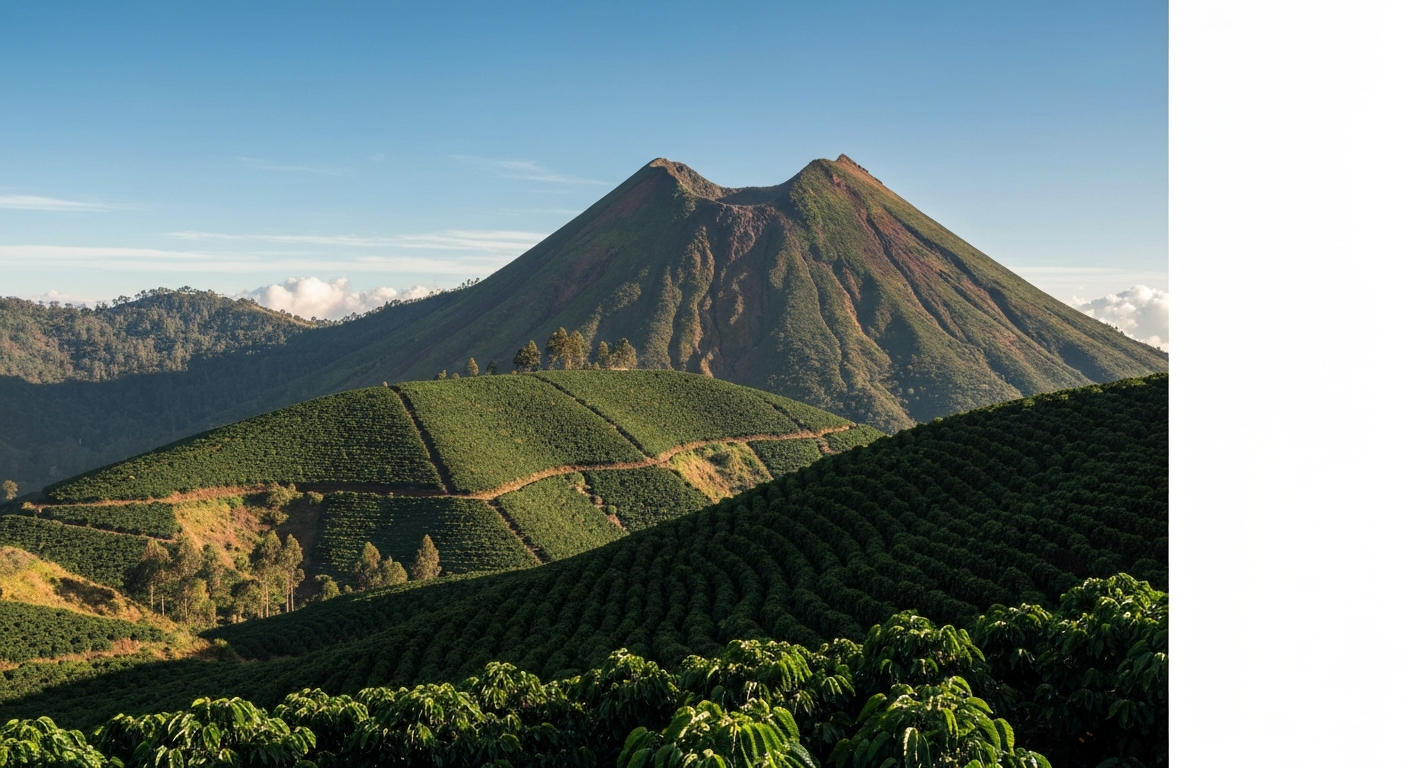
Guatemala’s volcanic highlands — centuries of eruptions have created some of the most fertile coffee-growing soils in the Americas
Today Guatemala produces roughly 3.5 million 60-kilogram bags annually, making it Central America’s third-largest exporter behind Honduras and, in some years, Nicaragua. But volume alone tells a thin story. What makes Guatemala essential to the specialty coffee conversation is the remarkable diversity packed into a country roughly the size of Tennessee — eight officially recognised growing regions, each with its own altitude band, microclimate, and cup character. As James Hoffmann notes in The World Atlas of Coffee, Guatemala’s regional designation system, Anacafé’s “8 Regions” programme, is one of the most clearly defined terroir frameworks in the coffee world.
Flavour Profile
The classic Guatemalan cup is one of the most approachable in specialty coffee: rich dark chocolate and brown sugar form the backbone, supported by a bright, citric acidity — often reminiscent of green apple or grapefruit — and a full, round body. At higher altitudes, you begin to find floral aromatics and stone-fruit sweetness that add complexity without sacrificing that signature cocoa depth. The finish tends to be clean and lingering, with a gentle spice note — cinnamon, clove, sometimes black pepper — that surfaces as the cup cools.
This combination of sweetness, body, and structured acidity is why Guatemalan coffees are so popular with roasters worldwide. They perform beautifully as single-origin espresso and are a cornerstone of countless high-end blends, lending depth and chocolate richness wherever they appear.
Growing Regions
Guatemala’s coffee geography is defined by its volcanoes, its mountain ranges, and the interplay of Pacific and Caribbean weather systems. Four regions, in particular, dominate the specialty market.
Antigua
The Antigua Valley sits cradled between three volcanoes — Agua, Acatenango, and Fuego — at altitudes of 1,500 to 1,700 metres. Fuego is still active, periodically dusting the valley with fresh volcanic ash that replenishes the soil with minerals. The valley’s unique microclimate — cool nights, warm days, and low humidity — produces coffees with exceptional body, a pronounced chocolate character, and a sweet, smoky undertone that has made Antigua arguably Guatemala’s most famous growing region. The Bourbon and Caturra varieties planted here thrive in the pumice-rich soil, delivering a cup that is rich without being heavy, sweet without being simple.
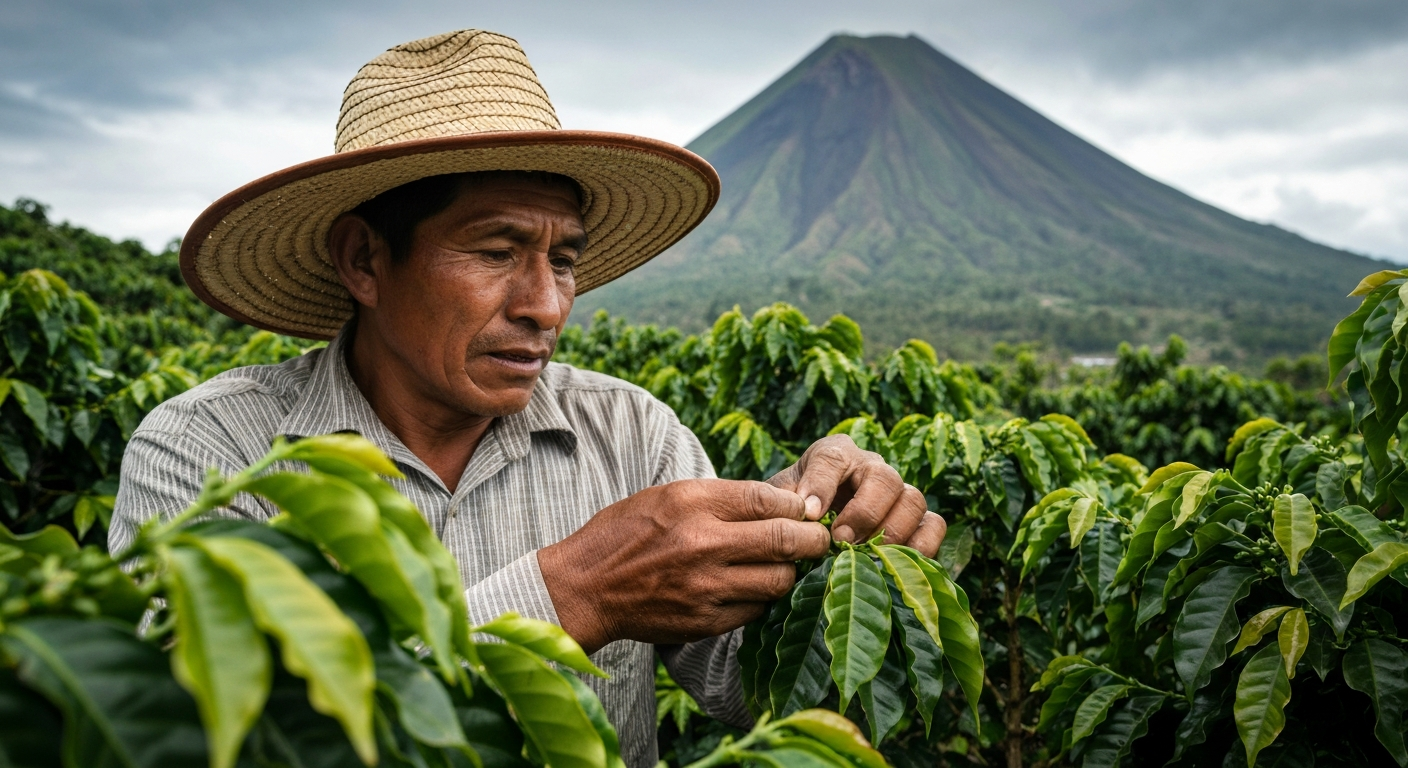
Volcán de Agua towers over Antigua — its fertile slopes produce some of Guatemala’s most sought-after coffees
Huehuetenango
In the remote northwestern highlands, far from any volcano, Huehuetenango (pronounced “way-way-teh-NANG-oh”) reaches the highest altitudes in Guatemalan coffee — farms here climb above 2,000 metres. Dry, hot winds from Mexico’s Tehuantepec plain protect the region from frost, enabling cultivation at elevations that would be impossible otherwise. The result is a strikingly different cup from Antigua: complex fruit acidity — often wine-like, with notes of red grape, dried cherry, and tropical fruit — layered over a lighter but still substantial body. Huehuetenango coffees are Guatemala’s answer to the question of whether Central American coffees can match the fruitiness of the best African origins, and many specialty roasters would answer with an emphatic yes.
Cobán
Tucked into the cloud forests of Alta Verapaz, Cobán is Guatemala’s wettest coffee region — rainfall can exceed 3,000 millimetres annually, and mist blankets the hills for much of the year. This persistent moisture creates a unique growing environment that shapes the cup: Cobán coffees tend to be balanced and clean, with a gentle brightness, stone-fruit sweetness, and a distinctive delicacy that sets them apart from the bolder profiles of Antigua or Huehuetenango. The region’s remoteness has kept many farms small and traditionally managed, often under dense shade canopies that slow cherry maturation and deepen flavour development.
Atitlán
The slopes surrounding Lake Atitlán — one of the most beautiful bodies of water in the Americas — produce coffees that split the difference between Antigua’s chocolate depth and Huehuetenango’s fruit complexity. Volcanic soils rich in organic matter, combined with lake-effect microclimates that moderate temperature swings, yield a cup that is bright, citric, and floral, with a smooth body and a clean, sweet finish. The region’s indigenous Tz’utujil and Kaqchikel communities have grown coffee here for generations, and many of the most exciting lots come from cooperatives that combine traditional knowledge with modern quality practices.
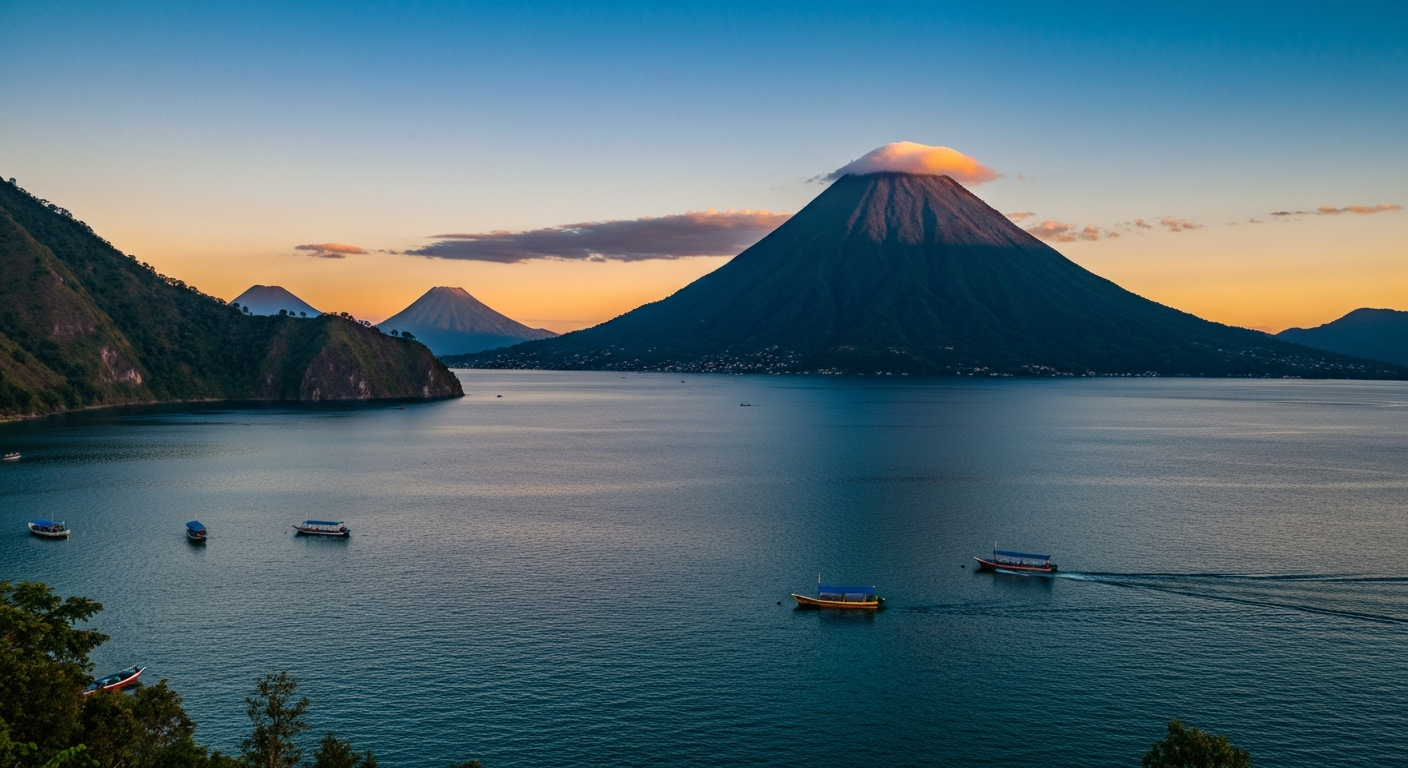
Lake Atitlán and its surrounding volcanoes — the lake-effect microclimate gives Atitlán coffees their bright, floral character
Volcanic Terroir
The concept of terroir — the idea that a coffee’s flavour is shaped by the specific place where it was grown — finds perhaps its clearest expression in Guatemala. The country’s volcanic soils are unusually rich in nitrogen, phosphorus, and trace minerals like zinc and boron, all of which contribute to the dense cellular structure of the coffee seed and, ultimately, to the cup’s body and sweetness. Hoffmann describes Guatemalan volcanic soils as among the most naturally fertile in the coffee world, requiring less chemical fertilisation than many origins and producing a noticeably heavier, more textured cup.
But soil is only part of the story. Guatemala’s dramatic topography creates microclimates that shift from valley to valley — and sometimes from one side of a hill to the other. Altitude, rainfall, cloud cover, wind patterns, and temperature differentials between day and night all vary sharply across short distances, which is why two farms ten kilometres apart can produce radically different cups. This is what makes Guatemala so rewarding for the curious drinker: there is always another valley, another volcano, another flavour to discover.
Processing
The vast majority of Guatemalan coffee is washed — fully depulped, fermented in concrete or tile tanks for 24 to 48 hours, thoroughly washed in clean water channels, and dried on concrete patios or raised beds under the highland sun. This method produces the clean, transparent cup that Guatemala is known for, allowing the terroir to speak without interference from fermentation-driven fruit flavours.
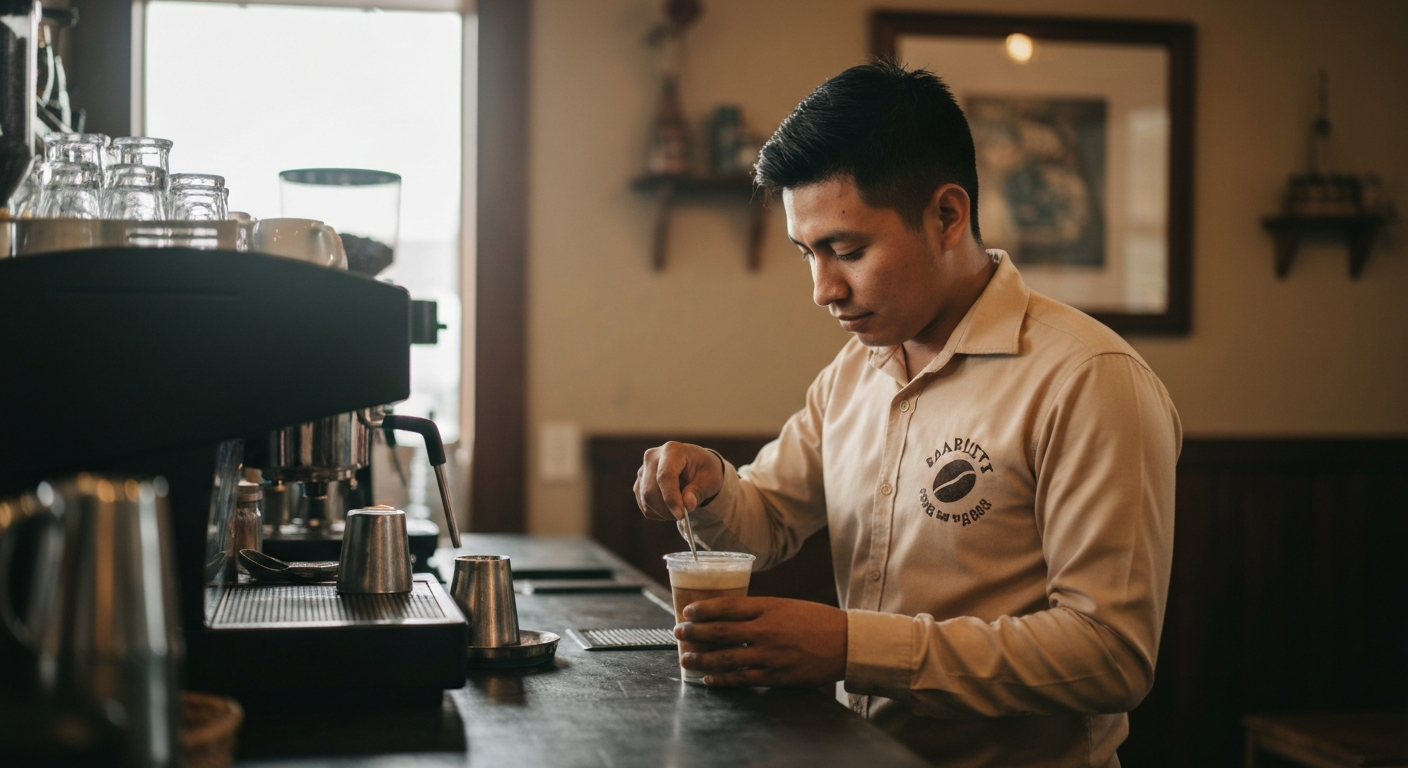
Parchment coffee drying in the Guatemalan highlands — meticulous processing is key to the country’s clean, sweet cup profiles
In recent years, however, a growing number of producers — particularly in Huehuetenango and around Lake Atitlán — have begun experimenting with honey and natural processes, as well as extended and anaerobic fermentations. These experimental lots are appearing at competition tables and on specialty menus worldwide, adding new dimensions to Guatemala’s flavour portfolio without abandoning the chocolate-and-citrus foundation that defines the country’s identity.
Why It Matters
Guatemala occupies a unique position in the coffee world. For roasters, it is a workhorse origin — reliable, versatile, and crowd-pleasing in blends and as a single origin alike. For green buyers, its well-developed infrastructure and clear regional distinctions make it one of the most transparent and traceable origins in Central America. And for drinkers, it offers an ideal entry point into specialty coffee: the flavours are bold enough to be immediately recognisable yet nuanced enough to reward deeper exploration.
Beyond the cup, Guatemala’s coffee sector faces real challenges — the devastation of coffee leaf rust (la roya) in 2012–2013 wiped out nearly a quarter of the country’s production and forced thousands of smallholders off their land. Climate change continues to push viable growing altitudes higher, and many farming communities struggle with poverty and lack of access to markets. Yet Guatemalan producers have responded with resilience: investing in rust-resistant varieties, expanding direct trade relationships, and leveraging the country’s reputation for quality to command the premiums that make high-altitude farming sustainable.
For anyone who wants to understand what terroir means in coffee — how soil, altitude, and climate converge to create flavour — Guatemala is one of the finest classrooms on Earth.
Further Reading
- The World Atlas of Coffee by James Hoffmann — comprehensive profiles of Guatemala’s eight growing regions and their cup characteristics
- Anacafé — Asociación Nacional del Café — Guatemala’s national coffee association, with regional maps and production data
- SCA — Specialty Coffee Association — research papers, cupping protocols, and origin resources
- World Coffee Research — variety development and climate-resilience programmes relevant to Guatemala
Related Topics
Colombia
Colombia's Andean geography — three mountain ranges, volcanic soils, and year-round harvests — yields balanced washed Arabicas with caramel sweetness and bright stone fruit.
getting-startedWhat is Coffee Origin?
Coffee origin is the story of place — altitude, soil, and climate shape every flavour note. From Ethiopian florals to Colombian caramel and Kenyan citrus.
varietyBourbon
Bourbon is Arabica's second foundational cultivar — named after Réunion island, prized for rich sweetness, chocolate notes, full body, and complex fruit.
processWashed (Wet) Processing
Washed coffee processing removes all fruit before drying to reveal clean, bright cups — floral, terroir-transparent, and prized by the specialty world. The benchmark method.