 English
  Українська
  Čeština
 The Variety That Changed Everything
No coffee variety has captured the imagination of the specialty world quite like Gesha. When Hacienda La Esmeralda in the Chiriquí highlands of Panama first submitted a Gesha lot to the Best of Panama competition in 2004, it shattered price records and stunned judges with a flavour profile that seemed to belong to a different beverage entirely — explosive jasmine aromatics, bergamot citrus, tropical stone fruit, and a sweetness so refined it resembled nectar. The lot scored 95.5 points. In that single moment, Gesha rewrote the rules of what coffee could taste like and how much the market would pay for the privilege of tasting it.
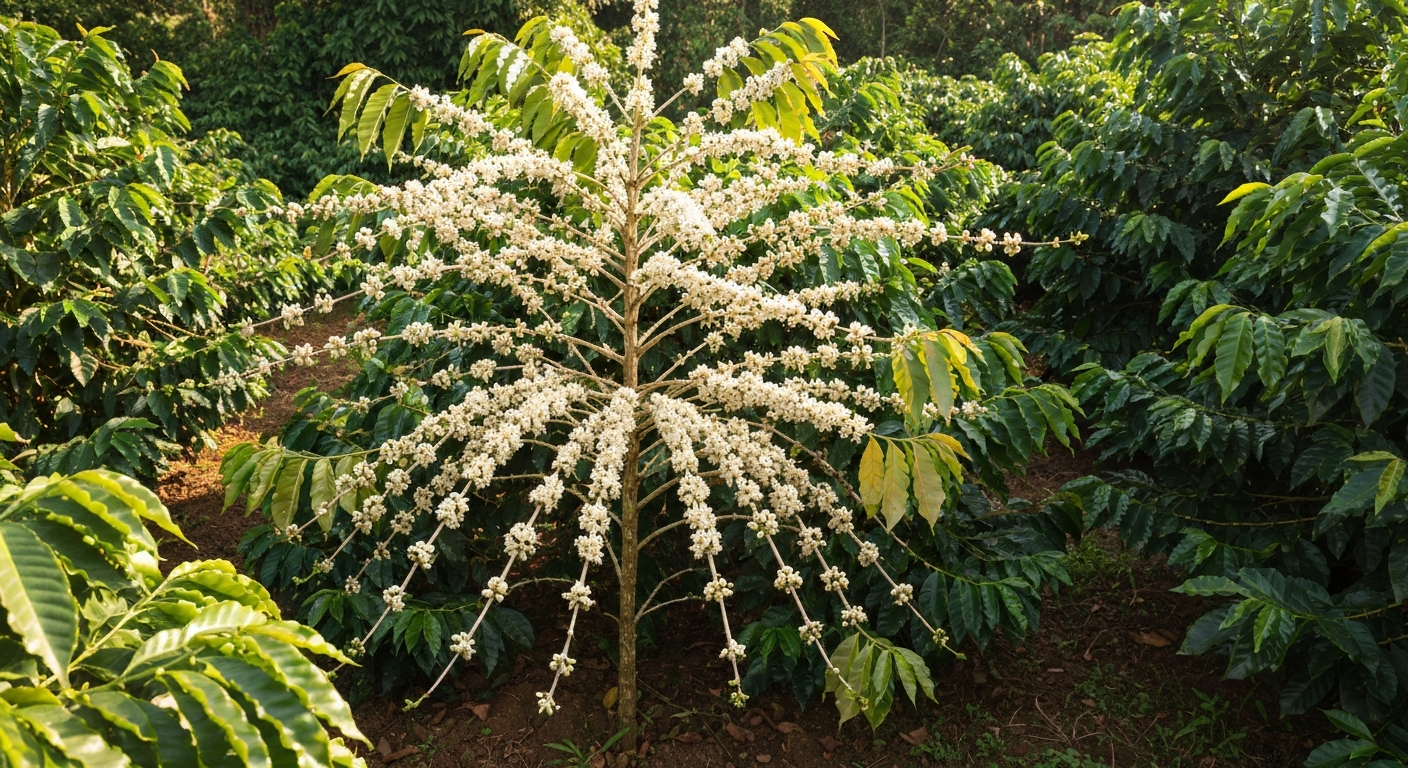
Gesha plants are tall, lanky, and low-yielding — their elongated beans and sparse cherry clusters are unmistakable on the branch
From Ethiopian Forest to Panamanian Fame
Gesha traces its origins to the Gori Gesha forest near the town of Gesha in southwestern Ethiopia, where it was collected as a wild variety in the 1930s and 1940s as part of disease-resistance surveys. Seeds were sent to research stations in Tanzania and then to CATIE (Centro Agronómico Tropical de Investigación y Enseñanza) in Costa Rica. From Costa Rica, Gesha arrived in Panama in the 1960s, where it was planted by the Peterson family at Hacienda La Esmeralda as a rust-resistant option at high altitude. For decades, it was blended anonymously into the farm’s general lots — unremarkable, just another tall, low-yielding tree.
Then, in 2003, a cupping session revealed that the trees growing at the highest elevation — above 1,600 metres on the slopes of Volcán Barú — were producing something the family had never tasted before. As Daniel Peterson later recounted, “We thought there was something wrong with our palates.” There was not. The following year, the lot won Best of Panama and the modern Gesha era began.
In 2023, a lot of Hacienda La Esmeralda Gesha sold at auction for over $6,000 per kilogram — more than many people earn in a month. The variety’s combination of rarity, agronomic difficulty, and transcendent cup quality makes it the most expensive coffee in the world, year after year.
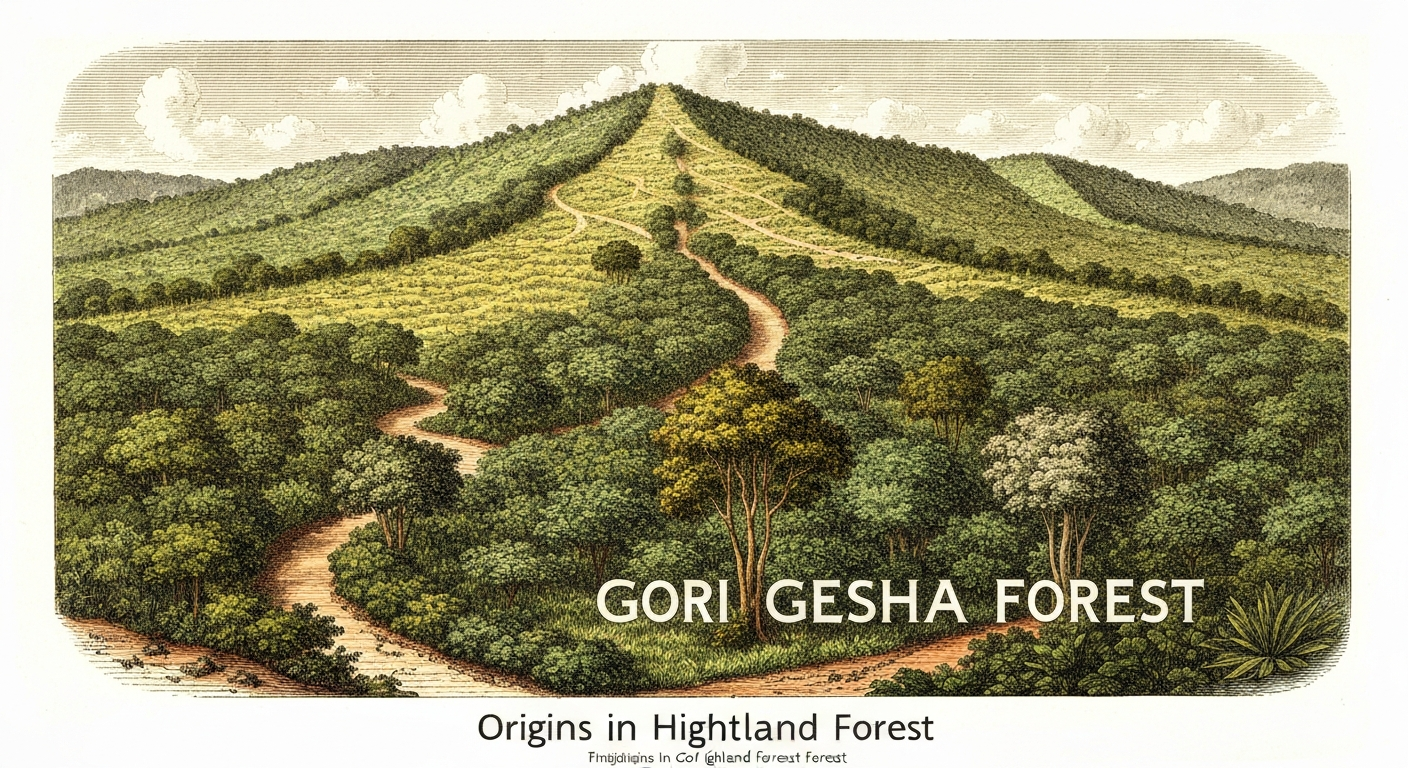
Gesha’s wild origins in Ethiopia’s highland forests — the variety was first collected from the Gori Gesha forest in the 1930s
Why It Tastes Different
Gesha’s extraordinary aromatics are rooted in its genetics and chemistry. Research has shown that the variety produces unusually high concentrations of certain volatile compounds — particularly linalool, the terpene responsible for its signature jasmine and bergamot notes, and geraniol, which contributes rose-like florals. Its bean structure is distinctively elongated, almost pointed at both ends, and the plants themselves are tall, lanky, and low-yielding compared to commercial varieties like Bourbon. At optimal altitude — typically above 1,600 metres — the slow cherry maturation over 9 to 11 months amplifies these characteristics, producing cups with an almost perfume-like complexity, a tea-like body, and a sweetness that lingers on the palate for minutes.
According to World Coffee Research, Gesha’s sensory profile is so distinct that trained cuppers can often identify it blind — a rarity among coffee varieties, and a testament to the power of genetics over terroir.
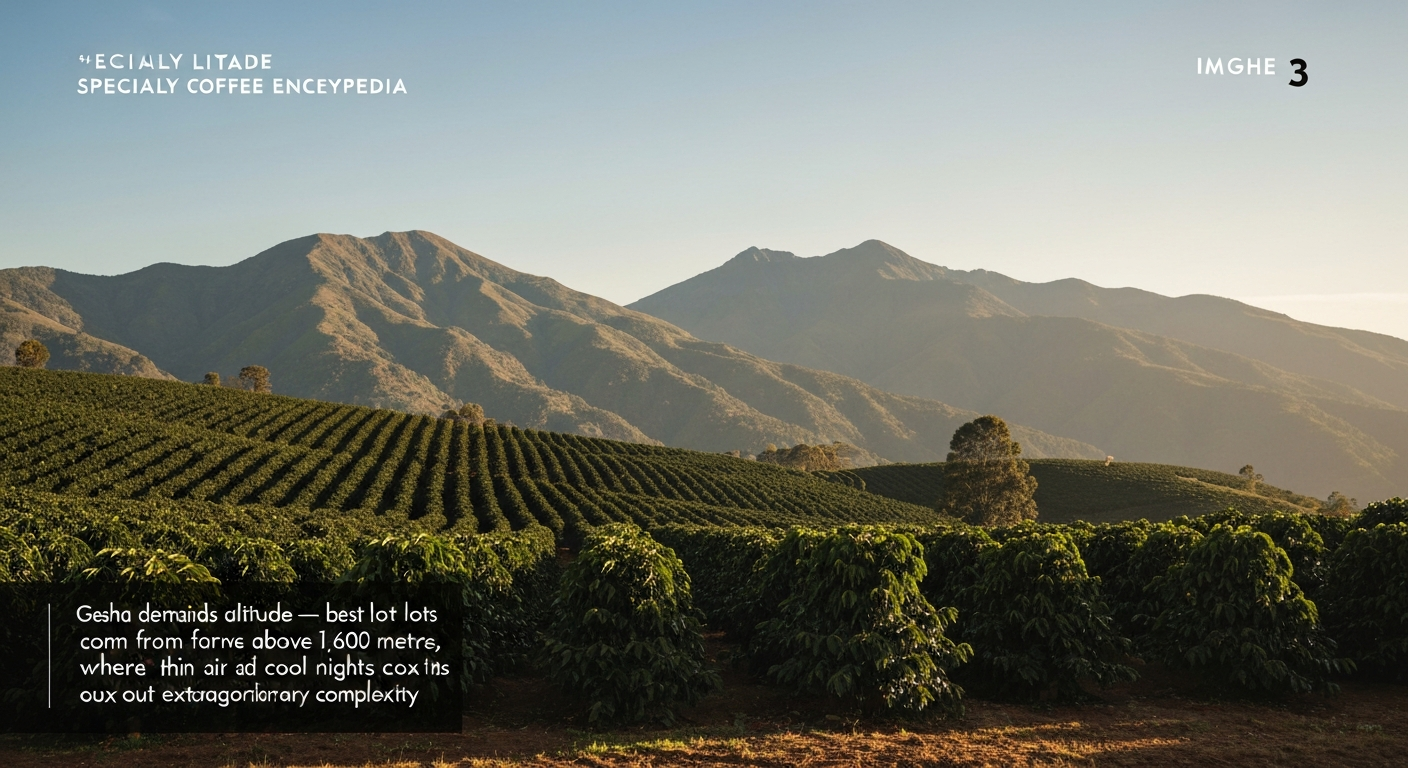
Gesha demands altitude — the best lots come from farms above 1,600 metres, where thin air and cool nights coax out the variety’s extraordinary complexity
Global Spread
The success of Panamanian Gesha sparked a global gold rush. Colombia, where Gesha thrives in the high-altitude departments of Huila and Nariño, has become a major producer of competition-winning Gesha lots — some rivalling Panama’s best. Ethiopia now markets Gesha from its original homeland, including lots from the Gesha forest itself, offering a fascinating comparison between the wild original and its cultivated descendants. Costa Rica, Guatemala, Honduras, and even producers in Asia and East Africa have planted Gesha, though results vary significantly with terroir and management.
The variety demands altitude, meticulous agronomic care, and gentle post-harvest handling — natural or honey process drying can amplify its fruit-forward characteristics, while washed processing tends to emphasise its floral clarity. Not every farm can coax out the magic. As Jeff Koehler writes in Where the Wild Coffee Grows, the gap between ordinary Gesha and transcendent Gesha is enormous — the variety rewards excellence and punishes shortcuts.
More Than Hype
Sceptics sometimes dismiss Gesha as marketing-driven hype — a variety riding its name rather than its quality. But the variety’s dominance in blind cupping competitions worldwide tells a different story. It consistently scores in the highest tier not because of its celebrity, but because its genetic makeup produces flavour compounds that are measurably distinct from other Arabica varieties. For producers willing to invest in the demanding agronomy — the low yields, the specific altitude requirements, the careful harvesting — Gesha offers the possibility of producing something genuinely transcendent. A cup that, at its best, stops you mid-sip and makes you reconsider what coffee can be.
Further Reading
- Where the Wild Coffee Grows by Jeff Koehler — the full story of Gesha’s origins in Ethiopia and its journey to global fame
- The World Atlas of Coffee by James Hoffmann — context on Gesha within the broader landscape of Arabica varieties
- Best of Panama Auction — annual competition results and pricing data for Gesha and other Panamanian lots
- World Coffee Research — genetic research on Gesha and its place in the Arabica family tree
Related Topics
Arabica (Coffea arabica)
Arabica accounts for 60% of global coffee production and virtually all specialty coffee. Here is what separates it from Robusta — genetics, altitude, and cup character.
varietyTypica
Typica is Arabica's foundational cultivar, known for clean sweetness, silky body, and delicate acidity — the genetic root of most modern coffee varieties worldwide.
varietyBourbon
Bourbon is Arabica's second foundational cultivar — named after Réunion island, prized for rich sweetness, chocolate notes, full body, and complex fruit.
originEthiopia
The birthplace of Arabica and still its most genetically diverse origin — Ethiopia produces florals, berries, and citrus from thousands of heirloom varieties across its highlands.