 English
  Українська
  Čeština
 The Compact Powerhouse
In the world of Arabica coffee, few varieties have reshaped farming practices as thoroughly as Caturra. A natural dwarf mutation of Bourbon, Caturra was discovered in the Brazilian state of Minas Gerais in 1937 and quickly proved itself to be one of the most productive and adaptable cultivars ever found. Its compact stature, high yield, and bright, citrus-leaning cup profile made it the variety of choice across Latin America for most of the twentieth century — and it remains deeply important to specialty coffee today. Where Bourbon brought sweetness and body, Caturra brought density, efficiency, and a sparkling acidity that has defined the flavour identity of countries like Colombia, Costa Rica, and Guatemala for generations.
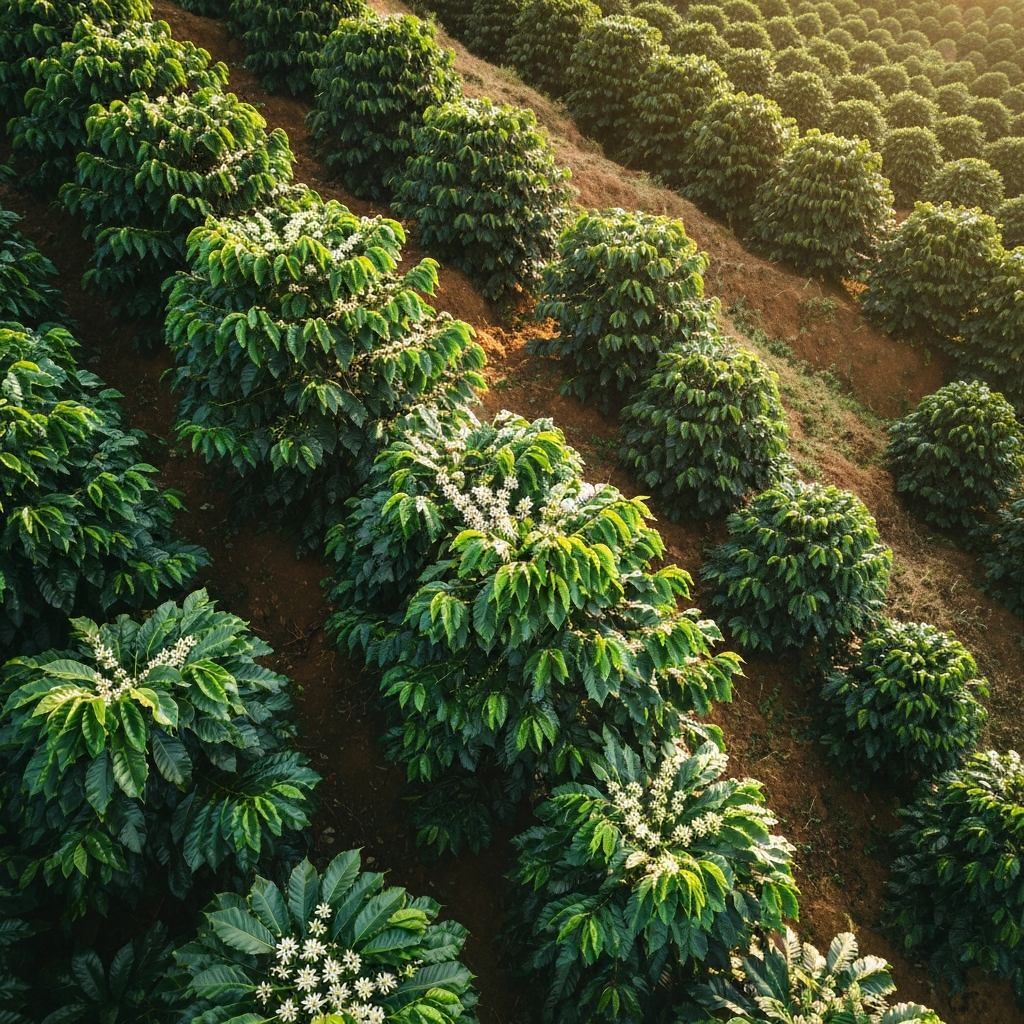
Caturra’s compact growth habit allows farmers to plant trees closer together, dramatically increasing the number of productive plants per hectare
Discovery in Minas Gerais
The story of Caturra begins near the town of Caturra in the state of Minas Gerais, Brazil, around 1937. Farmers noticed a cluster of unusually short Bourbon plants growing in their fields — not stunted by disease or poor conditions, but genetically compact. These plants carried the same dense cherry clusters and round bean shape of their Bourbon parents, but on a frame that stood roughly half as tall. Researchers at the Instituto Agronômico de Campinas (IAC) identified the trait as a single-gene dominant mutation — a natural dwarfism that made the plant inherently smaller while preserving (and in some cases improving) its productivity. As Andrea Illy and Rinantonio Viani explain in Espresso Coffee: The Science of Quality, this kind of spontaneous mutation is rare but not unknown in coffee genetics, and Caturra’s proved to be among the most consequential in the history of the crop.
Caturra can produce up to 70 percent more coffee per hectare than traditional Bourbon, thanks to its compact size allowing closer spacing — a revolution for smallholder farmers across Latin America who needed higher income from limited land.
The Dwarf Advantage
Caturra’s compact stature — typically 1.5 to 2 metres tall compared to Bourbon’s 3 to 4 metres — is not merely a cosmetic difference. It fundamentally changed how coffee could be farmed. Shorter trees are easier to pick, reducing labour costs and improving harvest efficiency. They can be planted at densities of 5,000 to 10,000 trees per hectare, compared to Bourbon’s typical 2,500 to 4,000. More trees per hectare means more cherries, more yield, and more income — a critical advantage for the smallholder farmers who produce the majority of the world’s coffee. The compact canopy also allows better sunlight penetration and air circulation, which can reduce fungal pressure in humid climates. However, Caturra’s productivity comes at a cost: the plants are demanding feeders that require generous fertilisation and careful soil management. Without adequate nutrition, yields decline rapidly, and the trees exhaust themselves within a decade. As James Hoffmann notes in The World Atlas of Coffee, Caturra rewards attentive farming but punishes neglect.
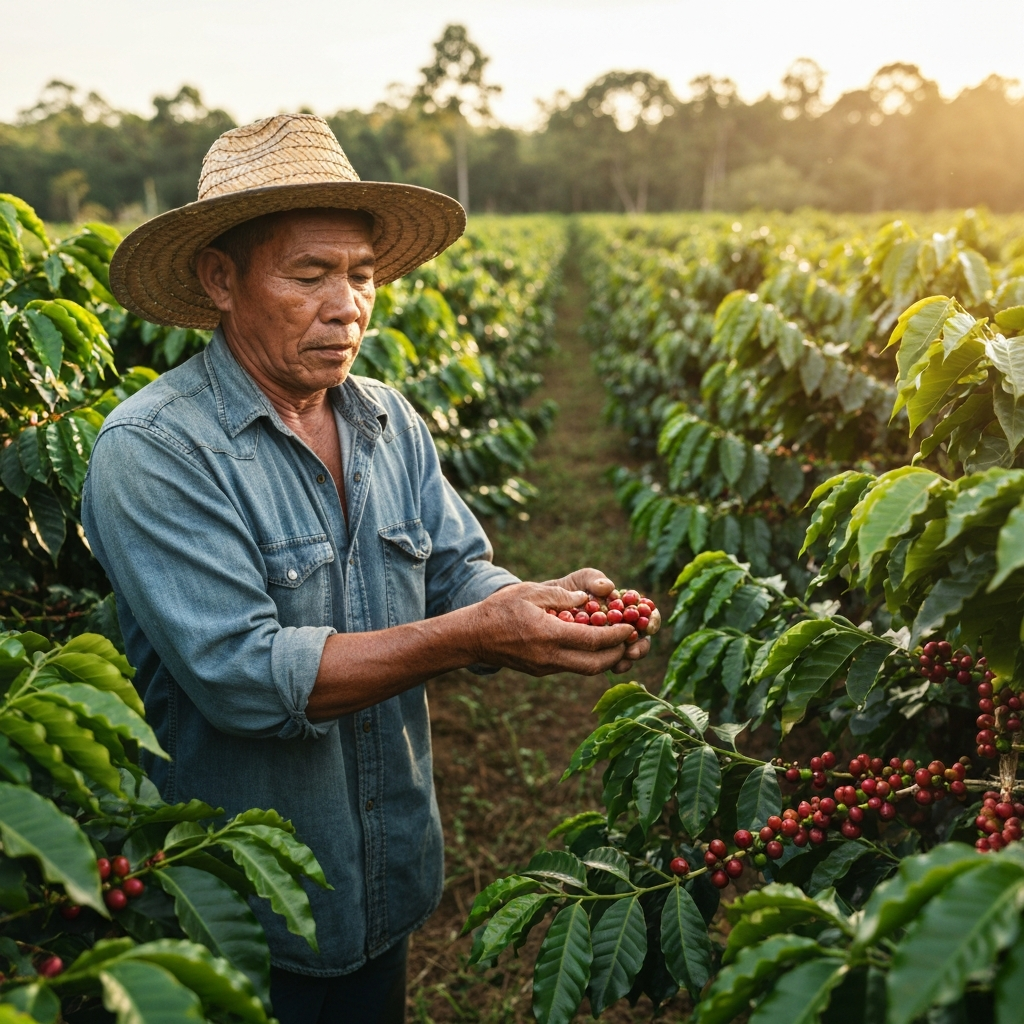
Caturra’s shorter stature makes hand-picking faster and more ergonomic — a practical advantage that helped drive its adoption across the steep terrain of Colombian and Central American farms
Spread Through Latin America
While Caturra was discovered in Brazil, it was Colombia and Central America where the variety truly found its home. In the 1950s and 1960s, Colombia’s Federación Nacional de Cafeteros (FNC) promoted Caturra as part of a massive modernisation campaign, encouraging farmers to replace their tall, sprawling Typica and Bourbon plantations with dense, high-yielding Caturra plots. The programme was spectacularly successful: by the 1980s, Caturra dominated Colombian coffee production and had become synonymous with the bright, clean, well-balanced profile that defined Colombian coffee on the world stage. Costa Rica, Guatemala, Honduras, and Nicaragua followed a similar path, each adopting Caturra as a mainstay variety that thrived in their volcanic soils and high-altitude microclimates. The variety performs best between 1,200 and 2,000 metres above sea level, where cool nights slow cherry maturation and allow complex sugars and organic acids to develop fully.
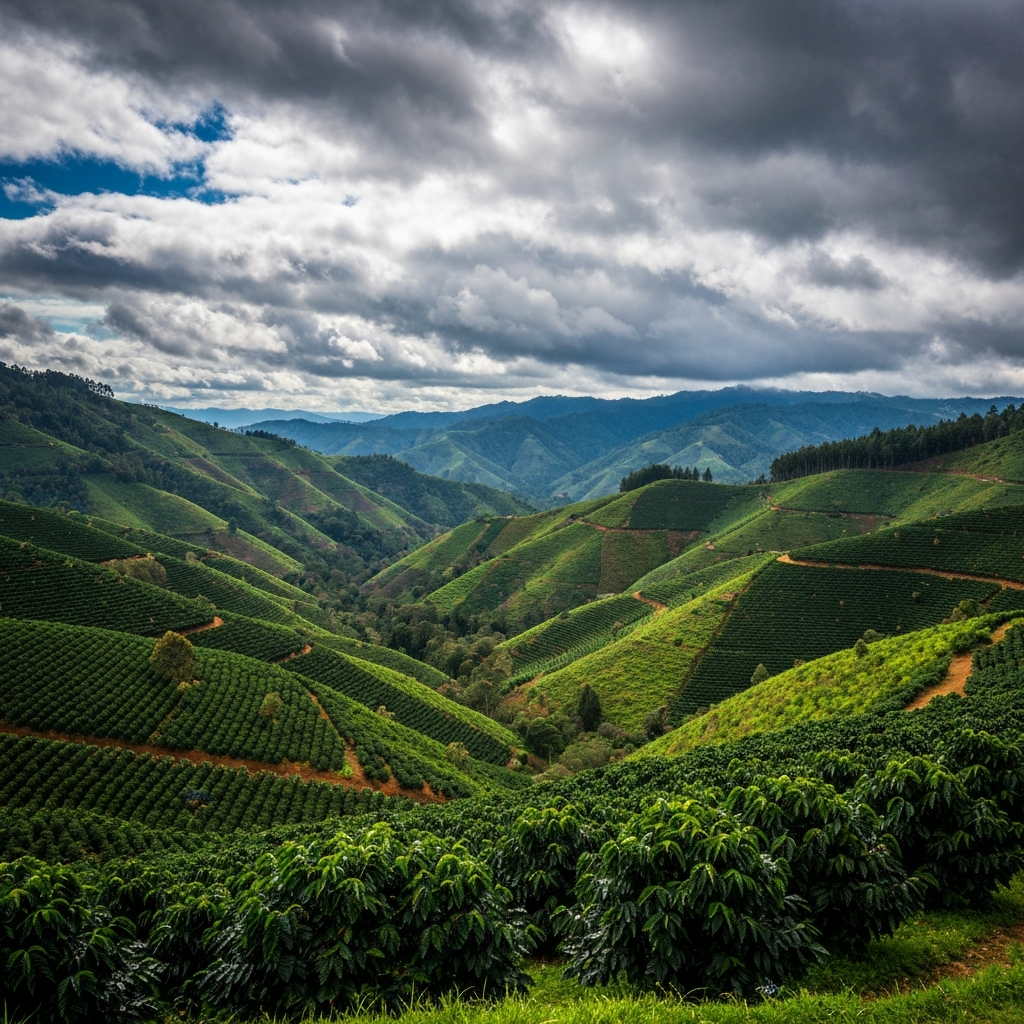
The high-altitude valleys of Colombia and Central America provided the ideal combination of altitude, rainfall, and volcanic soil for Caturra to express its best qualities
Flavour Profile
Caturra’s cup character sits in a distinctive space — bright and lively, with more acidity than its Bourbon parent but slightly less body and sweetness. At its best, Caturra delivers crisp citrus acidity (think lemon, tangerine, green apple), a clean and transparent mouthfeel, and a medium body that lets origin character shine through. Floral notes — jasmine, orange blossom — appear at higher altitudes, while lower-grown Caturra tends toward nuttier, more chocolatey territory. Washed processing, which dominates in Colombia and Central America, amplifies Caturra’s natural brightness and clarity, producing cups that are clean, articulate, and refreshingly direct. Natural and honey processing can round out the acidity and add fruit-forward sweetness, though these methods are less traditional for the variety. As Ric Rhinehart, former executive director of the Specialty Coffee Association, has observed, Caturra’s transparency makes it an excellent indicator of terroir — a variety that tells you more about where it was grown than about its own genetics.
Comparison with Bourbon
The relationship between Caturra and Bourbon is one of the most instructive in coffee genetics. Genetically, Caturra is Bourbon — it carries nearly identical DNA, differing primarily in the single gene responsible for dwarfism. Yet in the cup, the two diverge noticeably. Bourbon tends toward rounder sweetness, heavier body, and stone-fruit or chocolate notes, while Caturra leans citric, lighter-bodied, and more transparent. Some of this difference is genetic, but much of it is environmental: Caturra’s higher planting density and greater nutrient demands create a different physiological stress on the plant, which affects cherry chemistry. Bourbon is generally considered the superior cup in direct side-by-side comparison, particularly the Red and Pink Bourbon mutations that have become darlings of the competition circuit. But Caturra’s vastly higher productivity and easier farm management make it the pragmatic choice for the majority of Latin American producers — a variety that delivers reliably good quality at commercially viable volumes.
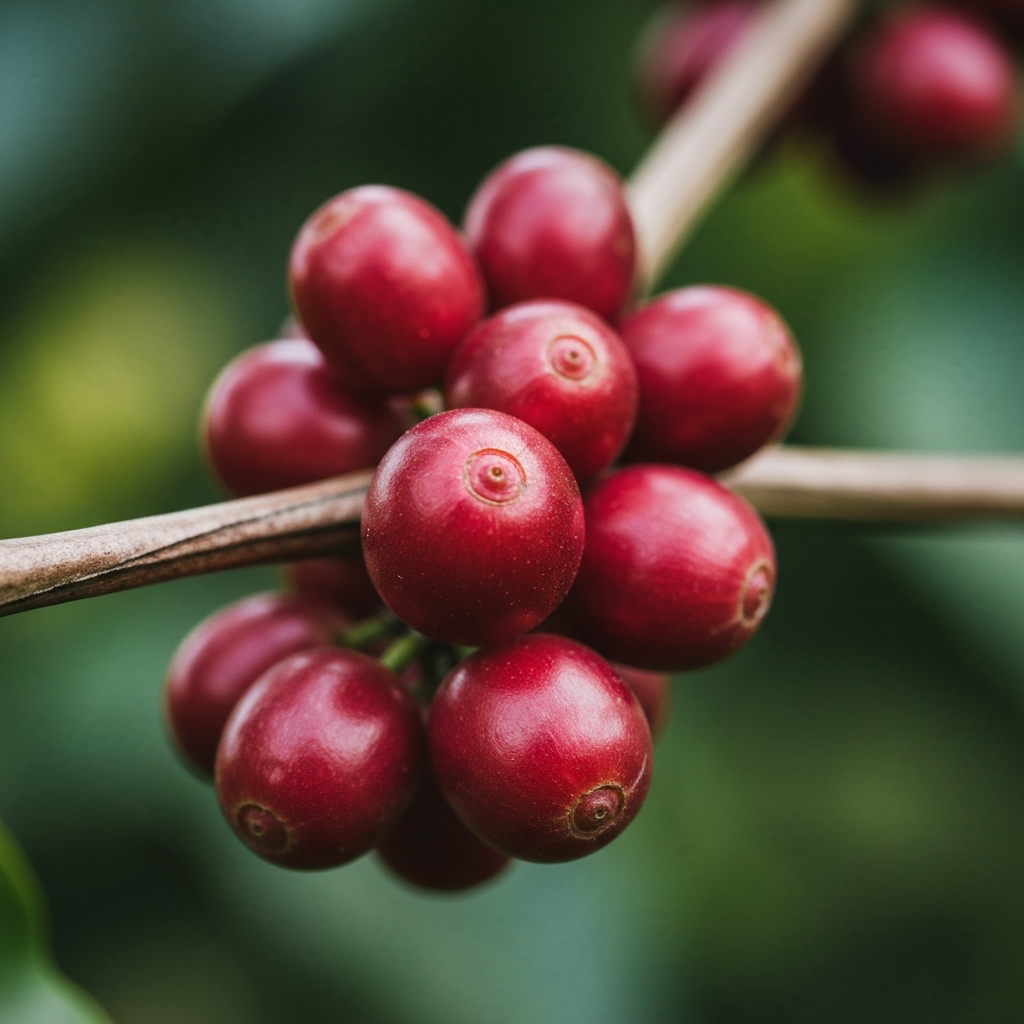
Caturra’s dense cherry clusters ripen slightly more unevenly than Bourbon’s, requiring careful selective picking to achieve the best cup quality
Why It Matters
Caturra’s importance extends far beyond its own cup profile. It is the genetic parent or ancestor of many of the world’s most significant modern varieties. Catuaí — the cross between Caturra and Mundo Novo — combined Caturra’s compactness with even greater disease resilience and became Brazil’s dominant variety. Colombia’s Castillo, developed by Cenicafé, carries Caturra genetics alongside Timor Hybrid resistance to coffee leaf rust. Even the celebrated Gesha is sometimes grafted onto Caturra rootstock for improved vigour. In a coffee industry increasingly threatened by climate change and the spread of devastating diseases like coffee leaf rust — to which Caturra is unfortunately susceptible — the variety’s legacy is being carried forward through its descendants. Caturra itself may gradually cede ground to rust-resistant alternatives, but its DNA will continue to shape the flavour of specialty coffee for decades to come. For now, a well-grown, carefully processed Caturra from a Colombian or Costa Rican hillside remains one of the most satisfying and approachable cups in specialty coffee — bright, clean, and unmistakably alive.
Further Reading
- The World Atlas of Coffee by James Hoffmann — comprehensive coverage of Caturra’s role across Latin American origins
- Espresso Coffee: The Science of Quality by Andrea Illy and Rinantonio Viani — the genetics and agronomy behind Bourbon mutations including Caturra
- World Coffee Research Variety Catalog — agronomic data, genetic lineage, and sensory profiles for Caturra and its descendants
- Uncommon Grounds by Mark Pendergrast — the economic and social history of coffee varieties in Latin America
Related Topics
Bourbon
Bourbon is Arabica's second foundational cultivar — named after Réunion island, prized for rich sweetness, chocolate notes, full body, and complex fruit.
varietyWhat are Coffee Varieties?
Coffee varieties — Typica, Bourbon, Gesha, SL28 — are the genetic blueprints behind every cup. A guide to what they are, how they differ, and why variety matters for flavour.
originColombia
Colombia's Andean geography — three mountain ranges, volcanic soils, and year-round harvests — yields balanced washed Arabicas with caramel sweetness and bright stone fruit.
getting-startedArabica (Coffea arabica)
Arabica accounts for 60% of global coffee production and virtually all specialty coffee. Here is what separates it from Robusta — genetics, altitude, and cup character.