 English
  Українська
  Čeština
 Ethiopia is where the story of coffee begins. The highland forests of southwestern Ethiopia — dense, misty, and ancient — are the evolutionary cradle of Coffea arabica, and wild coffee plants still grow in the understory of the Kaffa and Buno Bedele forests today, exactly as they have for millennia. Legend tells of Kaldi, a ninth-century goat herder who noticed his flock dancing with unusual energy after eating red cherries from a certain shrub. Whether or not Kaldi truly existed, the tale captures a profound truth: Ethiopia has been intertwined with coffee for over a thousand years, longer than any other place on Earth.
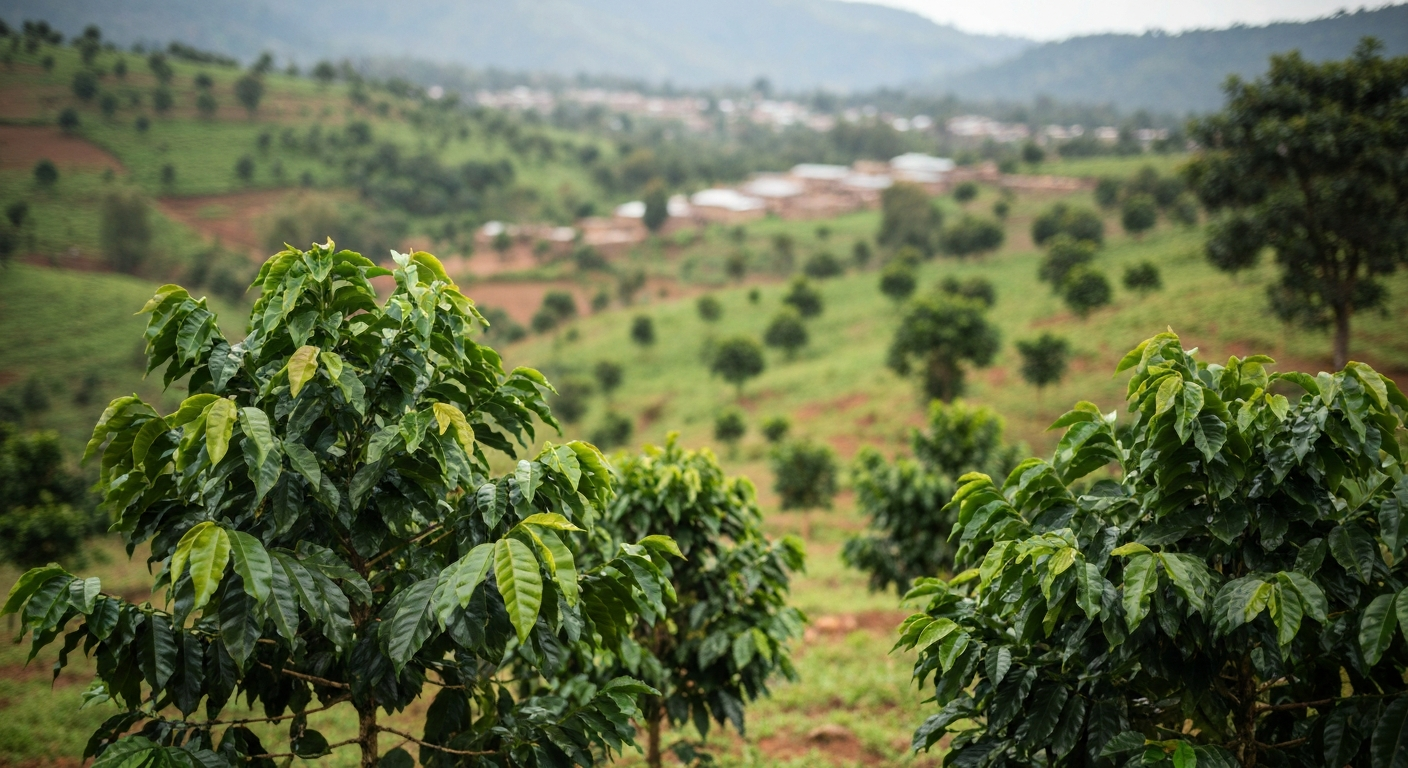
The Ethiopian highlands — the ancestral home of Arabica coffee, where wild plants still grow in ancient forests
As Jeff Koehler writes in Where the Wild Coffee Grows, the forests of southwestern Ethiopia are “the only place in the world where coffee grows as it always has — wild, in the shade of taller trees, without any human intervention.” This genetic homeland is both a museum and a laboratory for the future of coffee.
Heirloom Varieties
No other origin on Earth comes close to Ethiopia’s genetic diversity. While most producing countries cultivate a handful of well-documented cultivars, Ethiopian farmers tend varieties collectively labelled “heirloom” — a catch-all term for thousands of genetically distinct populations that have never been formally catalogued. Research by the Jimma Agricultural Research Center has identified over 6,000 accessions, yet the true number of distinct genotypes may exceed 10,000.
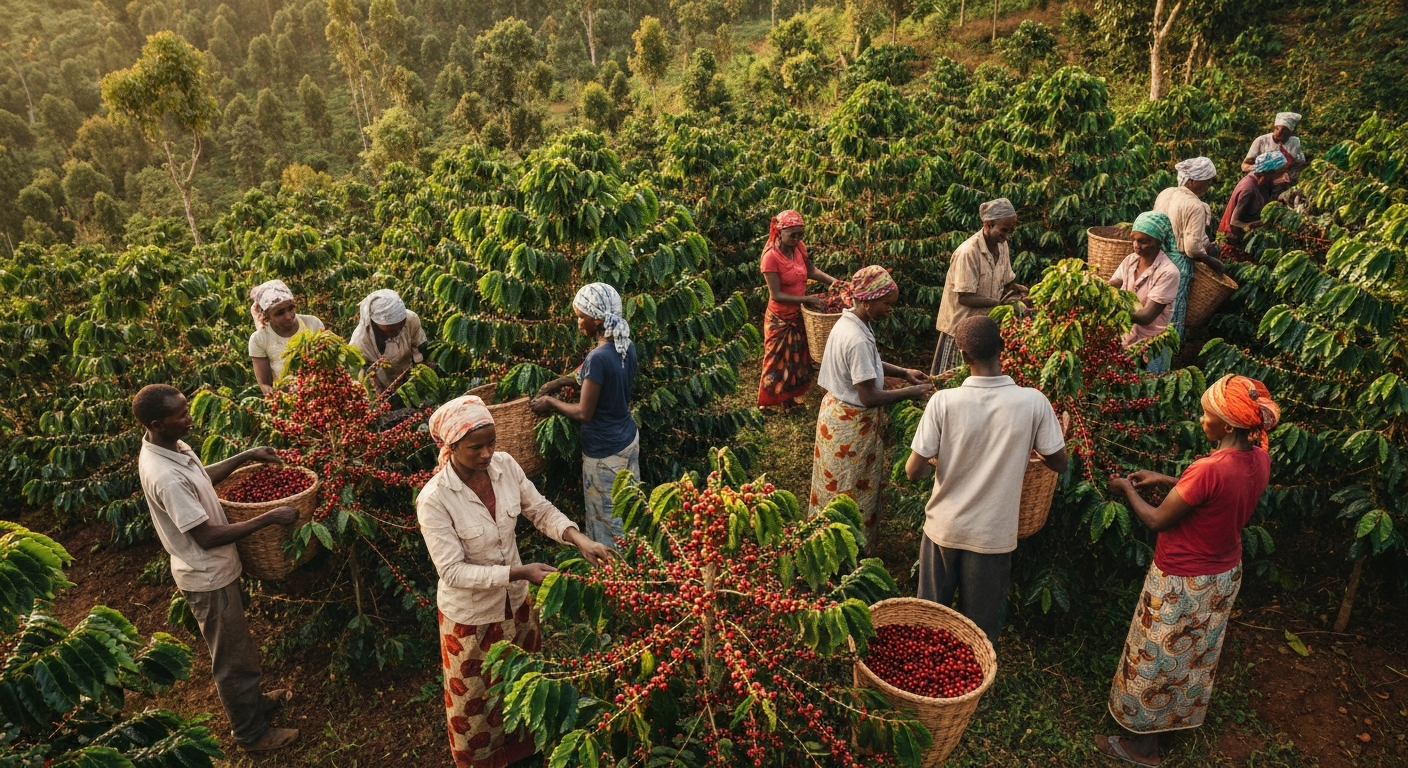
Heirloom coffee cherries ripening in the Ethiopian highlands — each farm may harbour varieties found nowhere else
This diversity is not just scientifically important; it is the reason Ethiopian coffees display such an extraordinary range of flavours, from jasmine and sun-ripened peach to wild blueberry and bittersweet dark chocolate. The Gesha variety — now the most expensive cultivar in the world — originated in these same forests before its long journey to Panama.
Ethiopia is home to an estimated 6,000 to 10,000 wild and semi-wild Arabica genotypes — a genetic treasure chest that breeders worldwide depend on for disease resistance and flavour innovation.
Major Growing Regions
Ethiopian coffee regions read like a specialty coffee greatest-hits list. Yirgacheffe, in the Gedeo zone, is prized for delicate floral and citrus notes that have made it a benchmark origin — James Hoffmann describes it in The World Atlas of Coffee as “perhaps the most famous of all coffee origins.” Sidamo (now officially the Sidama region following a 2020 referendum) produces berry-forward, wine-like cups with remarkable depth. Guji has emerged as a star in its own right, delivering vibrant stone-fruit sweetness and a syrupy mouthfeel that rivals its neighbours.
To the east, Harrar delivers wild, blueberry-jammy naturals that polarise and delight in equal measure — their intensity is almost confectionery-like. Limu and Jimma, in the western highlands, offer gentler, more balanced profiles with honey sweetness and mild fruit. Each region’s unique combination of altitude (1,500 to 2,200 metres), volcanic soil, and microclimate gives its coffee a distinct fingerprint.
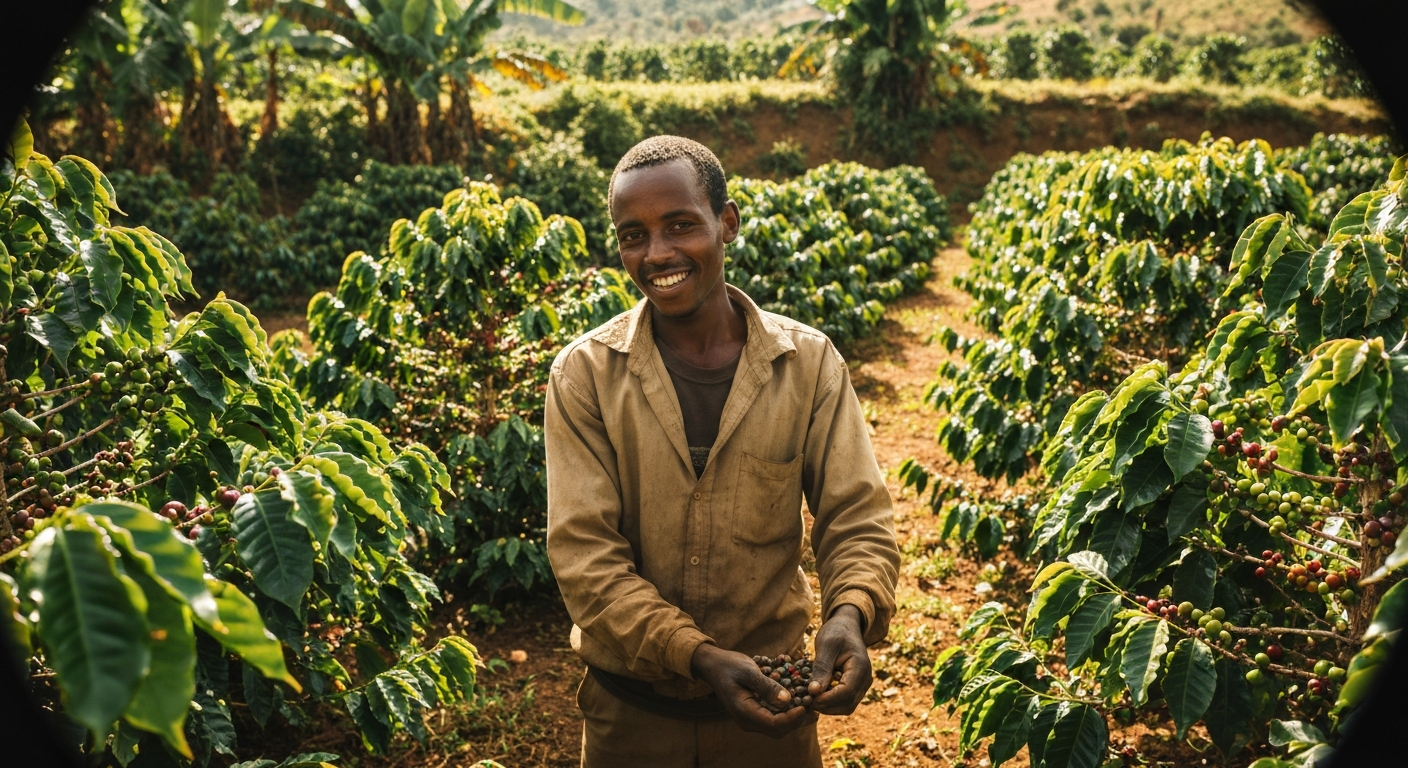
The diverse landscapes of Ethiopia — from the misty highlands of the west to the sun-baked eastern plateaus
Processing Traditions
Ethiopia uses both major processing methods extensively, and the choice of method can transform the same farm’s harvest into two entirely different cups.
Washed coffees — locally called “fully washed” — are depulped, fermented in concrete tanks for 36 to 72 hours, and dried on raised beds. The result is clean, bright, and floral, with terroir shining through unobstructed. Washed processing is the method that made Yirgacheffe world-famous.
Natural (dry-processed) coffees, where whole cherries sun-dry on raised African beds for two to four weeks, tend to be explosively fruity, heavy-bodied, and fermentation-driven. The best Ethiopian naturals — particularly from Guji and Sidamo — routinely score above 90 points in professional cupping evaluations.
The Coffee Ceremony
Coffee is woven into the social fabric of Ethiopian life through the traditional ceremony known as buna. Green beans are roasted in a flat pan over charcoal, the smoke mingling with burning frankincense. The roasted beans are ground by hand in a wooden mortar, then brewed in a jebena — a black clay pot with a narrow spout. The ceremony unfolds over three rounds: abol (the strongest), tona, and baraka (a blessing), each progressively lighter, and can last well over an hour.
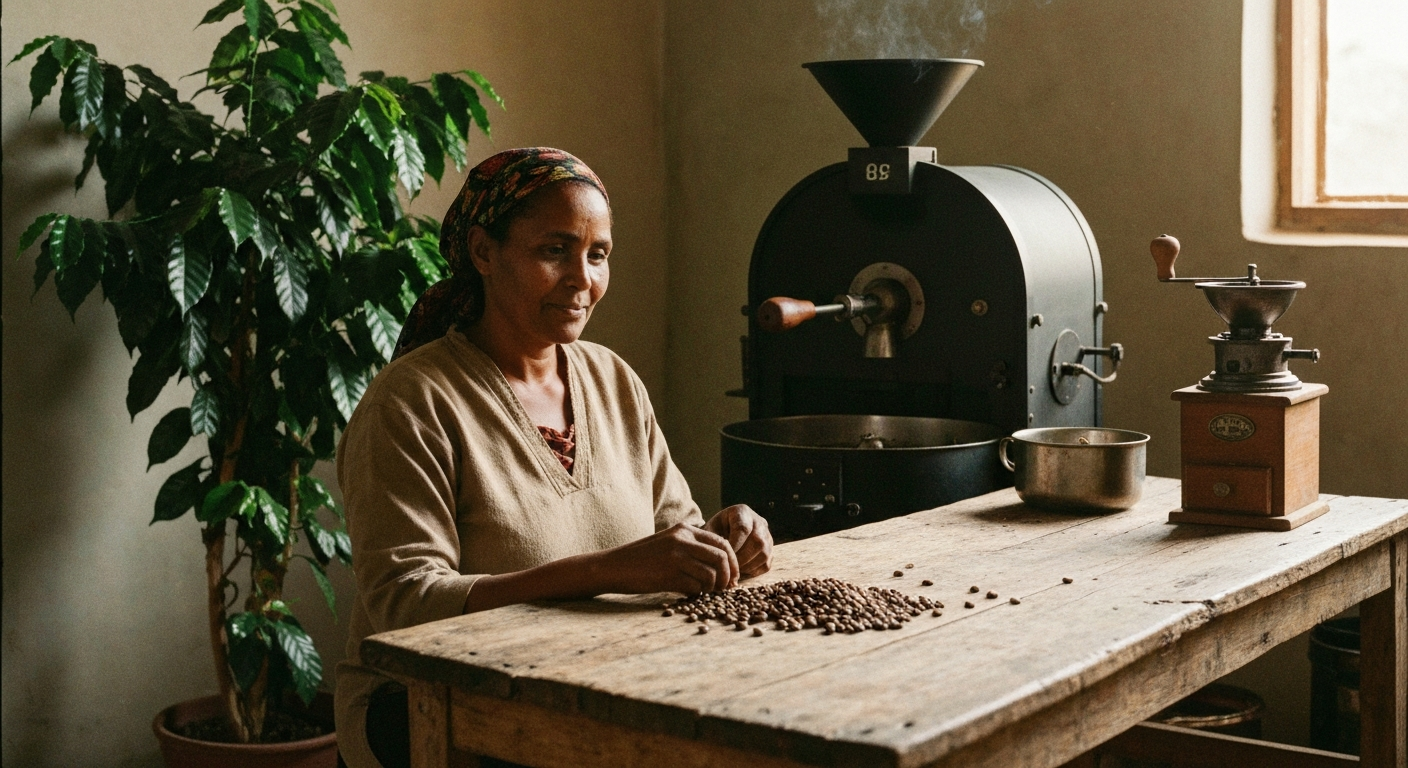
The Ethiopian coffee ceremony — green beans roasted over charcoal, ground by hand, brewed in a jebena clay pot
It is a ritual of hospitality, community, and conversation that reminds the world coffee was a cultural practice long before it became a global commodity. In a nation where nearly half the harvest is consumed domestically, coffee is not an export product — it is daily life.
Ethiopia Today
Ethiopia is Africa’s largest coffee producer and the world’s fifth-largest overall, exporting over 4 million 60-kilogram bags annually according to the ICO. The Ethiopia Commodity Exchange (ECX) has shaped how coffee is traded domestically, though recent reforms now allow direct sales that improve traceability — a development that has excited specialty buyers seeking single-farm and single-lot transparency.
For any coffee lover seeking the purest expression of what Arabica can be — in all its wild, untamed, astonishing diversity — Ethiopia remains the essential origin. No other country comes close.
Further Reading
- Where the Wild Coffee Grows by Jeff Koehler — the story of Ethiopia’s wild coffee forests and their uncertain future
- The World Atlas of Coffee by James Hoffmann — detailed profiles of Ethiopian growing regions
- ICO — International Coffee Organization — Ethiopian production and export data
- World Coffee Research — variety catalogues and genetic conservation efforts
Sub-topics
Ethiopia — Yirgacheffe
Yirgacheffe sits within the birthplace of coffee and produces some of the most aromatic washed coffees on earth — jasmine, lemon, bergamot, and peach at altitude.
intermediateEthiopia — Sidamo
Ethiopia Sidamo: a diverse origin producing floral washed lots and explosive naturals bursting with blueberry, dark chocolate, and berry complexity at altitude.
Related Topics
Ethiopia — Yirgacheffe
Yirgacheffe sits within the birthplace of coffee and produces some of the most aromatic washed coffees on earth — jasmine, lemon, bergamot, and peach at altitude.
originEthiopia — Sidamo
Ethiopia Sidamo: a diverse origin producing floral washed lots and explosive naturals bursting with blueberry, dark chocolate, and berry complexity at altitude.
getting-startedWhat is Coffee Origin?
Coffee origin is the story of place — altitude, soil, and climate shape every flavour note. From Ethiopian florals to Colombian caramel and Kenyan citrus.
getting-startedArabica (Coffea arabica)
Arabica accounts for 60% of global coffee production and virtually all specialty coffee. Here is what separates it from Robusta — genetics, altitude, and cup character.