 English
  Українська
  Čeština
 The People’s Brewer
The French press — also known as a cafetière, press pot, or plunger — is one of the most accessible and forgiving ways to brew excellent coffee at home. Invented in its modern form by Italian designer Attilio Calimani in 1929 (despite the French name, the most common design is actually Italian), this full-immersion brewing method steeps coarsely ground coffee in hot water for several minutes before a metal mesh plunger separates the grounds from the brew. The result is a rich, heavy-bodied cup with a velvety texture and a depth of flavour that pour-over methods, with their paper-filtered clarity, simply cannot replicate.
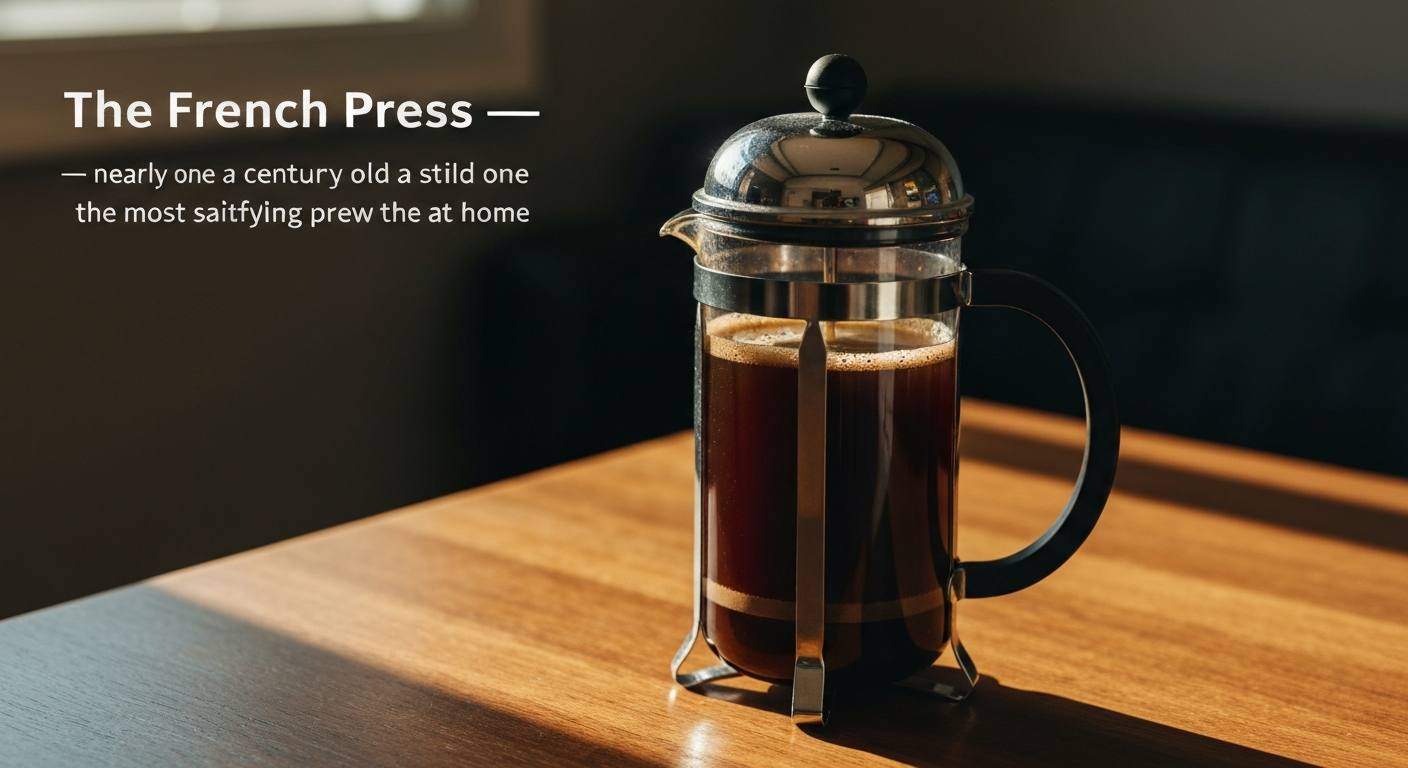
The French press — nearly a century old and still one of the most satisfying ways to brew coffee at home
How to Brew
The French press recipe is beautifully simple — no special filters, no gooseneck kettles, no precision pouring technique required. Add coarsely ground coffee — about the texture of coarse sea salt — to the carafe at a ratio of roughly 1:15 (for example, 30 grams of coffee to 450 grams of water). Pour water at 93°C to 96°C over the grounds, ensuring full saturation with a gentle stir. Place the lid on with the plunger raised, and steep for 4 minutes. Press the plunger down slowly and steadily — rushing creates turbulence that stirs up fine particles — then pour immediately to prevent over-extraction from continued contact with the grounds at the bottom of the carafe.
James Hoffmann’s popular “ultimate French press technique,” shared in a video that has garnered millions of views, adds a twist: after the 4-minute steep, he gently stirs the surface crust to break it, scoops off floating foam and fine particles with a spoon, then waits an additional 5 to 8 minutes before plunging very gently. The result is a dramatically cleaner, sweeter cup than the traditional method — proving that even the simplest brewer rewards experimentation.
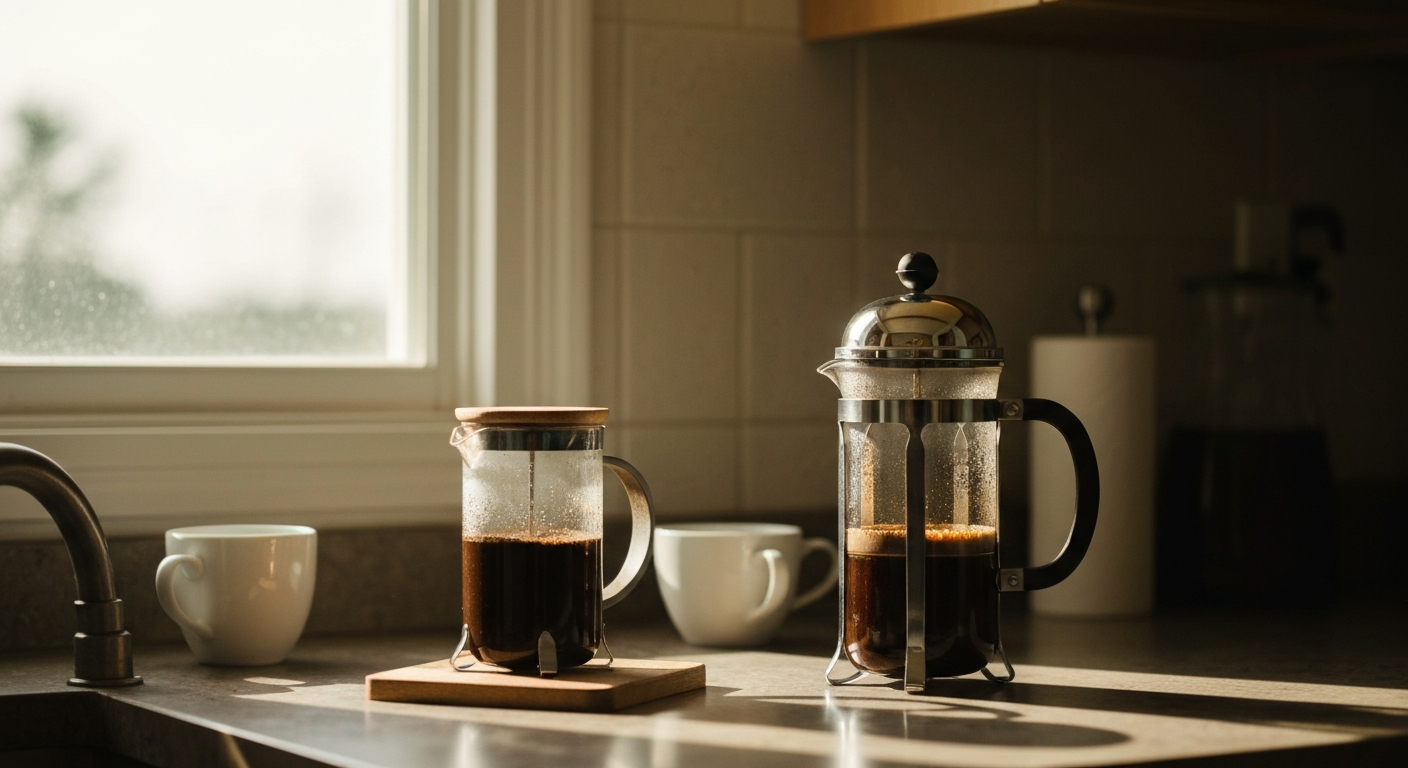
The morning ritual — French press brewing requires nothing more than hot water, ground coffee, and a few minutes of patience
Flavour Characteristics
Because the French press uses a metal mesh filter rather than paper, oils and fine coffee particles pass freely into the cup. This is the defining feature of the method and the source of its distinctive character. The oils — which contain flavour compounds that paper filters absorb — produce a noticeably heavier body and a more tactile, almost buttery mouthfeel. Flavours tend to be round, robust, and full, with less perceived acidity and more emphasis on chocolatey, nutty, and caramel notes. Bourbon and Typica varieties, with their inherent sweetness and body, are particularly well-suited to French press brewing. As Jessica Easto notes in Craft Coffee, the method is “the most democratic brewer” — it flatters a wide range of coffees and forgives imprecise technique more readily than pour-over or espresso.
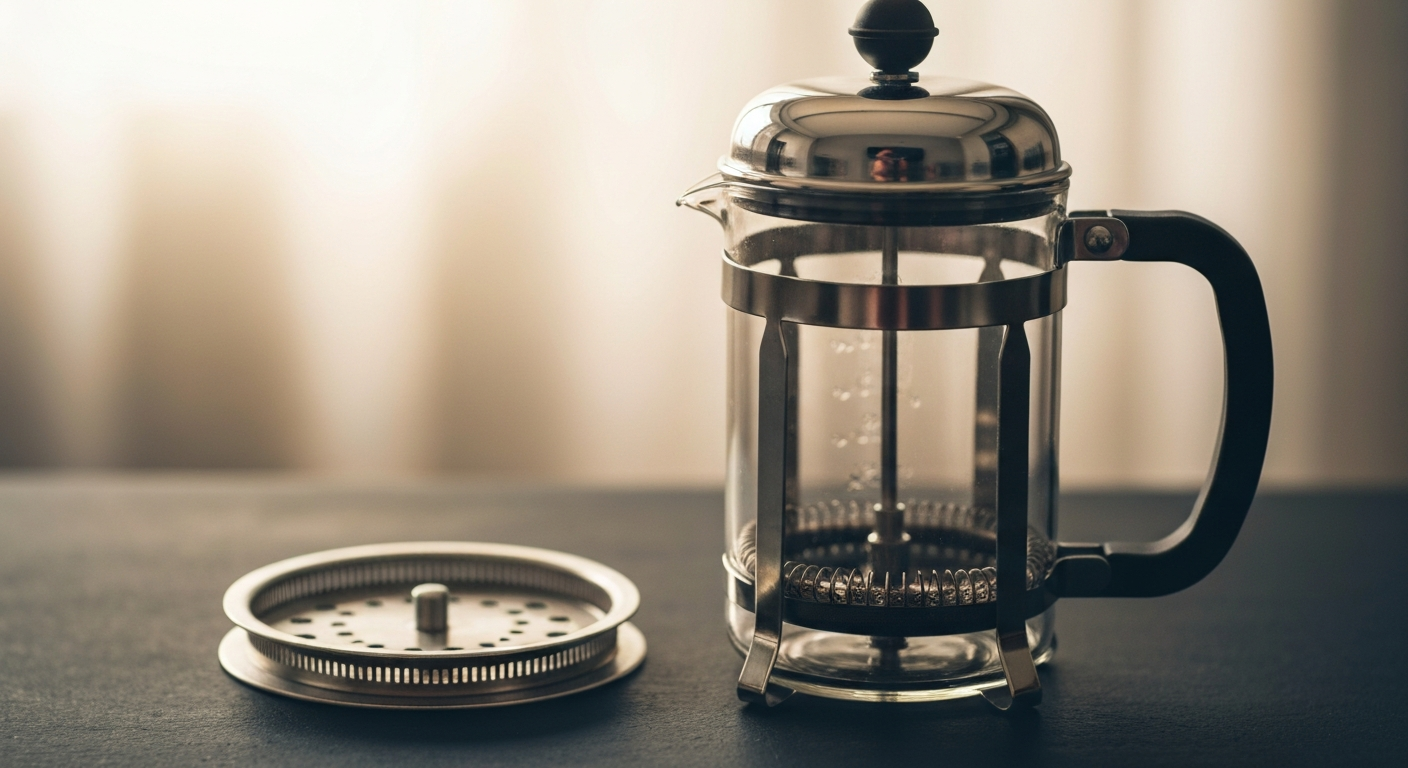
Coarse ground coffee for French press — the larger particle size slows extraction during the immersion steep, preventing bitterness
Some drinkers find the slight sediment at the bottom of a French press cup charming and authentic — a reminder that you are drinking something made from a fruit seed, not a laboratory. Others prefer the cleaner profile of pour-over or espresso. It is largely a matter of personal taste, and neither preference is wrong.
Pros and Cons
The French press has clear, compelling advantages: it is inexpensive (a quality glass press costs less than a bag of specialty coffee), requires no disposable filters, is easy to learn, and produces a rich, satisfying cup with minimal technique. It travels well — a metal or plastic French press is a backpacker’s best friend — and works anywhere you have hot water and a few minutes.
On the other hand, the metal mesh allows fine sediment through, the brew can become over-extracted and bitter if left sitting in the carafe too long after pressing, and cleanup is messier than a paper-filter method. The heavy body and oils, while delicious, are not ideal for highlighting the delicate floral and citrus notes of light-roasted single origins — that is where pour-over excels. For daily home brewing where simplicity, body, and warmth are priorities, the French press remains hard to beat. It has earned its place as one of the most beloved brewing methods in the world for nearly a century, and shows no signs of surrendering it.
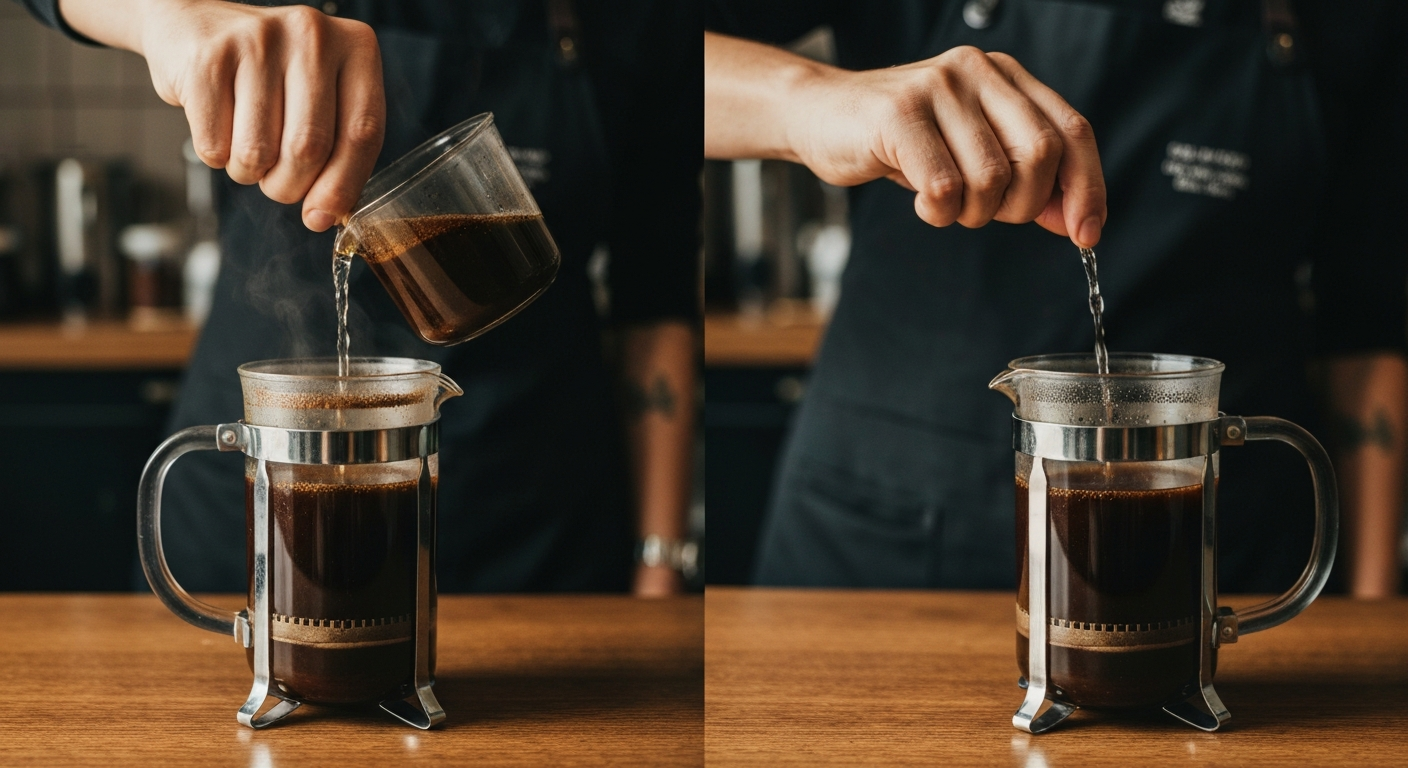
French press alongside other manual brewers — each method reveals a different facet of the same coffee
Further Reading
- Craft Coffee: A Manual by Jessica Easto — practical French press recipes and the science behind immersion brewing
- The World Atlas of Coffee by James Hoffmann — includes his refined French press technique and the principles behind it
- SCA Brewing Standards — gold cup extraction targets applicable to French press and all brewing methods
Related Topics
What is Coffee Brewing?
Coffee brewing extracts soluble flavour from roasted grounds using water — and grind size, temperature, time, and ratio all determine whether the cup sings or disappoints.
brewingPour Over
Pour-over is a manual coffee brewing method using paper filters and controlled water flow, producing clean, nuanced cups that reveal single-origin character.
getting-startedEspresso
Espresso forces near-boiling water through finely ground coffee at 9 bars of pressure — producing concentrated, crema-topped shots in 25 to 30 seconds.