 English
  Українська
  Čeština
 Vietnam does not whisper about coffee — it roars. The country is the world’s second-largest coffee producer after Brazil, responsible for roughly 1.7 million metric tonnes per year, and it has achieved this position in barely three decades. But what makes Vietnam truly distinctive is not just volume; it is the species at the heart of its industry. While most celebrated origins stake their reputation on Arabica, Vietnam built its empire on Robusta — the hardier, higher-caffeine, more bitter sibling — and in doing so created a coffee culture unlike any other on Earth.

Vietnamese coffee — bold, sweet, and unapologetically Robusta — is inseparable from the country’s identity
The French introduced coffee cultivation to Vietnam in the 1850s, planting Arabica in the northern highlands around Tonkin. But it was the post-reunification economic reforms of the late twentieth century that turned Vietnam into a global powerhouse — and it was Robusta, not Arabica, that fuelled the transformation.
The Central Highlands: Đắk Lắk and Lâm Đồng
Vietnam’s coffee heartland is the Central Highlands (Tây Nguyên), a vast basalt plateau stretching across five provinces at elevations between 500 and 1,500 metres. The rich, iron-red volcanic soils and pronounced wet-dry seasons create ideal conditions for Robusta, which thrives at lower altitudes than its Arabica cousin.
Đắk Lắk province alone accounts for roughly 30 per cent of the country’s total coffee output. The city of Buôn Ma Thuột — often called Vietnam’s “coffee capital” — sits at its centre, surrounded by seemingly endless plantations. Lâm Đồng, further south and higher in elevation, plays a dual role: its lower-lying areas produce excellent Robusta, while the cool altitudes around Da Lat have become the frontier for Vietnam’s emerging Arabica sector.
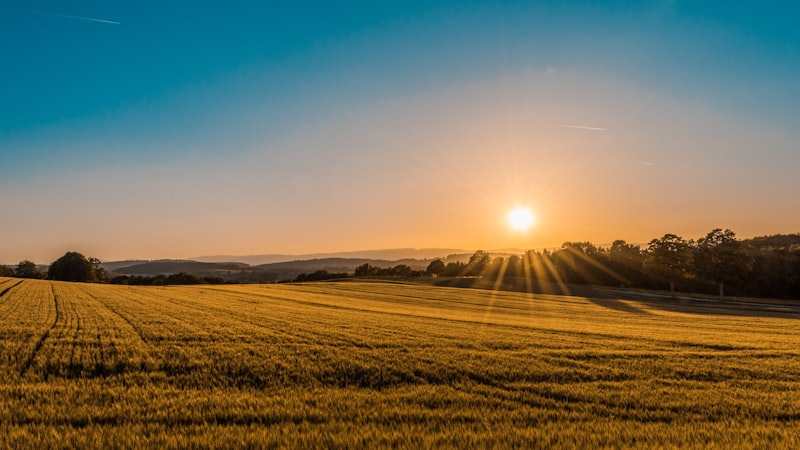
The Central Highlands — Vietnam’s volcanic basalt plateau produces the bulk of the country’s Robusta harvest
Gia Lai, Kon Tum, and Đắk Nông round out the highland growing provinces, each contributing to a national harvest that reached over 29 million 60-kilogram bags in the 2022–23 season according to the USDA — a staggering figure for a country that produced almost no coffee for export as recently as the 1980s.
Rapid Growth Since the 1990s
Vietnam’s coffee story is one of the most dramatic agricultural transformations in modern history. Following the Đổi Mới (renovation) economic reforms of 1986, the government encouraged smallholder farmers to plant coffee on the highland frontier. The results were explosive: production grew from under one million bags in 1990 to over 25 million by 2010, catapulting Vietnam past Colombia and Indonesia to become the world’s second-largest producer.
This growth was almost entirely Robusta-driven. Today, Robusta accounts for approximately 95 per cent of Vietnamese production, making the country the world’s largest Robusta exporter by a wide margin. Much of this output enters the global supply chain as instant coffee and commercial blends — Andrea Illy notes in Espresso Coffee: The Science of Quality that Vietnamese Robusta is a foundational component of the instant coffee industry worldwide.
Vietnam went from a negligible coffee exporter to the world’s second-largest producer in just two decades — one of the fastest agricultural scale-ups in history.
The Vietnamese Phin Filter
At the heart of Vietnamese coffee culture is the phin — a small, single-cup metal drip filter that sits directly on top of a glass. Ground coffee (typically a dark-roasted Robusta or Robusta-Arabica blend) is placed inside, tamped with a perforated press, and hot water is added. The brew drips slowly through over four to six minutes, producing a concentrated, full-bodied liquor with an intensity that would make an espresso take notice.
The phin is democratic and portable. It requires no electricity, no paper filters, and no expensive equipment — just hot water and patience. Street vendors, office workers, and grandmothers across the country use the same device, and it produces a remarkably consistent result every time.
Cà Phê Sữa Đá and Egg Coffee
The most iconic Vietnamese coffee drink is cà phê sữa đá — iced coffee with sweetened condensed milk. Phin-brewed coffee drips directly onto a thick layer of condensed milk at the bottom of the glass, then ice is added and the whole thing is stirred into a sweet, bitter, deeply satisfying drink that somehow perfectly suits Vietnam’s tropical heat. It is as much a national symbol as phở or bánh mì.

Cà phê sữa đá — phin-brewed Robusta over sweetened condensed milk and ice, Vietnam’s signature drink
In Hanoi, another tradition holds court: cà phê trứng, or egg coffee. Created in the 1940s at Café Giảng when fresh milk was scarce, egg coffee replaces dairy with a whipped mixture of egg yolk, sugar, and condensed milk, creating a rich, custard-like cap that floats over strong black coffee. It is decadent, unexpected, and utterly Hanoian.
Rising Arabica in Da Lat
While Robusta remains king, a quiet revolution is underway in the cool highlands around Da Lat. At elevations above 1,200 metres, where temperatures drop low enough to slow cherry maturation and develop complex sugars, a new generation of farmers is producing high-quality Arabica. Varieties such as Catimor and, more recently, Typica and Bourbon are yielding cups with surprising sweetness, mild acidity, and stone-fruit notes — a far cry from the bold bitterness Vietnam is known for.
The misty highlands around Da Lat — Vietnam’s emerging Arabica frontier, where cooler temperatures favour complex flavour development
Specialty roasters in Ho Chi Minh City and Hanoi are championing these micro-lots, and Vietnamese Arabica has begun appearing on specialty menus internationally. It remains a tiny fraction of national output — perhaps 5 per cent — but it signals that Vietnam’s coffee story is still being written, and the next chapter may surprise those who think of the country only in terms of Robusta and instant coffee.
Why It Matters
Vietnam’s significance to the global coffee industry cannot be overstated. As the world’s dominant Robusta supplier, it underpins the instant coffee sector, commercial espresso blends across Italy and southern Europe, and a growing ready-to-drink market. When Vietnamese harvests falter — as they did during the droughts of 2016 — Robusta prices spike globally.
But beyond the commodity markets, Vietnam matters because it demonstrates that coffee culture is not a monolith. The phin, cà phê sữa đá, and egg coffee are traditions as deep and meaningful as the Ethiopian buna ceremony or the Italian espresso bar ritual. They remind us that every origin develops its own relationship with the bean, shaped by history, climate, and taste. Vietnam’s relationship happens to be bold, sweet, caffeinated, and served over ice — and there is nothing wrong with that.
Further Reading
- The World Atlas of Coffee by James Hoffmann — coverage of Vietnamese growing regions and the Robusta landscape
- Espresso Coffee: The Science of Quality by Andrea Illy and Rinantonio Viani — the role of Robusta in global coffee blending
- ICO — International Coffee Organization — Vietnamese production statistics and trade data
- World Coffee Research — variety development and climate adaptation in Southeast Asia
Related Topics
Robusta (Coffea canephora)
Often dismissed but increasingly respected, Robusta is coffee's resilient workhorse — powering espresso blends, instant coffee, and a growing fine Robusta movement.
getting-startedWhat is Coffee Origin?
Coffee origin is the story of place — altitude, soil, and climate shape every flavour note. From Ethiopian florals to Colombian caramel and Kenyan citrus.
originIndonesia
The world's fourth-largest coffee producer, known for earthy Sumatran coffees and the unique wet-hulled processing method.
getting-startedThe Coffee Belt
The Coffee Belt spans the tropics between Cancer and Capricorn, home to all 70 coffee-growing nations and every Arabica and Robusta variety on Earth.