 English
  Українська
  Čeština
 When coffee professionals talk about “origin,” they mean far more than a country name stamped on a bag. Origin is the story of place — the specific geography, altitude, soil chemistry, rainfall patterns, and farming traditions that shape a coffee’s character long before it reaches a roaster or a cup. Just as wine lovers speak of terroir to describe how a vineyard’s environment expresses itself in the glass, coffee’s terroir determines whether your morning brew tastes like sun-ripened blueberries or bittersweet dark chocolate, bright mandarin or deep burnt caramel.

A coffee farm nestled among green hills — where altitude, soil, and climate converge to shape flavour
James Hoffmann, in The World Atlas of Coffee, puts it simply: “The same variety of coffee plant, grown in two different places, will taste completely different.” That single observation unlocks the entire world of specialty coffee.
Terroir: The Taste of Place
Coffee is remarkably sensitive to its environment. A single variety planted at 1,800 metres in nitrogen-rich volcanic soil will taste dramatically different from the same variety grown at 800 metres in sandy loam just a few hundred kilometres away. Altitude slows cherry maturation — at elevations above 1,500 metres, cherries can take 9 to 11 months to ripen, compared with 6 to 8 months at lower altitudes. That extended growing season allows sugars, organic acids, and aromatic precursors to develop far greater complexity.

Coffee cherries ripening on the branch — the slower the maturation, the more complex the final cup
Rainfall patterns, shade cover, the angle of sunlight, and even the microorganisms living in the soil all leave fingerprints on flavour. This is why two farms separated by a single ridge in Ethiopia’s Gedeo zone can produce strikingly different cups — one bright and jasmine-scented, the other deep and berry-laden.
Coffee grown above 1,500 metres is often classified as “Strictly Hard Bean” (SHB). The slow maturation at altitude produces denser, harder seeds that roast more evenly and carry more flavour complexity.
From Farm to Flavour
The journey from origin to cup passes through many hands — farmers, pickers, processors, millers, exporters, importers, roasters — but the foundation is always the land itself. According to the International Coffee Organization (ICO), over 70 countries cultivate coffee commercially, and every one of them sits within or near the tropical Coffee Belt that encircles the planet between the Tropics of Cancer and Capricorn.
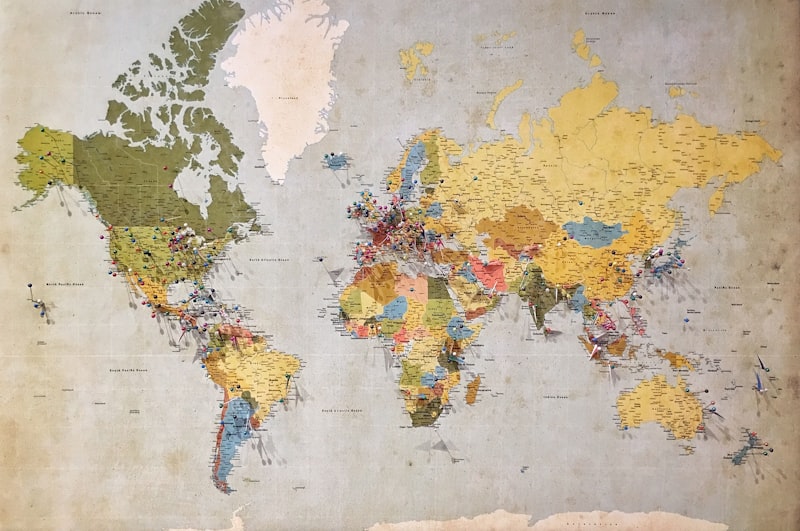
The Coffee Belt — the narrow tropical band where all the world’s coffee is grown
Understanding origin gives you a map for predicting flavour. Ethiopian coffees often carry floral and berry notes inherited from thousands of heirloom Arabica genotypes. Colombian coffees tend toward caramel sweetness and stone fruit clarity, shaped by Andean altitudes and meticulous washed processing. Kenyan coffees are renowned for their phosphoric, blackcurrant-driven acidity — a product of unique cultivars like SL28 and volcanic highland soils. Each origin tells a different story in the cup.
Exploring Origins
As you explore the Coffee Atlas, you will discover how each producing country and region brings something unique to the global coffee map. The interplay of latitude, elevation, variety, and processing creates an almost infinite palette of flavours — and that diversity is what makes specialty coffee endlessly fascinating.

Freshly roasted beans — the final transformation that unlocks the flavours origin planted in the seed
Start with the Coffee Belt to understand the big picture, then dive into individual countries to taste the differences for yourself. Whether you are a curious beginner or a seasoned cupper, origin is the key that unlocks every other dimension of coffee appreciation.
Further Reading
- The World Atlas of Coffee by James Hoffmann — the definitive guide to coffee origins, processing, and brewing
- Uncommon Grounds by Mark Pendergrast — the history of coffee from Ethiopia to the modern supply chain
- ICO — International Coffee Organization — global trade data, production statistics, and market reports
Related Topics
The Coffee Belt
The Coffee Belt spans the tropics between Cancer and Capricorn, home to all 70 coffee-growing nations and every Arabica and Robusta variety on Earth.
originEthiopia
The birthplace of Arabica and still its most genetically diverse origin — Ethiopia produces florals, berries, and citrus from thousands of heirloom varieties across its highlands.
originColombia
Colombia's Andean geography — three mountain ranges, volcanic soils, and year-round harvests — yields balanced washed Arabicas with caramel sweetness and bright stone fruit.