 English
  Українська
  Čeština
 Washed processing — also called wet processing — is the method most associated with purity in the cup. Its philosophy is elegant in its simplicity: strip away every trace of fruit from the seed before drying, so that nothing stands between the drinker and the bean’s intrinsic character. The altitude where it grew, the mineral composition of the soil, the variety planted by the farmer — all of these come through with startling transparency. James Hoffmann describes the washed method in The World Atlas of Coffee as producing “a cleaner, more consistent, and often more complex” cup than its counterparts. For many specialty roasters and competition baristas, washed coffee is the benchmark against which all other processing methods are measured.
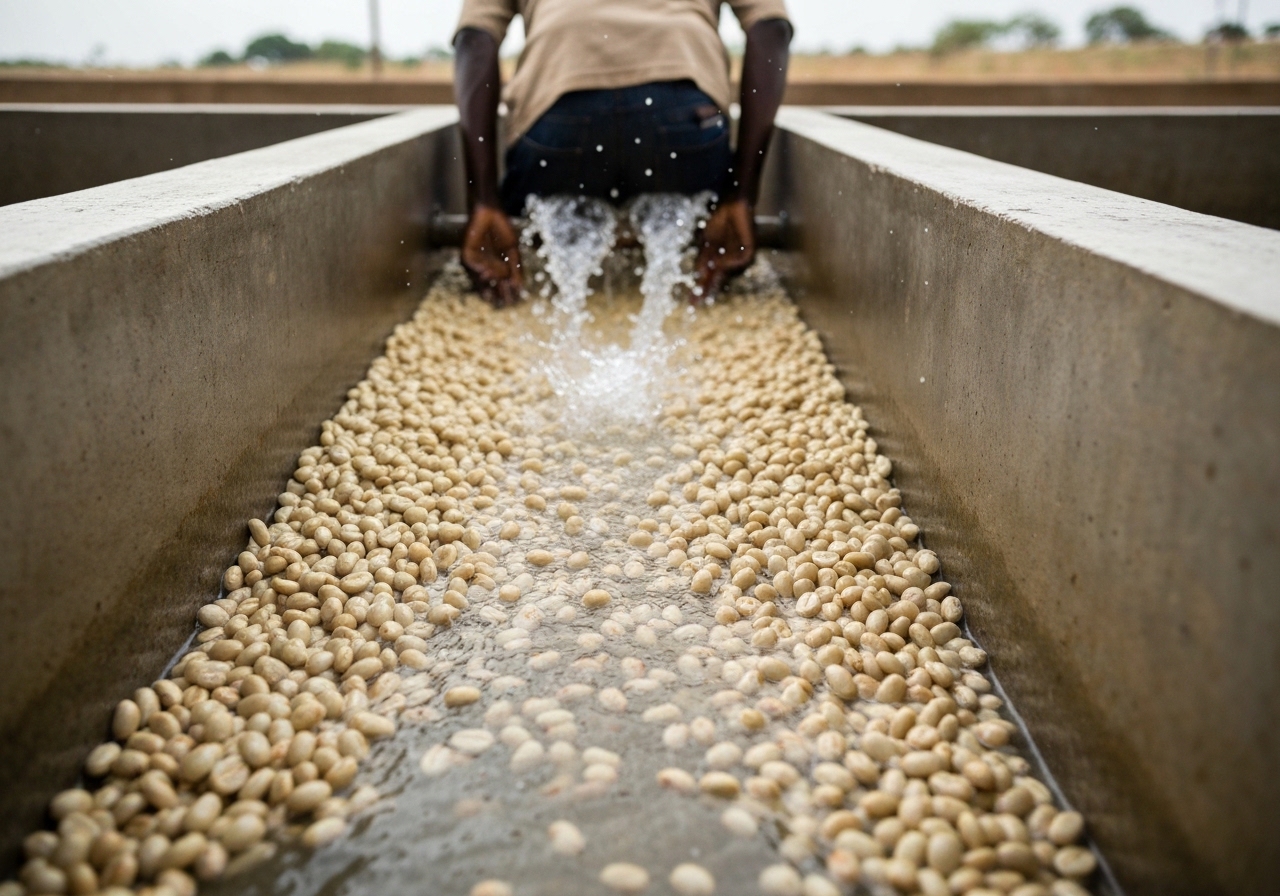
Washing channels at a processing station — fermented beans are scrubbed clean before drying
Step by Step
The washed process begins immediately after harvest, and speed matters. Ripe cherries are sorted — often by floating them in water, where underripe and defective cherries rise to the surface — then fed through a mechanical depulper that strips the outer skin and most of the pulp. The depulped beans, still coated in a thick layer of sticky mucilage, are transferred to fermentation tanks filled with water.
Over the next 12 to 72 hours — the duration depending on altitude, ambient temperature, water chemistry, and the producer’s protocol — naturally occurring microorganisms break down the mucilage into soluble compounds. The best producers monitor this stage with scientific rigour, tracking pH levels (typically aiming for a drop from around 6.5 to below 4.0), water temperature, and elapsed time. Under-fermentation leaves mucilage on the bean, producing a slimy texture and muted flavours; over-fermentation introduces harsh, vinegary off-notes that no amount of careful roasting can fix.
Once fermentation is complete, the beans are channelled through washing troughs where workers agitate them in flowing clean water, scrubbing away every last trace of fruit residue. The clean parchment coffee — pale, swollen, and slightly rough to the touch — is then spread in thin layers on raised drying beds or concrete patios to dry slowly over one to three weeks, turned regularly to ensure even moisture loss.
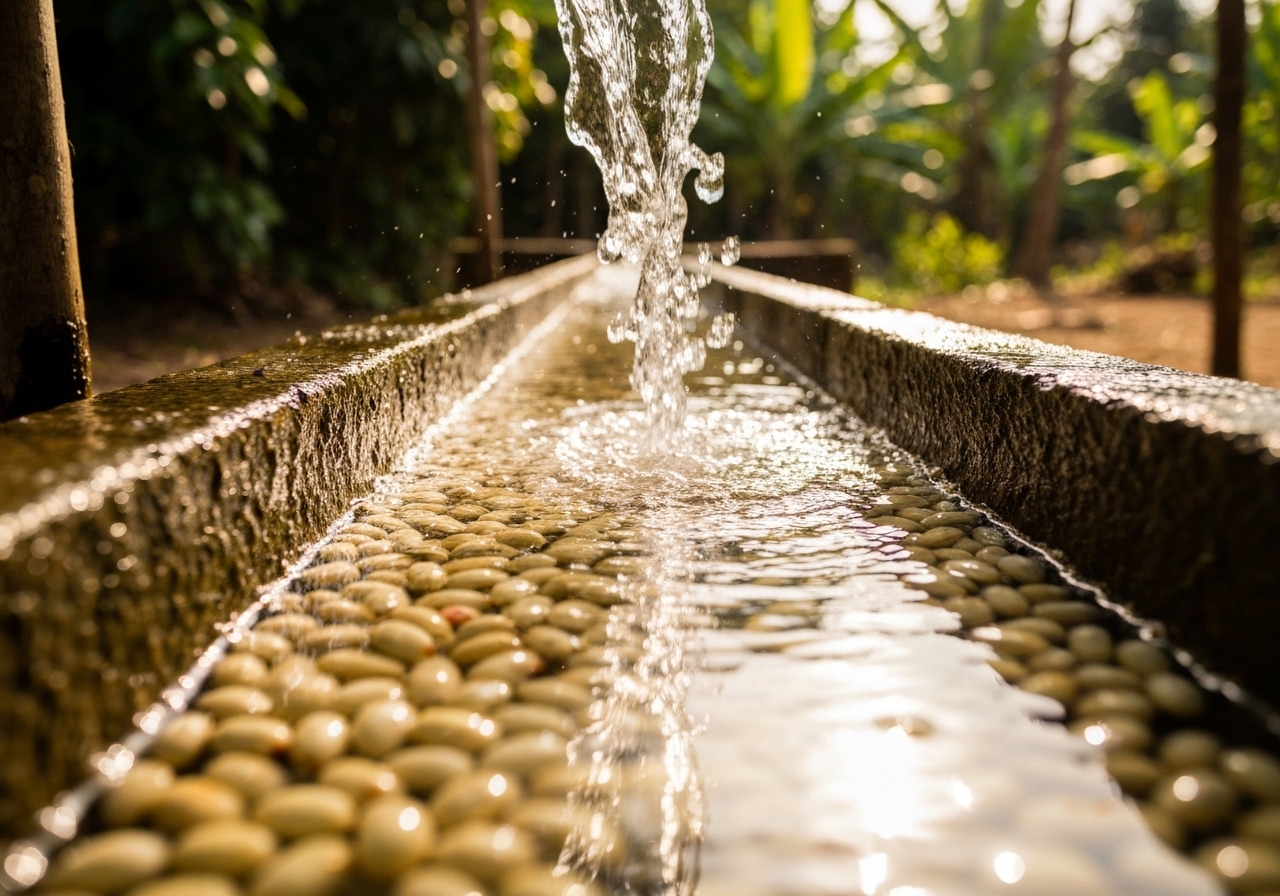
Clean water is essential to the washed method — it carries away fermented mucilage and polishes the parchment
Fermentation in washed processing is a precision tool, not an afterthought. According to SCA research, even a six-hour difference in fermentation time can measurably shift a coffee’s acidity and aromatic profile.
Flavour Characteristics
Washed coffees are prized for their brightness, clarity, and defined acidity structure. Without the residual sweetness imparted by drying mucilage, the cup tends to foreground floral aromatics — jasmine, orange blossom, honeysuckle — alongside citrus and stone-fruit acidity and a clean, lingering finish. Body is typically lighter to medium compared to natural or honey-processed coffees.
This transparency is precisely what makes washed processing the preferred method for showcasing terroir. A washed Yirgacheffe will present delicate bergamot and lemon zest; a washed Kenyan from the slopes of Mount Kenya will deliver explosive blackcurrant and grapefruit acidity. The method lets you taste exactly why those two origins are different — a distinction that heavier processing can obscure.
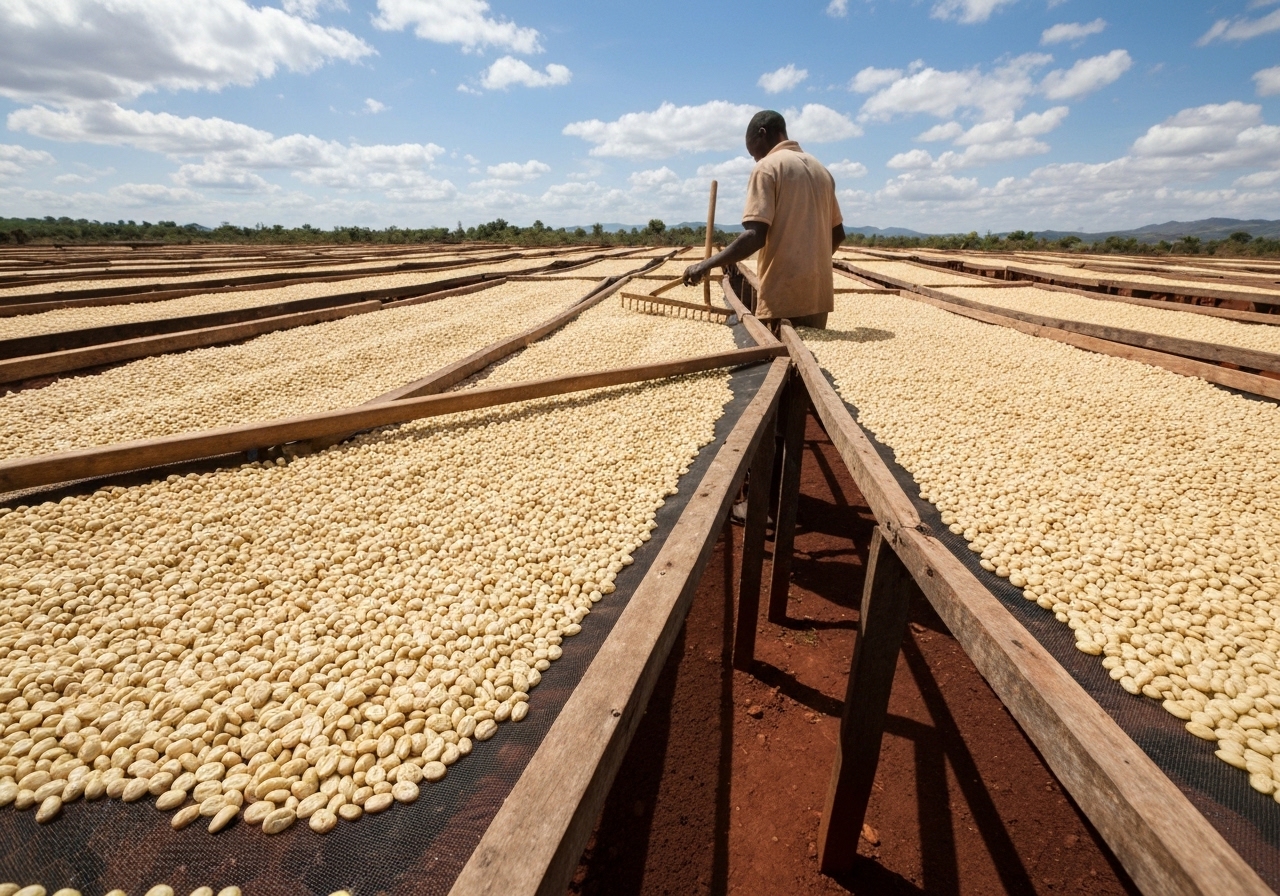
Washed parchment coffee drying on raised beds — slow, even drying is critical for clean cup quality
Where Washed Processing Dominates
The washed method requires abundant clean water, which concentrates its use in regions with reliable rainfall and river systems. It is the dominant process in East Africa — Kenya, Ethiopia, Rwanda, and Burundi all rely heavily on centralised washing stations where smallholder farmers deliver their cherry. In Central America, countries like Guatemala, Costa Rica, and El Salvador have built their specialty reputations largely on washed lots. Colombia, the world’s third-largest producer, processes the vast majority of its coffee by the washed method, and Colombian washed coffees form the backbone of many specialty roasters’ offerings worldwide.
Competition coffees are disproportionately washed. At the World Barista Championship and Cup of Excellence auctions, washed lots are consistently among the highest-scoring entries — chosen for their precision, complexity, and the way they reward attentive extraction.
Environmental Considerations
The washed method’s dependence on water is its greatest environmental challenge. A single kilogram of green coffee can require 40 to 50 litres of water to process, and the wastewater — laden with organic matter from fermented mucilage — can severely pollute rivers and groundwater if discharged untreated. In regions like Lake Kivu in Rwanda or the Yirgacheffe watershed in Ethiopia, this is a pressing concern.
Modern washing stations are increasingly adopting ecological pulpers that recirculate water and reduce consumption by up to 80 percent. Some producers have invested in constructed wetlands and biodigesters that treat wastewater and even convert it to fertiliser. The Coffee Quality Institute (CQI) and organisations like World Coffee Research are funding studies on low-water fermentation techniques that maintain cup quality while dramatically cutting environmental impact.
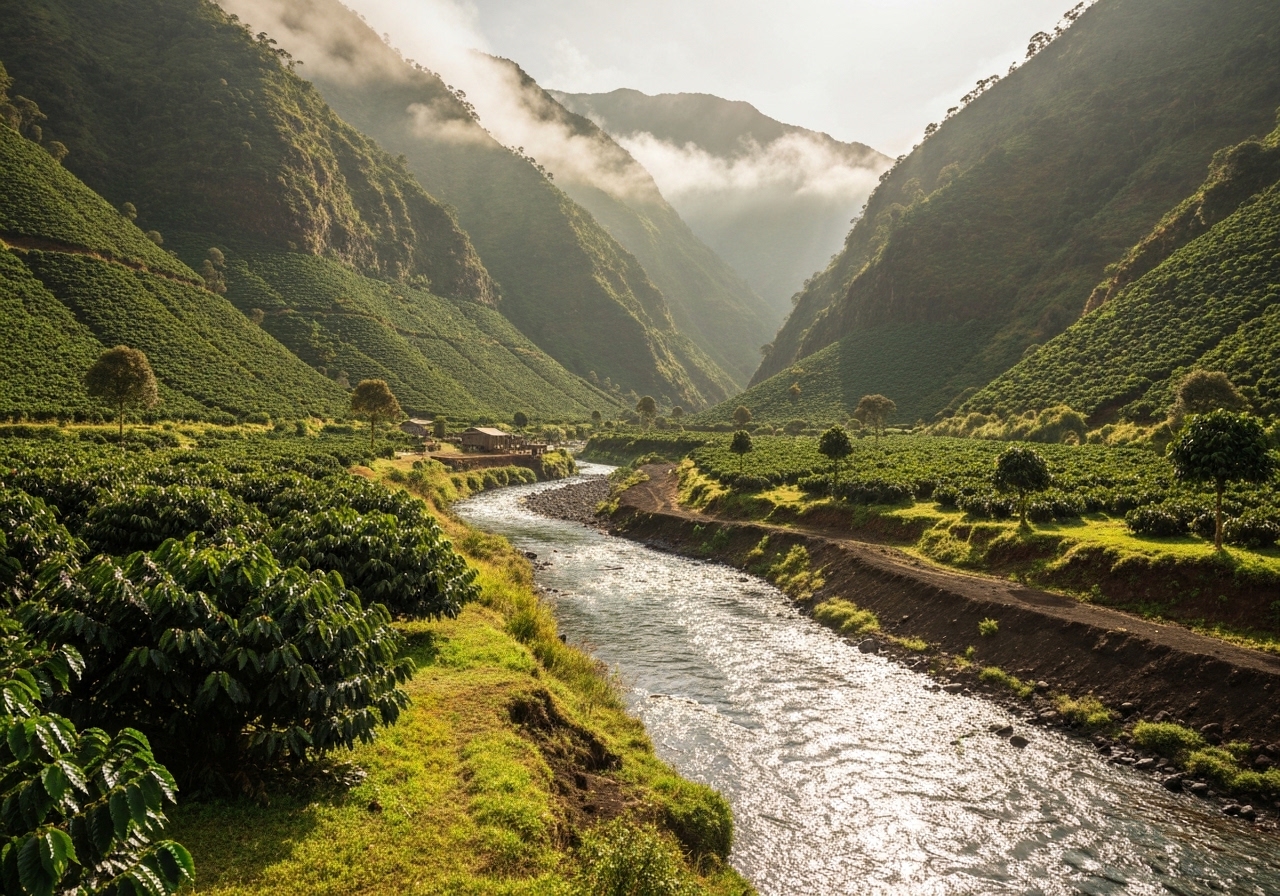
Highland rivers provide the clean water essential to washed processing — but sustainability demands careful stewardship
Further Reading
- The World Atlas of Coffee by James Hoffmann — detailed breakdown of washed processing by origin
- Coffee: A Comprehensive Guide by Robert Thurston — the science of fermentation and mucilage removal
- SCA Processing Research — fermentation studies and quality standards
- Coffee Quality Institute — Q-grading protocols and post-harvest best practices
Related Topics
Natural (Dry) Processing
Natural processing dries whole coffee cherries in the sun before milling — the oldest method, and the one most responsible for fruity, wine-like, and berry-forward cups.
processHoney Processing
Honey coffee processing retains mucilage on the bean, producing cups that blend washed clarity with natural sweetness and stone-fruit body. White to black honey.
getting-startedWhat is Coffee Processing?
Coffee processing — washed, natural, honey — transforms harvested cherries into green beans and shapes the cup more than almost any other variable, including roast level.
originEthiopia — Yirgacheffe
Yirgacheffe sits within the birthplace of coffee and produces some of the most aromatic washed coffees on earth — jasmine, lemon, bergamot, and peach at altitude.