 English
  Українська
  Čeština
 The Sweet Sibling
If Typica is the elegant, restrained half of Arabica’s founding pair, Bourbon is the richer, sweeter counterpart — the variety that competition baristas reach for when they want depth, complexity, and a syrupy mouthfeel. Named after the island of Bourbon — now Réunion — in the Indian Ocean, where French missionaries planted Yemeni coffee seeds in the early 1700s, this cultivar lineage has become one of the most important and beloved in specialty coffee. Its natural sweetness, layered acidity, and full body have made it a benchmark against which newer varieties are often judged.
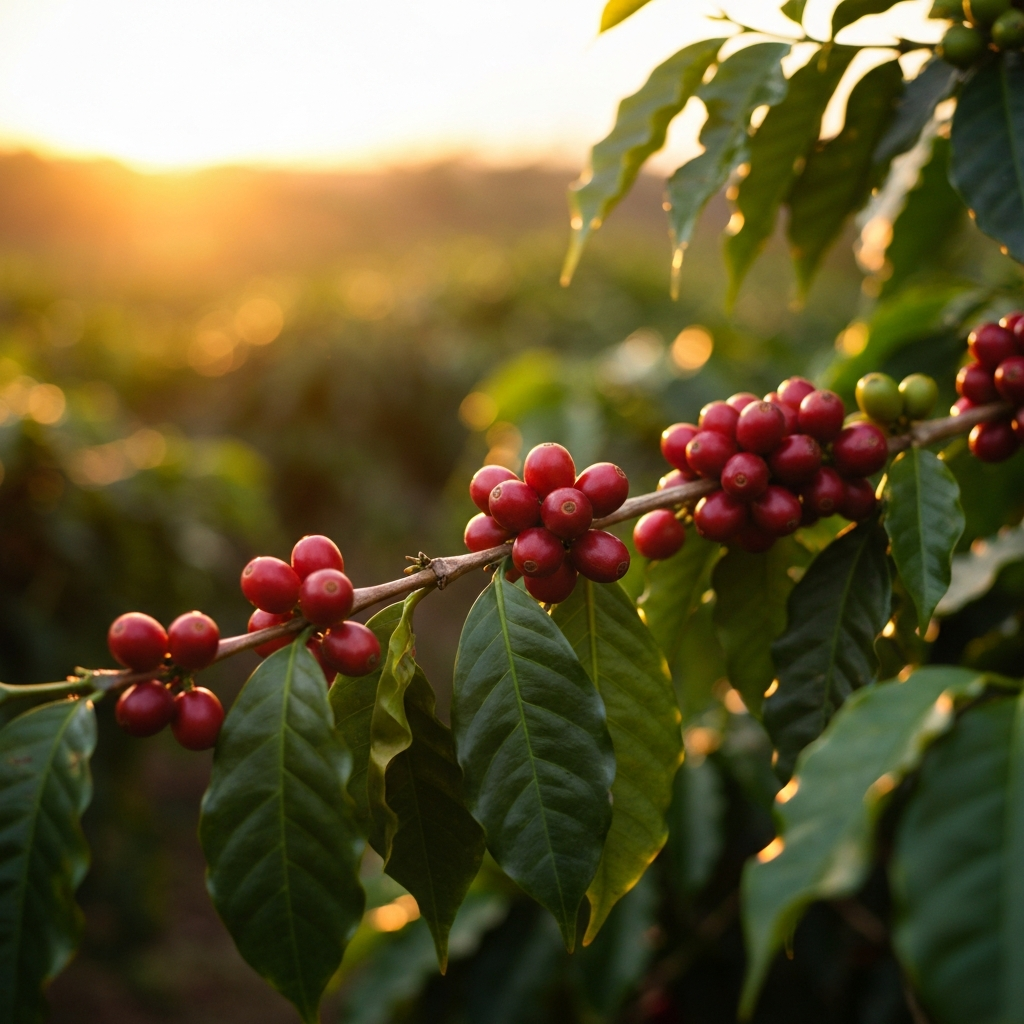
Bourbon cherries developing on the branch — the variety produces about 20 to 30 percent more yield than Typica, with rounder, denser beans
History on an Island
Coffee arrived on Bourbon Island around 1715, brought from the port of Mocha in Yemen by the French East India Company. Isolated on this small volcanic island in the Indian Ocean — just 63 kilometres long — the plants adapted over generations to the tropical maritime climate and rich volcanic soil, developing characteristics distinct from the Typica lineage that was simultaneously spreading through Dutch colonies in the coffee belt. Natural mutations accumulated. The plants grew shorter and sturdier than Typica, with rounder leaves, denser cherry clusters, and higher yields. By the mid-1800s, Bourbon seeds were introduced to Brazil, and from there they spread throughout Central and South America, East Africa, and beyond. As Mark Pendergrast recounts in Uncommon Grounds, this island sojourn gave Bourbon the time to develop its signature richness — a sweetness you can taste in every cup.
Bourbon produces about 20 to 30 percent more yield than Typica, which partly explains its widespread adoption by farmers worldwide. But it is the cup quality — round sweetness, chocolate, caramel, and ripe stone fruit — that keeps specialty producers planting it despite its susceptibility to coffee leaf rust.
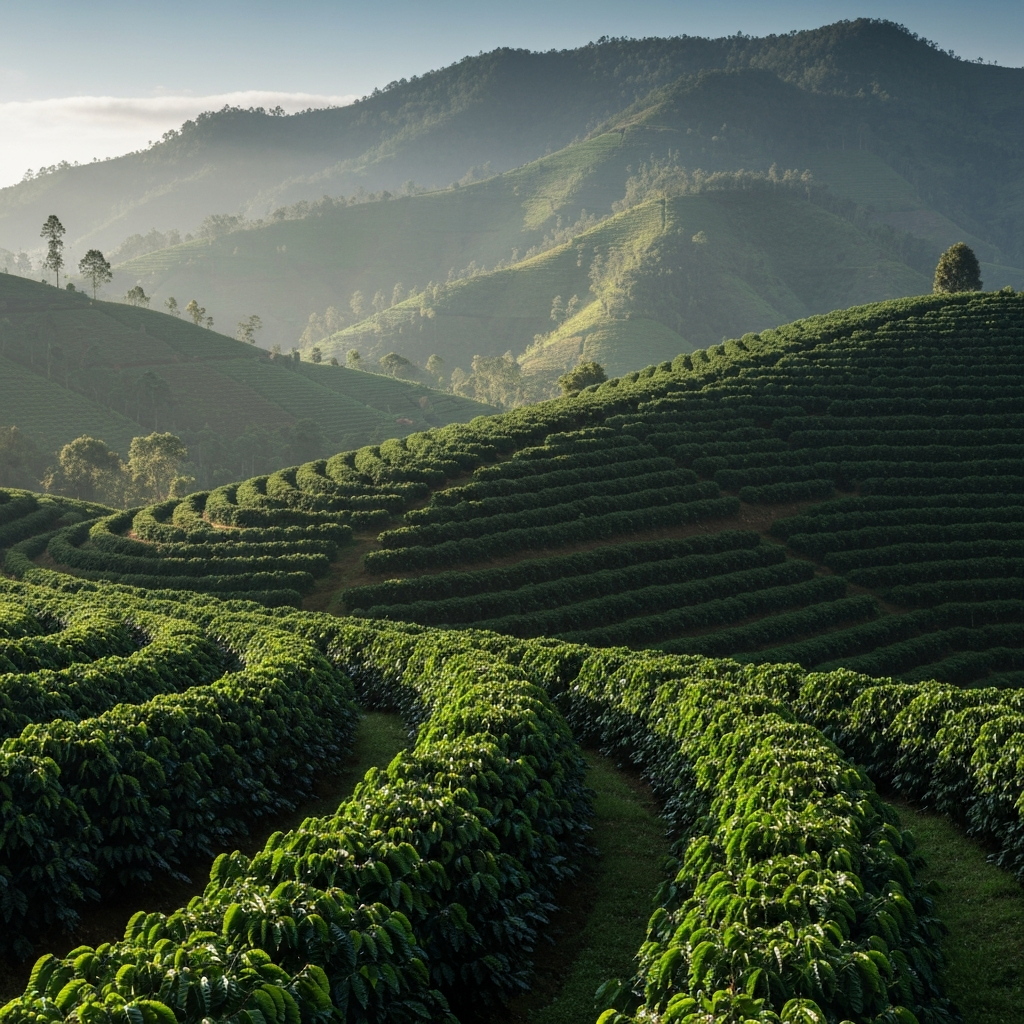
Bourbon performs best at altitudes between 1,100 and 2,000 metres, where cool nights and warm days create ideal conditions for slow cherry maturation
Mutations and Colours
One of Bourbon’s most distinctive features is its natural colour mutations, each carrying subtle flavour differences that have become prized in the specialty market. Red Bourbon, the most common, is the standard bearer — sweet, balanced, and complex, with notes of dark chocolate and dried fruit. Yellow Bourbon, particularly prized in Brazil’s Cerrado and Sul de Minas regions, often carries a lighter, fruitier, and more tea-like profile with stone fruit and honey notes. Pink Bourbon, a rare mutation — or possibly a Bourbon-Typica hybrid, as World Coffee Research has suggested — has gained a cult following in Colombia for its extraordinary floral, candy-like sweetness and delicate acidity. Orange Bourbon and other colour variants exist in smaller quantities, adding to the remarkable genetic and flavour diversity within this single lineage.
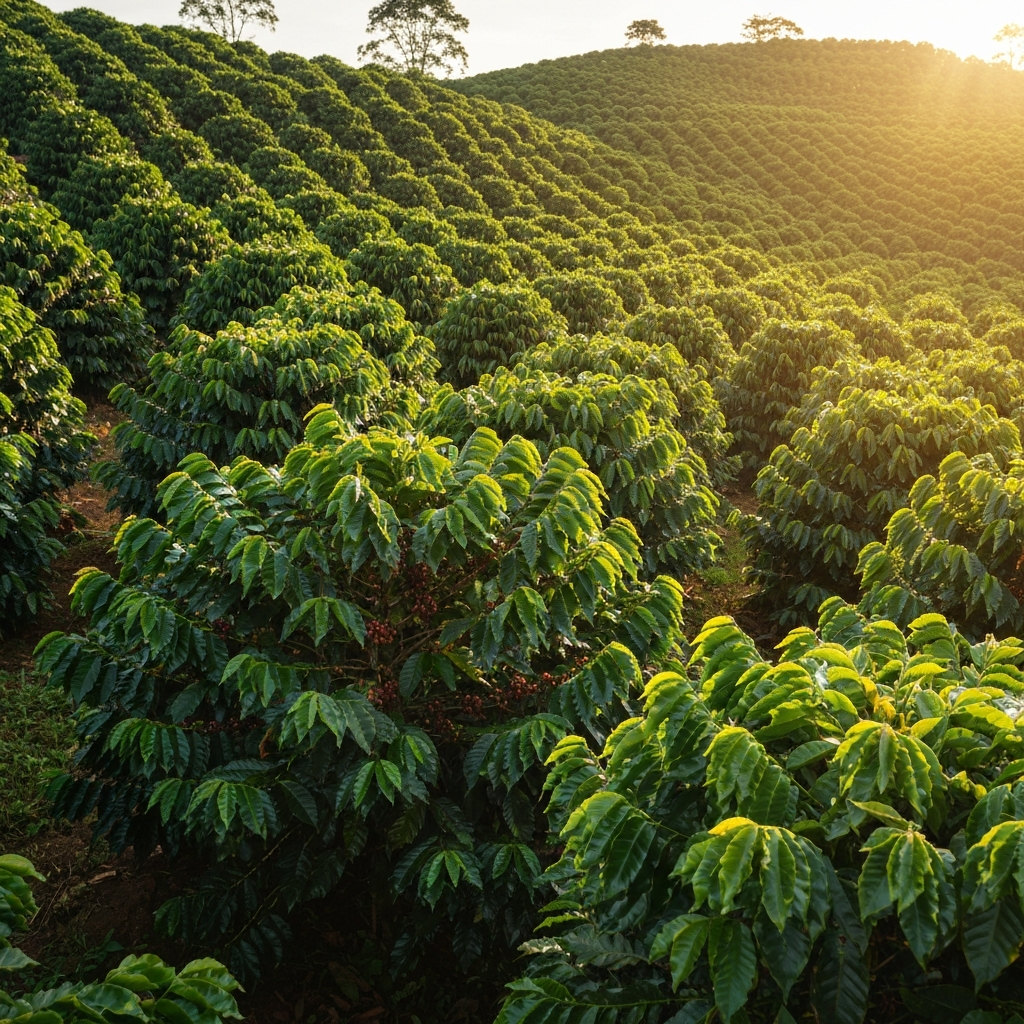
Bourbon’s compact growth habit and dense cherry clusters make it well-suited to the steep hillside farms where specialty coffee is often grown
Where Bourbon Thrives
Bourbon performs best at altitudes between 1,100 and 2,000 metres, where cooler temperatures allow its cherries to mature slowly and develop the complex sugars that define the variety’s character. It is widely planted in Rwanda and Burundi, where volcanic soils and equatorial altitude produce bright, juicy, citrus-driven cups that have put East African specialty coffee on the global map. In El Salvador, Bourbon is the dominant variety, delivering rich chocolate, stone-fruit, and brown sugar notes — the backbone of the country’s competition-winning lots. Brazilian Yellow Bourbon has become a specialty staple, producing round, nutty, low-acidity cups that are ideal for espresso blending. Guatemala, Honduras, and Peru also grow significant volumes. While modern rust-resistant varieties have displaced Bourbon in some regions, as James Hoffmann notes in The World Atlas of Coffee, its unmatched cup quality ensures its continued cultivation wherever quality commands a premium.
Further Reading
- The World Atlas of Coffee by James Hoffmann — detailed profiles of Bourbon and its descendants across origins
- God in a Cup by Michaele Weissman — the specialty coffee movement and the varieties that define it
- World Coffee Research Variety Catalog — agronomic data and sensory profiles for Red, Yellow, and Pink Bourbon
Related Topics
Typica
Typica is Arabica's foundational cultivar, known for clean sweetness, silky body, and delicate acidity — the genetic root of most modern coffee varieties worldwide.
getting-startedArabica (Coffea arabica)
Arabica accounts for 60% of global coffee production and virtually all specialty coffee. Here is what separates it from Robusta — genetics, altitude, and cup character.
varietyWhat are Coffee Varieties?
Coffee varieties — Typica, Bourbon, Gesha, SL28 — are the genetic blueprints behind every cup. A guide to what they are, how they differ, and why variety matters for flavour.