 English
  Українська
  Čeština
 The Coffee Belt — sometimes called the Bean Belt — is the tropical zone that wraps around the Earth between the Tropic of Cancer (23.5°N) and the Tropic of Capricorn (23.5°S). Every single coffee-producing country sits within or touches this narrow band. It is no coincidence: coffee plants demand consistent warmth, abundant rainfall, and filtered sunlight that only these latitudes reliably provide. According to the International Coffee Organization, roughly 70 countries cultivate coffee commercially, and all of them fall within this strip — a zone that covers less than a third of the planet’s surface yet produces one of its most traded commodities.
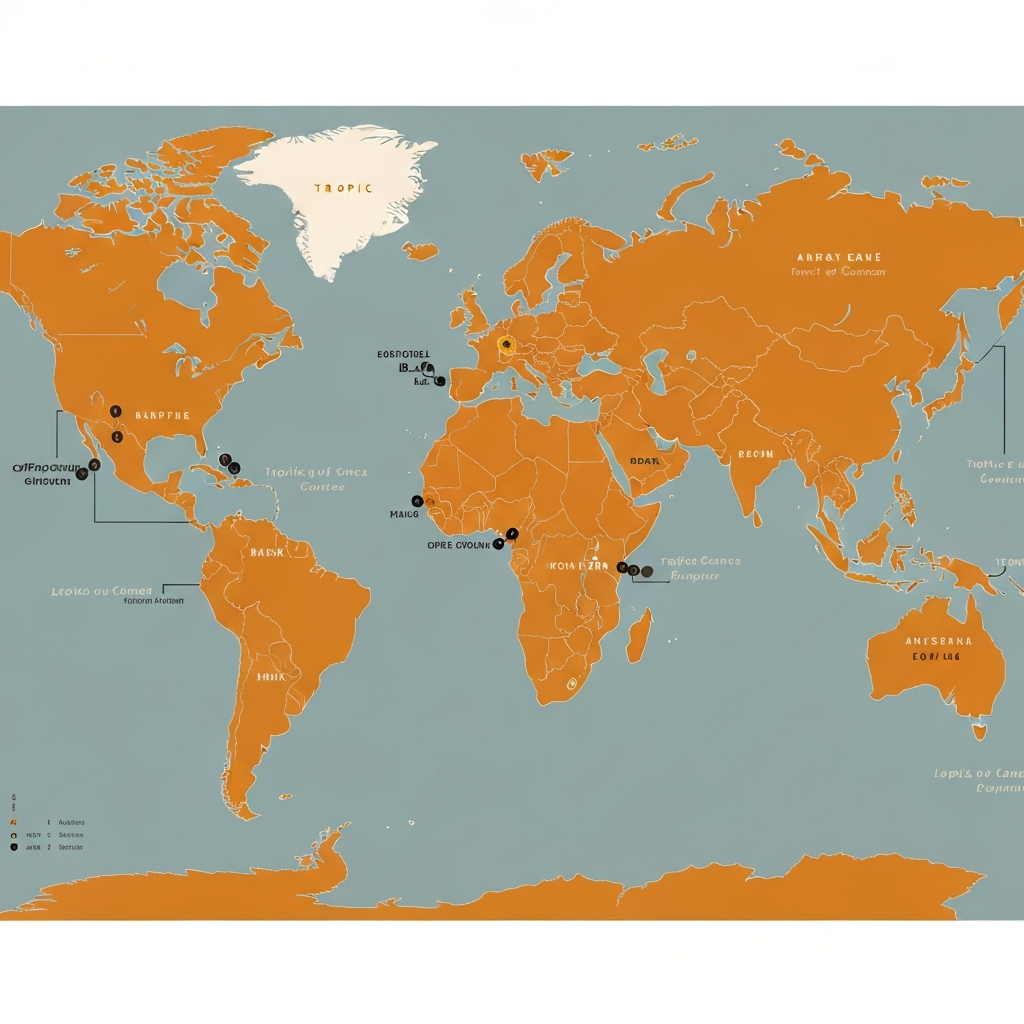
The Coffee Belt encircles the globe between the tropics — a narrow band of latitude where all the world’s coffee is grown
What Coffee Plants Need
Arabica coffee thrives at temperatures between 15°C and 24°C, with annual rainfall of 1,200 to 2,200 millimetres distributed relatively evenly throughout the year. Altitude is critical — most specialty-grade Arabica is cultivated between 1,000 and 2,200 metres above sea level, where cooler temperatures slow cherry development by weeks or even months, concentrating sugars and organic acids into denser, more flavourful seeds.
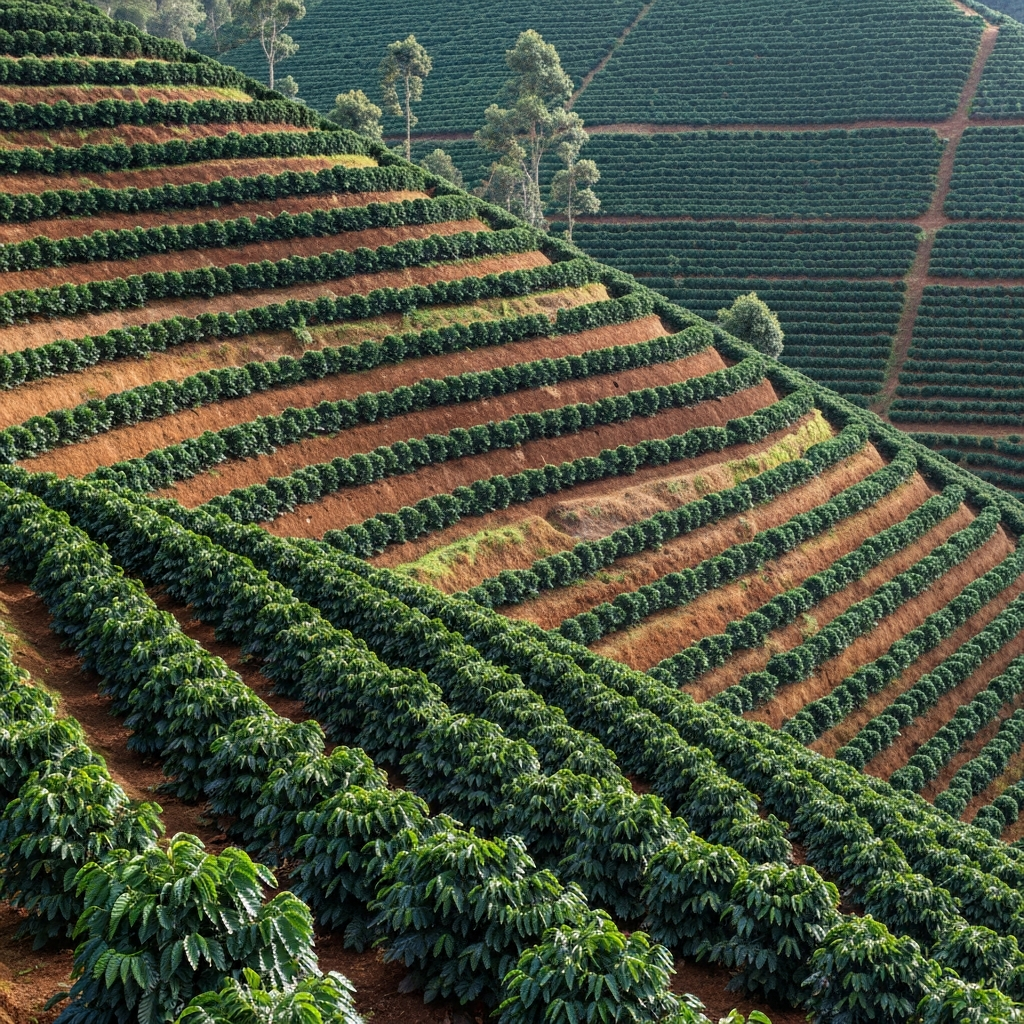
A coffee plantation at altitude — cooler temperatures and volcanic soil create ideal conditions for specialty-grade beans
Robusta (Coffea canephora), the hardier species, tolerates lower altitudes, higher temperatures (up to 30°C), and greater humidity, but still requires the tropical moisture the Belt provides. Rich, well-drained soil — often volcanic in origin — rounds out the ideal growing conditions. As James Hoffmann notes in The World Atlas of Coffee, “the best coffees tend to come from volcanic soils, which are rich in minerals and offer excellent drainage.”
The Coffee Belt contains some of the most biodiverse ecosystems on Earth. Many coffee farms double as wildlife corridors, and shade-grown coffee systems can support over 150 species of migratory birds — making sustainable cultivation both an ecological and economic imperative.
Three Great Producing Regions
The Belt divides into three macro-regions, each with a distinctive flavour identity shaped by local geology, cultivars, and processing traditions.
Africa and the Arabian Peninsula — led by Ethiopia, Kenya, and Uganda — is the ancestral home of coffee and the source of its wildest genetic diversity. African coffees are celebrated for brightness, fruit complexity, and floral aromatics. Ethiopia alone harbours an estimated 6,000 to 10,000 wild Arabica genotypes, a genetic treasury that breeders worldwide depend on for disease resistance and flavour innovation.
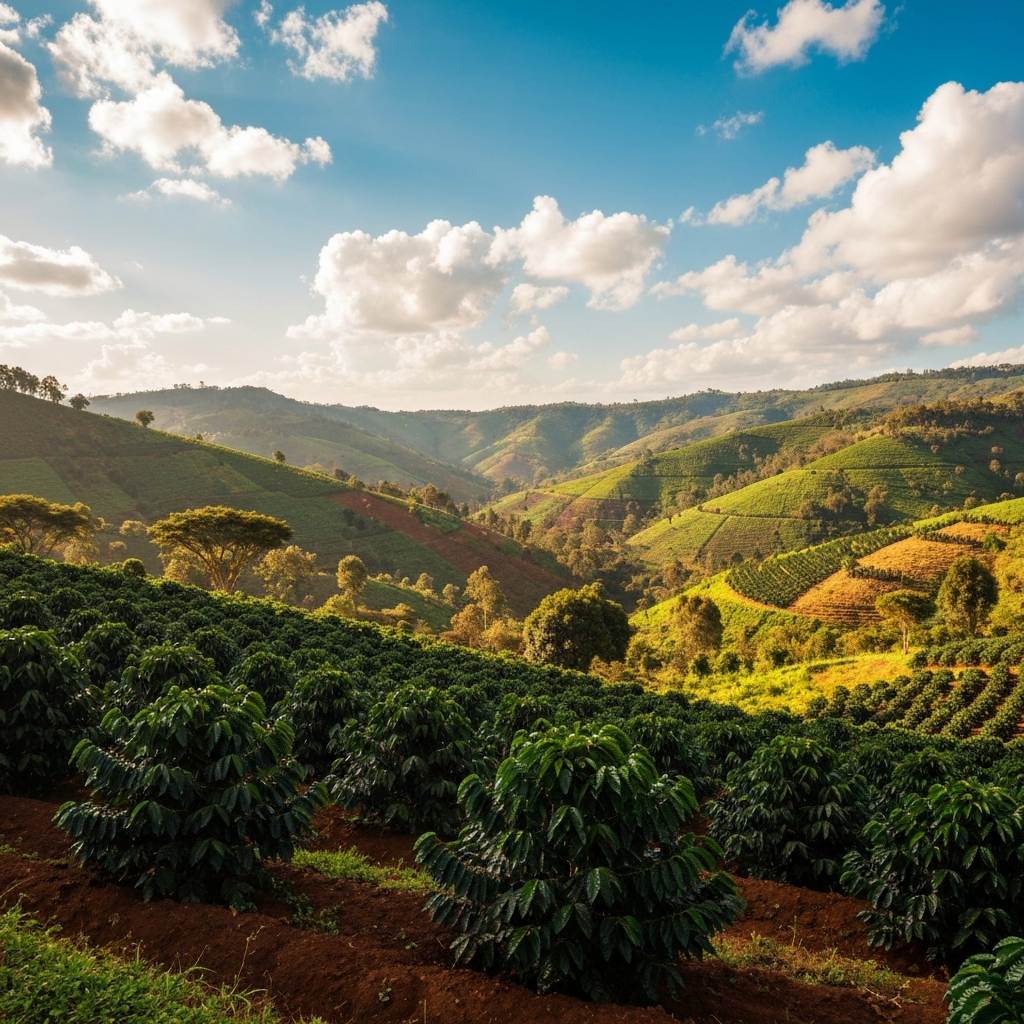
The highlands of East Africa — where coffee evolved in the wild and still grows among ancient forests
Central and South America — including Colombia, Brazil, Guatemala, and Costa Rica — dominates global production, accounting for roughly 60 percent of the world’s supply. Latin American coffees tend toward clean sweetness, balanced acidity, and notes of chocolate, caramel, and stone fruit, shaped by Andean altitudes and widespread washed processing.
The Asia-Pacific region — from Indonesia and Vietnam to Papua New Guinea — rounds out the picture with earthy, herbal, and spicy profiles. Vietnam alone is the world’s second-largest producer by volume, though much of its output is Robusta destined for instant coffee and espresso blends.
Climate and the Future
Climate change poses a serious and well-documented threat to the Coffee Belt. Rising average temperatures are pushing viable growing altitudes higher, shrinking available farmland and increasing pest pressure from coffee leaf rust and the coffee berry borer. Research published by World Coffee Research suggests that up to 50 percent of current Arabica-growing land could become unsuitable by 2050 under moderate warming scenarios.
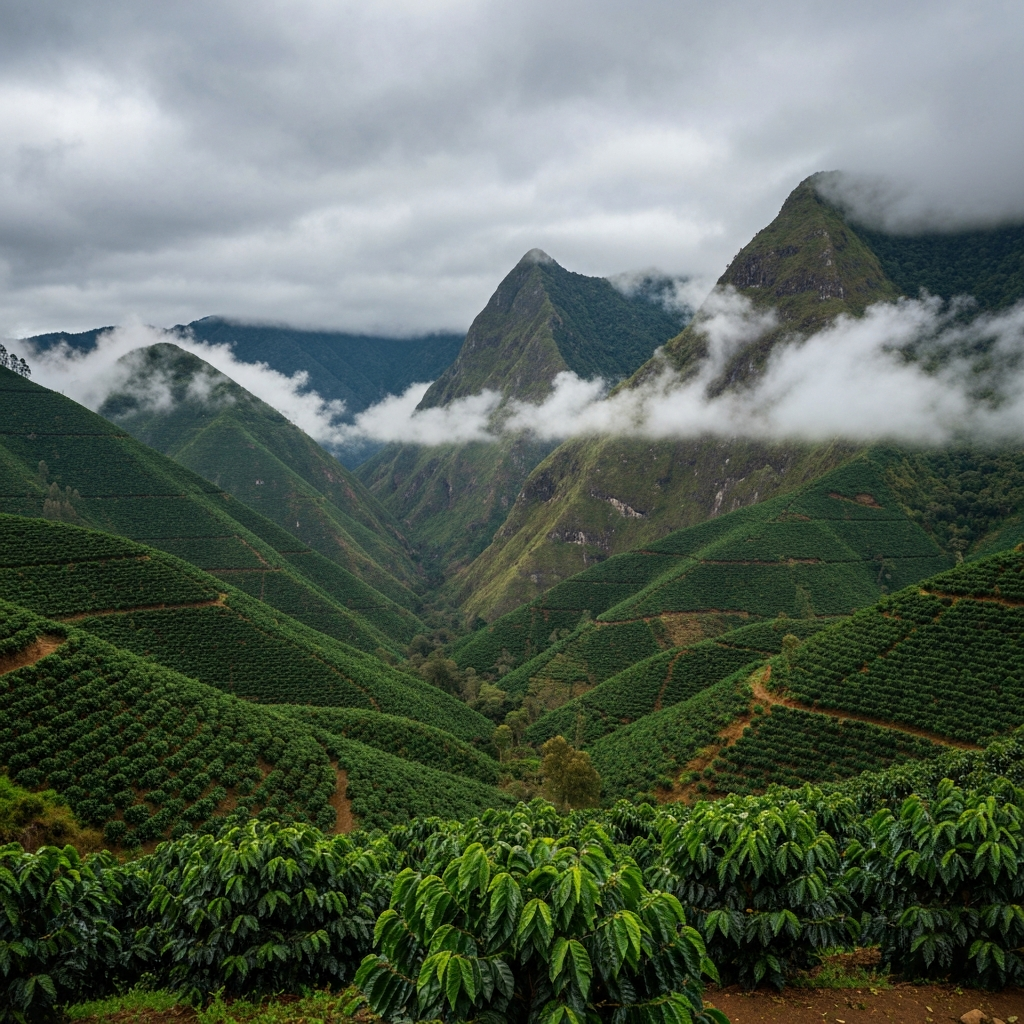
Climate change is reshaping the Belt — rising temperatures push viable coffee growing to ever-higher elevations
Some producers are already adapting: planting shade trees to moderate temperature, introducing drought-resistant cultivars, and moving operations upslope. Understanding the Belt’s geography is not just academic — it is the first step in appreciating both the fragility and the resilience of the global coffee supply chain, and the origins that depend on it.
Further Reading
- The World Atlas of Coffee by James Hoffmann — detailed maps and profiles of every major coffee-producing country
- World Coffee Research — scientific research on varieties, agronomy, and climate adaptation
- ICO — International Coffee Organization — global production data and market statistics
Related Topics
What is Coffee Origin?
Coffee origin is the story of place — altitude, soil, and climate shape every flavour note. From Ethiopian florals to Colombian caramel and Kenyan citrus.
originEthiopia
The birthplace of Arabica and still its most genetically diverse origin — Ethiopia produces florals, berries, and citrus from thousands of heirloom varieties across its highlands.
originColombia
Colombia's Andean geography — three mountain ranges, volcanic soils, and year-round harvests — yields balanced washed Arabicas with caramel sweetness and bright stone fruit.
originBrazil
The world's largest coffee producer by far, Brazil supplies one-third of global output — low-acid naturals and pulped naturals with nutty, chocolate, and caramel profiles.