 English
  Українська
  Čeština
 For decades Honduras was a volume player — a country that grew enormous quantities of coffee but rarely appeared on the radar of specialty roasters. That story has changed dramatically. Honduras is now Central America’s largest coffee producer by volume and the world’s sixth-largest overall, exporting over 5 million 60-kilogram bags annually according to the ICO. More importantly, its coffees are winning Cup of Excellence competitions, placing on specialty menus worldwide, and revealing a range of terroir-driven profiles that rival its more famous neighbours Guatemala and Costa Rica.
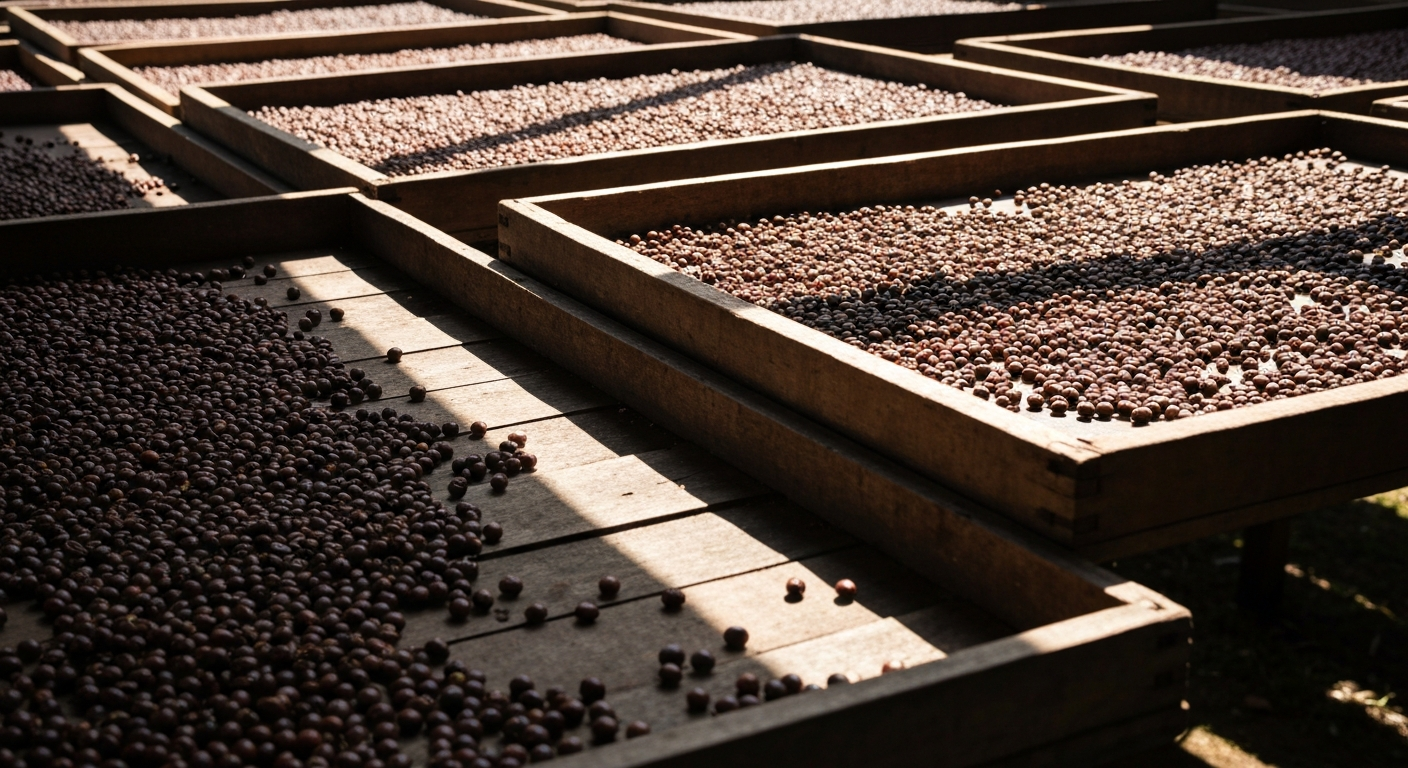
The mountainous interior of Honduras — where altitudes above 1,200 metres create ideal conditions for specialty-grade Arabica
The transformation is recent. As late as 2001, Honduras produced barely 3 million bags. Investment in infrastructure, quality training through organisations like IHCAFE (the Honduran Coffee Institute), and the establishment of a Cup of Excellence programme in 2004 catalysed a generation of producers who now chase flavour complexity rather than simple yield. As James Hoffmann notes in The World Atlas of Coffee, Honduras is “one of the most exciting and underappreciated origins in the specialty world.”
Growing Regions
Honduras officially recognises six distinct coffee-growing regions, each shaped by its own combination of altitude, soil type, rainfall, and microclimate. Five of these have become particularly important for specialty buyers.
Copán — In the western highlands bordering Guatemala, Copán sits at 1,100 to 1,500 metres elevation. Coffees here tend toward chocolate and caramel sweetness with soft acidity and a round, medium body. The volcanic soils and moderate rainfall produce clean, approachable cups that serve as an excellent introduction to Honduran coffee.
Marcala — Perhaps the most celebrated region, Marcala was the first Honduran coffee to receive a Denominación de Origen designation. Farms between 1,200 and 1,700 metres produce coffees with bright citrus acidity, stone-fruit sweetness, and a refined structure. Marcala lots frequently appear in Cup of Excellence finals, and the region’s small-holder cooperatives have become models for quality-focused production.
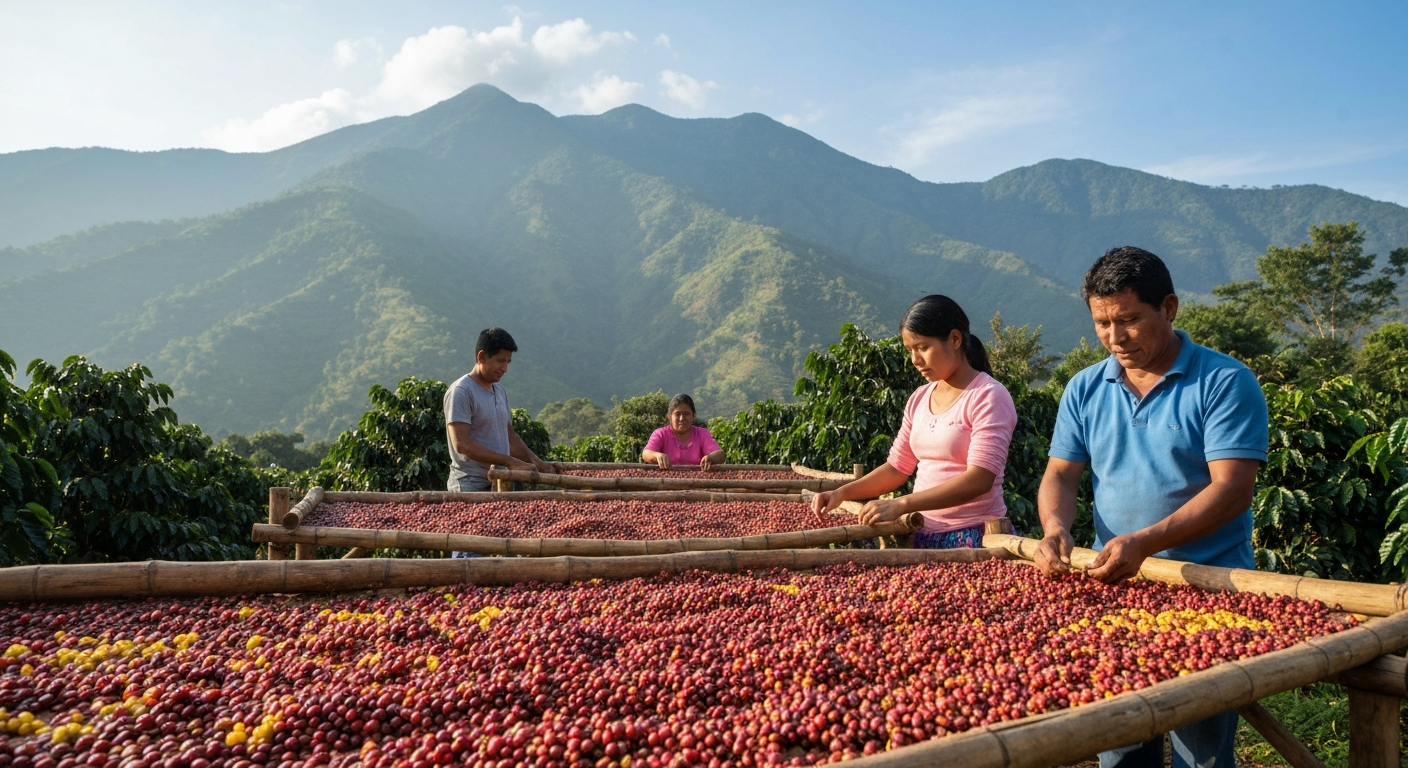
Morning mist settles over Honduran coffee country — altitude and cloud cover slow cherry maturation, concentrating sugars and complexity
Montecillos — Bordering Marcala to the north, Montecillos is one of the highest-altitude regions, with farms reaching 1,600 metres and above. The cooler temperatures produce dense, hard-bean coffees with pronounced acidity, peach and orange notes, and a clean, sweet finish. Montecillos is where Honduras most closely approaches the bright, articulate profiles associated with the best Central American lots.
Opalaca — A remote, mountainous region in the departments of Intibucá and Lempira, Opalaca is gaining recognition among specialty importers for its tropical fruit complexity and floral aromatics. Farms here are often small, family-run operations at 1,100 to 1,500 metres, and the region’s relative isolation has preserved traditional farming practices alongside its distinctive cup character.
Comayagua — Centrally located and one of the more accessible regions, Comayagua produces balanced coffees with nutty sweetness, mild citric acidity, and a smooth body. While less dramatic than Marcala or Montecillos, Comayagua’s consistent quality and larger farm sizes have made it important for both commodity and emerging specialty markets.
Denominación de Origen
In 2005, Marcala became the first Central American coffee region to receive a Denominación de Origen (DO) — a legally protected geographical indication similar to those used for European wines and cheeses. The DO certifies that coffee labelled “Café de Marcala” was grown within the defined region, at specific altitudes, and processed to established quality standards.
The designation was a watershed moment for Honduran coffee, signalling that the country was serious about competing on quality, not just volume. Other Honduran regions have since sought similar protections, and the Marcala DO has inspired neighbouring countries to pursue their own geographical indications.
Lempira and the Leaf Rust Crisis
Honduras was devastated by the coffee leaf rust (Hemileia vastatrix) epidemic that swept Central America beginning in 2012. The disease, which thrives in warm, humid conditions and attacks the leaves of susceptible varieties, destroyed an estimated 25 percent of Honduran production and forced thousands of smallholders to replant.
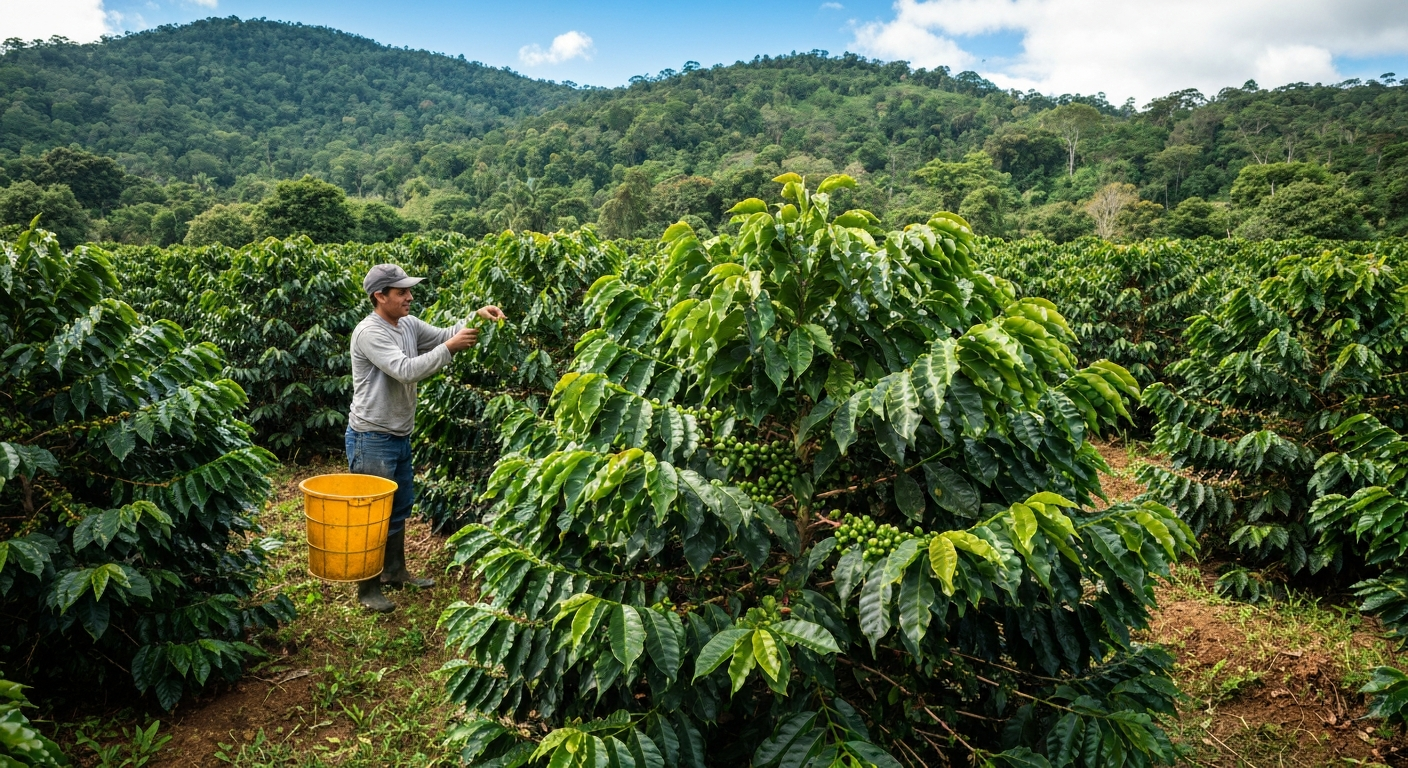
Replanted hillside farms now feature rust-resistant varieties alongside traditional cultivars like Catuaí and Bourbon
In response, IHCAFE promoted the Lempira variety — a Catimor-type hybrid with strong rust resistance — as a replacement for susceptible cultivars like Caturra, Catuaí, and Bourbon. Lempira has been widely adopted, and newer hybrids like Parainema (developed in Honduras itself) offer improved cup quality alongside disease tolerance. The transition has not been without controversy — some producers and buyers worry that replacing traditional varieties diminishes flavour complexity — but the practical reality of leaf rust has made resistance a non-negotiable trait for most Honduran farmers.
Honduras was the first Central American country to develop its own rust-resistant variety, Parainema, combining disease tolerance with cup quality that rivals traditional cultivars at its best.
Flavour Profile
Honduran coffees, overwhelmingly washed, tend to share a family resemblance: a clean, sweet foundation with medium body, balanced acidity, and flavour notes that range from milk chocolate and toffee to stone fruit and citrus depending on altitude and region. At their best — particularly from Marcala, Montecillos, and Opalaca — they offer the bright, articulate clarity that defines the finest Central American lots.
A growing number of producers are experimenting with honey and natural processing, and these lots can deliver tropical-fruit intensity and winey body that surprise drinkers who associate Honduras with clean, understated cups. Competition-winning Honduran naturals have scored above 90 points, demonstrating the country’s potential across processing styles.
Why It Matters
Honduras matters because it represents the leading edge of specialty coffee’s democratisation. A generation ago, it was dismissed as a bulk producer. Today, its Cup of Excellence lots command prices above $50 per pound, its cooperatives are models of quality-focused organisation, and its regional diversity rivals that of any Central American origin. For roasters and drinkers seeking exceptional value — complex, well-processed coffees at prices below those of neighbouring Guatemala or Costa Rica — Honduras is arguably the most compelling origin in the Americas right now.
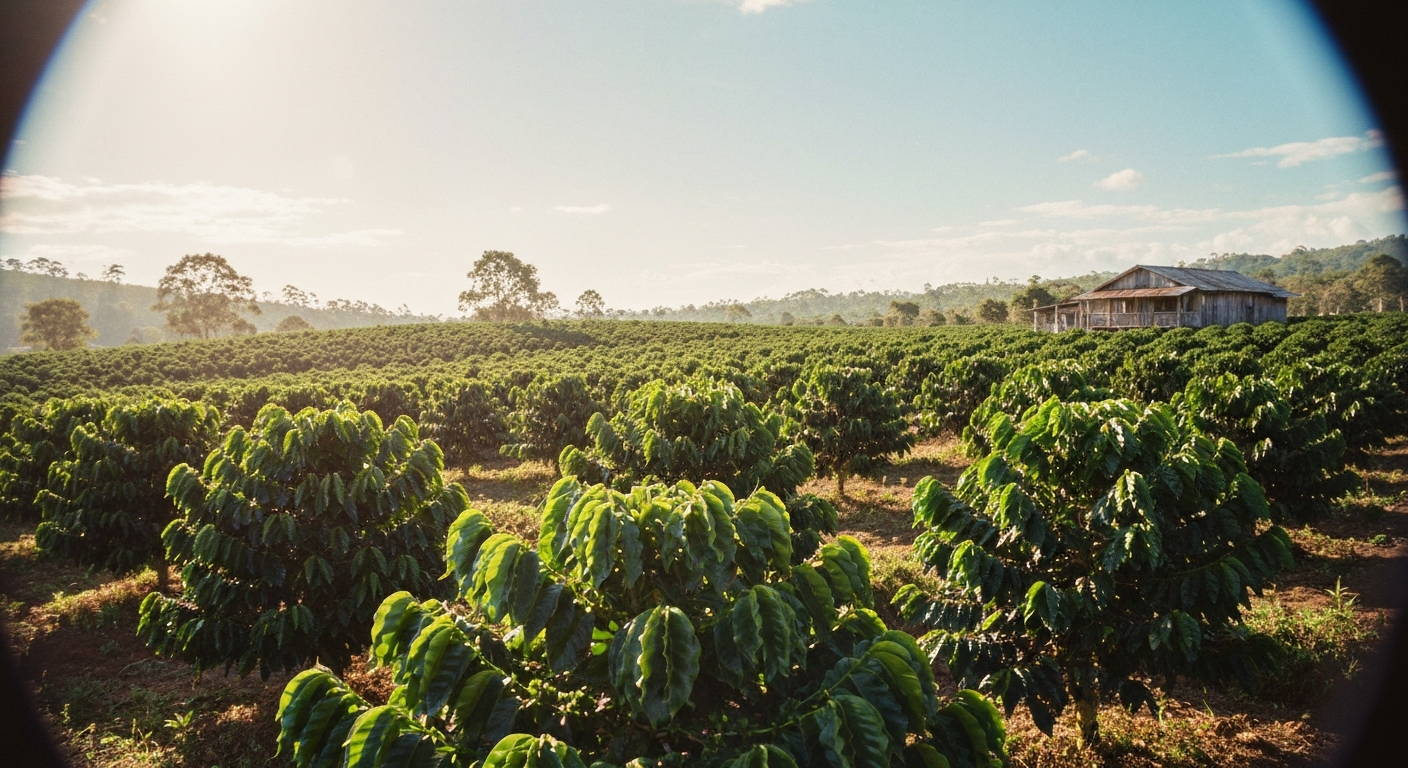
Honduran specialty coffee — once overlooked, now commanding attention from roasters and competition judges worldwide
The challenge ahead is sustaining this momentum. Climate change is pushing viable growing altitudes upward, leaf rust remains an ongoing threat, and many smallholders still lack access to credit and export infrastructure. But the trajectory is unmistakable: Honduras has earned its place among the world’s great coffee origins, and it is still ascending.
Further Reading
- The World Atlas of Coffee by James Hoffmann — regional profiles and tasting notes for all six Honduran coffee zones
- Coffee Atlas of Ethiopia by Aaron Davis et al. — for context on the genetic origins of varieties now grown in Honduras
- IHCAFE — Instituto Hondureño del Café — the national coffee institute’s research, data, and development programmes
- Cup of Excellence — Honduras — competition results and winning lot profiles
- World Coffee Research — variety performance data including Lempira and Parainema
Related Topics
Guatemala
Guatemala's volcanic soils and high altitudes — from Antigua to Huehuetenango — produce some of Central America's most complex coffees, rich with chocolate, citrus, and spice.
getting-startedWhat is Coffee Origin?
Coffee origin is the story of place — altitude, soil, and climate shape every flavour note. From Ethiopian florals to Colombian caramel and Kenyan citrus.
varietyCaturra
A natural dwarf mutation of Bourbon discovered in Brazil, Caturra combines high yields with bright acidity and has become the backbone of Latin American coffee production.
processWashed (Wet) Processing
Washed coffee processing removes all fruit before drying to reveal clean, bright cups — floral, terroir-transparent, and prized by the specialty world. The benchmark method.