 English
  Українська
  Čeština
 The Democratic Republic of Congo is coffee’s great paradox. It possesses some of the finest natural growing conditions on Earth — high-altitude volcanic highlands, equatorial rainfall, ancient Bourbon genetics, and proximity to the Great Rift Valley — yet it has been almost entirely absent from the specialty coffee conversation for most of the modern era. The reasons are tragically human: decades of colonial exploitation, the plunder of the Mobutu years, and recurring armed conflict in the eastern provinces have devastated infrastructure, displaced communities, and made the simple act of getting a bag of coffee from farm to port an exercise in resilience. And yet, against all odds, Congolese coffee is emerging. The lots coming out of the Kivu region today are stunning — and the story behind them is one of the most compelling in specialty coffee.
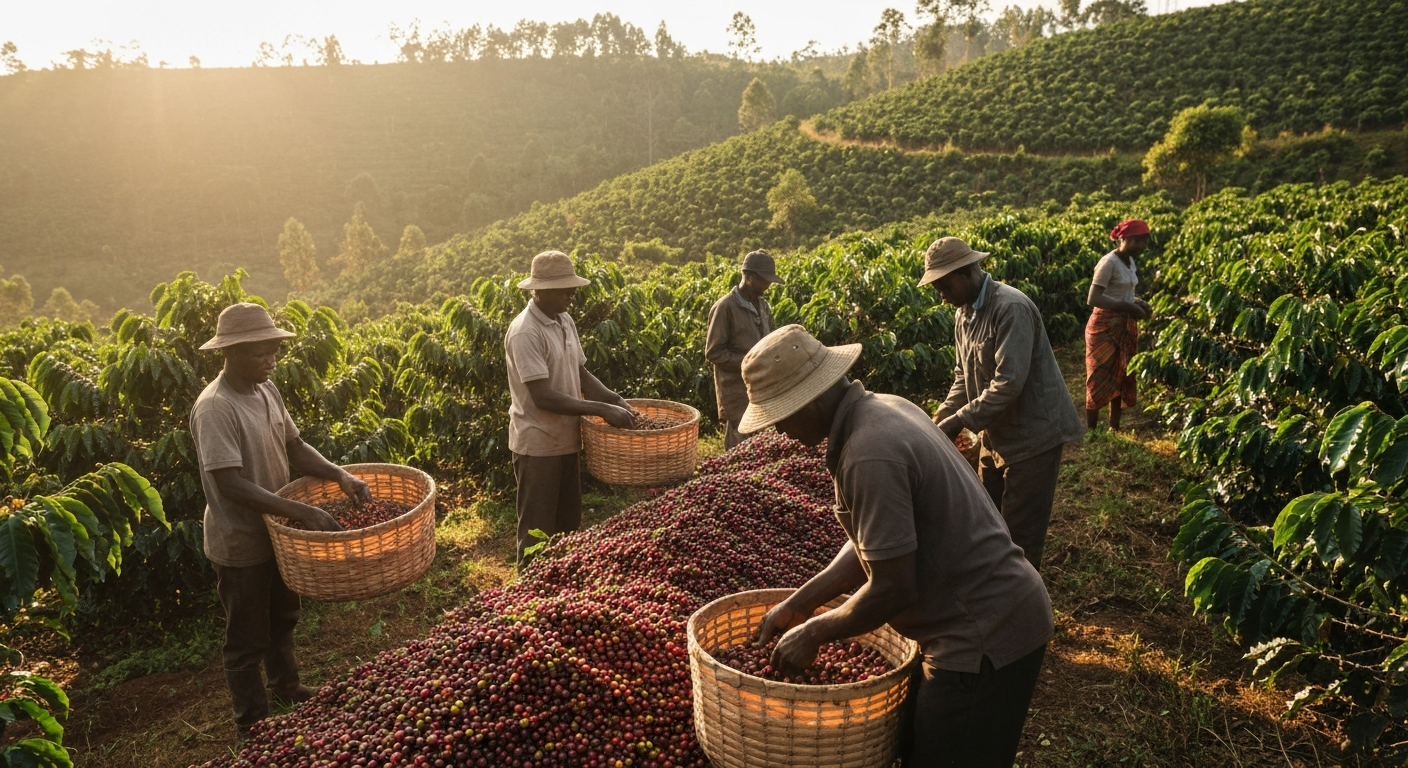
The highlands of eastern Congo — volcanic soil, high altitude, and equatorial climate create extraordinary coffee-growing conditions
Coffee is not new to the DRC. The country was once a significant producer — in the 1980s, output exceeded 2 million bags annually, making it one of Africa’s largest. But by the 2000s, production had collapsed to a fraction of that, with most of the remaining crop being low-grade Robusta from the western lowlands. The specialty renaissance centres on the eastern highlands — specifically the provinces of North Kivu and South Kivu — where a combination of altitude, volcanic soil from the Virunga chain, and the moderating influence of Lake Kivu creates conditions that rival neighbouring Rwanda and Burundi.
The Kivu Region
South Kivu, centred around the towns of Bukavu, Minova, and the Kalehe territory, is the epicentre of Congolese specialty coffee. Farms sit between 1,400 and 2,200 metres on the western shore of Lake Kivu, one of Africa’s Great Lakes. The combination of altitude, equatorial latitude, volcanic soil rich in potassium and phosphorus, and lake-effect moisture regulation creates a terroir of exceptional potential.
North Kivu, around the city of Goma and the territories of Masisi and Rutshuru, grows coffee in the shadow of the Virunga volcanoes — active peaks that periodically deposit fresh mineral-rich ash on the surrounding farmland. The security situation in North Kivu has historically been more volatile than the south, making consistent production and export challenging, but the quality potential is immense.
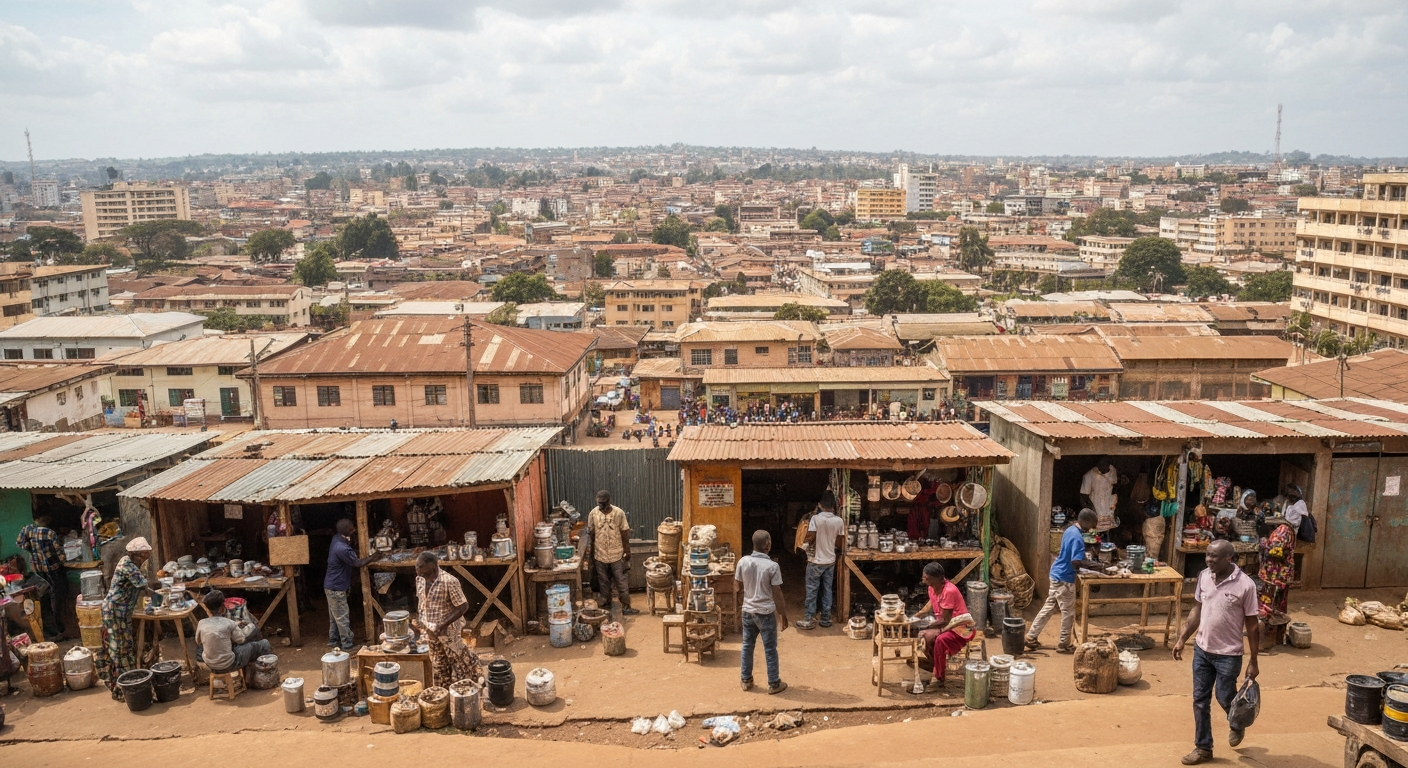
Raised drying beds at a Kivu washing station — the same careful post-harvest techniques that transformed neighbouring Rwanda’s coffee
Ituri province, further north, is a newer entrant to the specialty scene, with a handful of cooperatives beginning to produce washed lots that have attracted buyer attention. The altitude and climate are promising, though infrastructure is even more limited than in the Kivus.
The DRC shares Lake Kivu and much of its coffee geography with Rwanda. The two countries’ coffees are often strikingly similar in profile — unsurprising, given that the hills, soil, varieties, and altitude are essentially continuous across the border. The difference lies in infrastructure, not terroir.
Varieties
The DRC’s Bourbon plantings are among the oldest and most genetically diverse in Africa. Much of the Kivu highlands was planted with Bourbon stock — likely originating from Belgian colonial-era introductions — that has been maintained by smallholder families for generations with minimal replanting or varietal substitution. This means that Congolese Bourbon has undergone decades of natural adaptation to local conditions, developing characteristics that some researchers believe are genetically distinct from Bourbon grown elsewhere.
Blue Mountain, a Typica selection named for its Jamaican connection, is also present in the Kivu region and contributes clean, sweet cups with gentle acidity. Smallholder gardens typically contain mixed plantings of Bourbon, Blue Mountain, and local selections, harvested and processed together. As the specialty sector matures, there is growing interest in varietal separation — identifying and isolating the best-performing Bourbon trees for dedicated micro-lots.
On the Robusta side, the DRC’s western and central lowlands produce significant volumes of commodity-grade Robusta, which accounts for the majority of the country’s total coffee output by volume.
Processing and Infrastructure
This is where the DRC’s challenges become most acute. The washing station model that transformed Rwandan coffee quality has been adopted in the Kivu region, but building and operating washing stations in a conflict-affected area with minimal road infrastructure is extraordinarily difficult. Organisations like Rebuild Women’s Hope, Saveur du Kivu, Sopacdi, and Virunga Coffee Company have established washing stations that produce clean, bright, fully washed lots — and the results, when everything works, are exceptional.
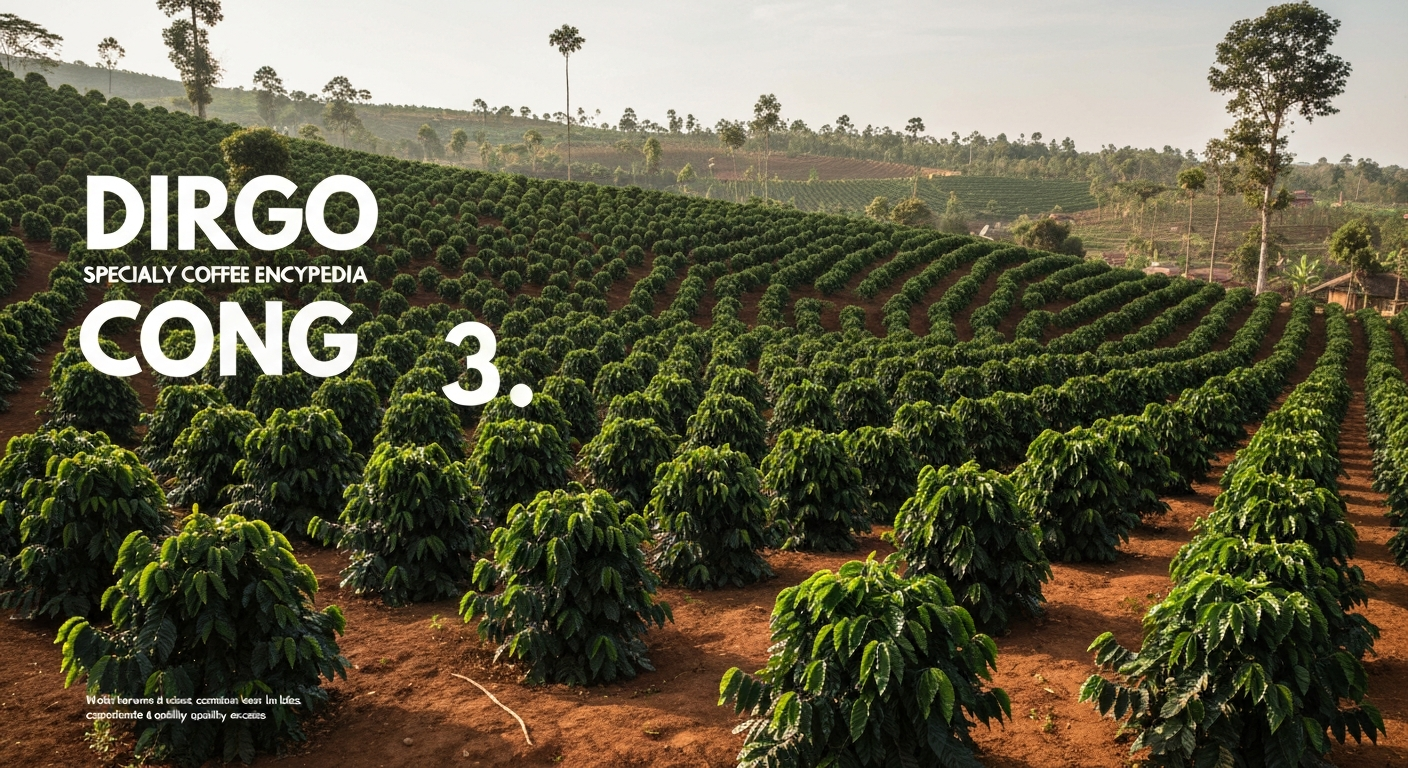
Smallholder coffee plots in eastern Congo — most farmers cultivate less than a hectare, making cooperatives essential for quality and market access
The typical process mirrors the Rwandan model: hand-picked ripe cherry is delivered to a centralised washing station, depulped, fermented for 12 to 24 hours, washed in grading channels, and dried on raised African beds for two to three weeks. The quality of the final cup depends heavily on the discipline of the washing station manager and the condition of the cherry at delivery — a challenge when farmers may walk hours on foot trails to reach the station.
Natural and honey processing experiments are beginning, though the wet climate of the Kivu region makes full natural drying riskier than in drier origins.
Flavour Profile
At their best, Congolese coffees from the Kivu region are remarkable — and remarkably similar to the finest Rwandan lots, which makes sense given the shared terroir. Expect bright, juicy acidity in the red-fruit spectrum — cranberry, red currant, blackcurrant — supported by a medium, silky body. The aromatics often carry a floral lift (jasmine, hibiscus) and the finish is clean, with lingering notes of raw honey, brown sugar, and dark chocolate.
The best lots have a vibrancy and sweetness that place them comfortably alongside specialty coffees scoring 85 to 88 points. As the specialty infrastructure matures and processing consistency improves, there is every reason to expect Congolese coffees competing at the highest levels of quality recognition.
Challenges and Opportunities
It would be dishonest to discuss Congolese coffee without acknowledging the immense challenges producers face. Armed conflict, particularly in North Kivu, disrupts supply chains and displaces farming communities. Road infrastructure is minimal — during the rainy season, key routes become impassable. The regulatory environment is complex, with multiple layers of taxation and bureaucracy between farm gate and export. And the absence of a strong national coffee institution (unlike Rwanda’s NAEB or Ethiopia’s ECX) means that quality standards and market access depend heavily on individual cooperatives and NGO-supported programmes.
The opportunities, however, are equally immense. The DRC has an estimated 5 million hectares suitable for coffee cultivation — far more than any other African country. Its Bourbon genetics are arguably among the finest on the continent. And the growing international interest in Congolese specialty coffee is creating price premiums that, when they reach the farmer, can be genuinely transformative in one of the world’s poorest countries.
For specialty buyers and drinkers, Congolese coffee represents something rare: the chance to discover a world-class origin before it becomes widely known, while supporting communities that have overcome extraordinary adversity to produce something beautiful.
Further Reading
- The World Atlas of Coffee by James Hoffmann — brief coverage of the DRC’s emerging specialty potential
- Saveur du Kivu — competition and quality programme for Kivu-region coffees
- Virunga Coffee Company — social enterprise working with smallholders in North Kivu
- Rebuild Women’s Hope — women-led cooperative and washing station operator in South Kivu
Related Topics
Rwanda
The 'Land of a Thousand Hills' has undergone a remarkable coffee renaissance, producing bright, complex, floral-citrus cups.
originEthiopia
The birthplace of Arabica and still its most genetically diverse origin — Ethiopia produces florals, berries, and citrus from thousands of heirloom varieties across its highlands.
varietyBourbon
Bourbon is Arabica's second foundational cultivar — named after Réunion island, prized for rich sweetness, chocolate notes, full body, and complex fruit.
processWashed (Wet) Processing
Washed coffee processing removes all fruit before drying to reveal clean, bright cups — floral, terroir-transparent, and prized by the specialty world. The benchmark method.